
Exclusive:CalMac: Potential electric cars limit on ferries amid impending advice over maximum battery levels
Increasing size and weight a challenge for west coast operator

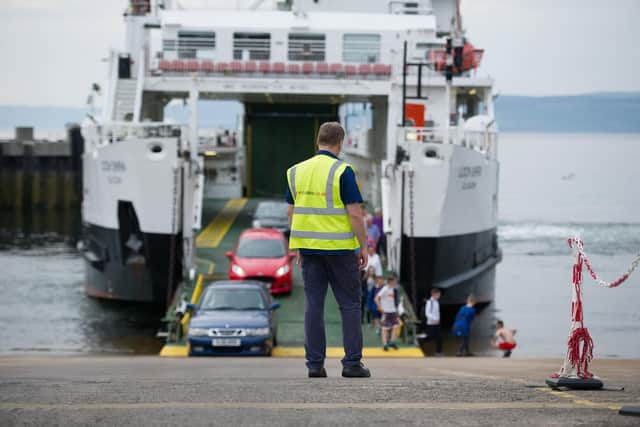
CalMac has warned of not having enough space for the increasing number of electric vehicles (EVs) on its ferries as it signalled impending advice over their maximum battery charge levels while aboard.
A manager has told Western Isles councillors that the increased weight of EVs posed a challenge even with the extra capacity which will be provided by new ferries due to enter the fleet.

Meantime, the west coast operator’s safety chief told the transportation committee meeting that it planned to publish new guidance over battery levels.
Some European ferry firms, such as in Greece, restrict these to 40 per cent of capacity for safety reasons.
David Hamill, CalMac’s Outer Hebrides area manager, asked whether increasing numbers of EVs would restrict the number of vehicles that ferries could carry, said: "Yes, I think it’s fair to say potentially it could.”
Referring to the Skye-Harris-North Uist routes, he said: “We’ve got the new vessels coming in, which are bigger and have more car-carrying capacity, and there will be two of them, so I know in the likes of the Little Minch services we are going to be increasing capacity on regular car decks.
“But it’s a much changing situation and if you look at the numbers of cars that are coming on the market now and replacing combustion-engined cars, then absolutely there will be a problem we need to solve at some point."
Will Lins, CalMac’s head of maritime safety, said: “Cars are getting heavier and bigger, so I don’t have to tell you what it’s like sometimes being stowed on the deck of our ships where the cars are bigger than they used to be, and how tight that can get at times.”
READ MORE: Tunnel to Western Isles: Vital to stem hemorrhaging population or 'hugely retrograde step'?
Mr Lins, asked whether CalMac offered guidance to EV drivers on battery levels, said: "We don’t particularly do that, but this is coming in the next tranche of developments.
"We are going to see a lot more of that on our websites.
"Whatever we do will be based on evidence and careful assessment.
"You can expect to see further guidance...but I hesitate to say that would be an absolute rule."
Mr Lins said a study showed EVs were 20 to 60 times less likely to catch fire than petrol or diesel vehicles.
However, he said in the rare cases in which an EV fire became a “thermal runaway” - when the battery feeds off itself - it was very difficult to extinguish, but EV fires could be contained with water.
CalMac’s EV guidance on its website stated that drivers must ensure there is no damage to the battery compartment and they may not be charged aboard ferries.
A CalMac spokesperson said later: “We do not expect EVs to significantly affect carrying capacity, particularly as the fleet is modernised.
“We will continue to keep this under review in response to changing vehicle types.
“EVs are an emerging technology so we will update [battery guidance] as transport procedures develop.
“There are not any significant changes envisaged for these types of vehicles.
“It was mentioned at the meeting the work we do with the UK Chamber of Shipping working groups, where we meet with other operators.
“Best practice comes from these groups, which informs what we currently have.
“This year we expect to update again as the process continues.”
Comments
Want to join the conversation? Please or to comment on this article.