
Tunnel to Western Isles: Vital to stem hemorrhaging population or 'hugely retrograde step'?

Concerns that a “fixed link” would increase centralisation of public services
Western Isles councillors have clashed over the merits of a tunnel to the mainland with one describing it as a “hugely retrograde step” while another argued it was vital to stem the “hemorrhaging” of young people from the islands.
Several councillors said the 30-40 mile link - such as between Rarnish in Benbecula and Neist Point in Skye - was crucial to the future of the Outer Hebrides while others said it would threaten their culture or lead to further centralisation of public services.


The council’s transportation committee agreed that a community consultation was required.
Councillor Susan Thomson said: “We need to decide what our view is and what the views of our community are...so we can have a definite answer when we are asked the question - do you want tunnels connecting to the mainland - and then we are all fighting on the same side.”
The discussion was prompted by the Commons’ Scottish affairs committee’s inquiry into new “fixed links”, such as bridges and tunnels, and whether there was a role for the UK Government in backing such projects, since it is a devolved issue.
The Scottish Government has included possible links between Harris and North Uist, and between South Uist and Barra, in its latest long-term transport strategy, the Strategic Transport Projects Review 2 (STPR2).
However, Transport Scotland considered two options for a link between the Western Isles and the mainland but did not take them forward because of the “anticipated technical challenges of their construction and the likely high cost”.

But Councillor Callum Maclean, committee member, said: “We are losing out by not looking into a tunnel to link us to mainland Scotland - we are letting down a future generation.”
He said travel to the islands cost families “a fortune”, adding: “It’s easier for them to go to Canada for a fortnight than here for a week.
“The system hasn’t been working for decades and it’s having a detrimental effect on our young people staying here. We are hemorrhaging.”
The council said the population of the islands had reduced by 5.5 per cent to 26,200 since 2011.
But fellow committee member, Councillor Kenny Macleod, said: “Joining to the mainland would be a huge retrograde step for us as islanders.
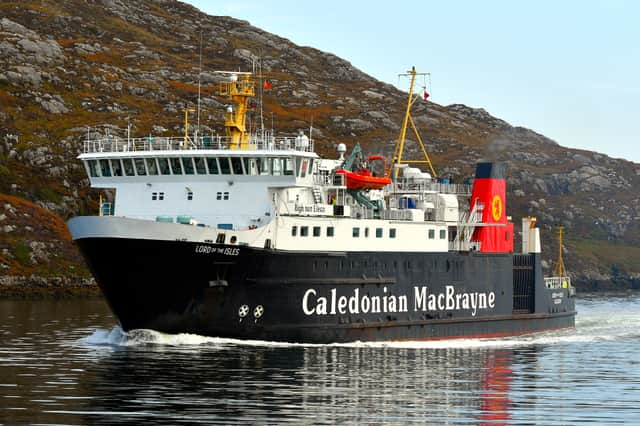
“I would rather we pushed for better ferry services that would hopefully protect our culture, our heritage and our communities from 24-hour access to all and sundry.”
He said links between the islands were more important, pointing to the “huge economic benefits” that tunnels had brought to the Faroe Islands.

Ms Thomson: “In this discussion, there are two diametrically opposed views over whether we want tunnels or not, but the idea that a body of water is going to protect us from ‘all and sundry’ is a fallacy - the internet already did that.”
Council leader Paul Steele said: “I understand people have concerns about the culture and access to the isles 24/7 but when we are looking at depopulation a lot of that is down to people moving away because they are not able to get backwards and forwards.”
Councillor Iain Macleod said: “I can see the many benefits of inter-island fixed links but at the same time I have worries that would lead to more centralisation of services which we have suffered badly from.
“We would need some kind of guarantee that was not going to happen.”
Another councillor said an “iron clad commitment” was required to prevent more services being “stripped from the peripheries”.
But he added: “I suspect that tunnels would throw fuel to the fire.”
Transport Scotland said the Scottish Government remained committed to progressing the two inter-island links, along with one to Mull.
A spokesperson said: “The next step is in determining whether there is a robust enough business case and local support to progress these options for more detailed consideration.”
Comments
Want to join the conversation? Please or to comment on this article.