


It may seem like it has been years since a Scot occupied 10 Downing Street - but over the decades dozens of Scots have made it to the rank of prime minister.
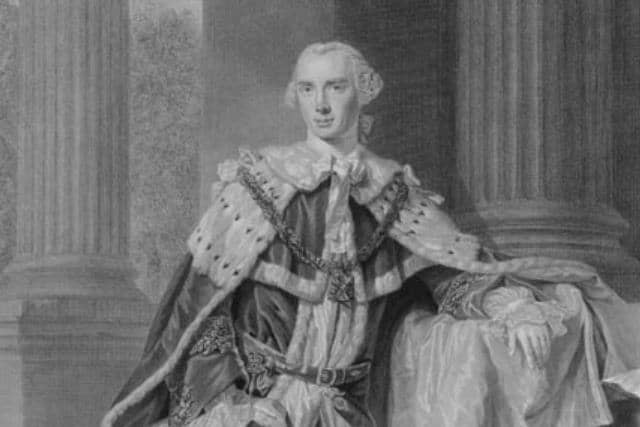
The very first Scottish prime minister was John Stuart, the 3rd Earl of Bute back in 1762.
Since then numerous politicians who were born or raised in Scotland, or represented Scottish constituencies, have followed in his footsteps, including wartime leaders, the first to appoint a female government minister, and the very first Labour prime minister.
The Scotsman takes a look at all the Scots to become prime minister, all the way back to the 18th century and through to Sir Tony Blair and Gordon Brown in the 21st century.

5. Sir Henry Campbell-Bannerman
Sir Henry Campbell-Bannerman was born in September 1836 in Kelvinside House, Glasgow and is the son of the Lord Provost of Glasgow. He was educated at Glasgow High School and Glasgow University, and was elected as the Liberal MP for Stirling Burghs in 1868. Before becoming Prime Minister, he was a financial secretary in the War Office and war secretary. He was in office from 1905 to 1908 and is the first to officially be given the title “Prime Minister”. During his tenure, he laid the foundations of the modern probation service, condemned the “methods of barbarism” used in the Boer War, and restored independence to the Transvaal and Orange Free States in South Africa. Sir Henry died in April 1908 only 19 days after stepping down as Prime Minister - he remains the only Prime Minister to have died in 10 Downing Street. | Crown copyright

6. Herbert Henry Asquith
Known as HH Asquith, he was born in September 1852 in West Yorkshire and served as Prime Minister from 1908 to 1916. He was first elected as the MP for East Fife in 1886 while a young widower with five children, and served as home secretary and chancellor of the exchequer. Mr Asquith is best known for bringing Britain into World War One, and his premiership was dominated by the issue of women’s suffrage. He also introduced old age pensions, National Insurance, higher taxes on unearned income, and stripped the House of Lords of powers to veto money bills and public legislation. Mr Asquith remains the only Prime Minister to have taken office on foreign soil - when his predecessor Sir Henry Campbell-Bannerman resigned, King Edward VII was in Biarritz in France, and the new Prime Minister had to travel there to officially take up the post. He became Earl of Oxford and entered the House of Lords in 1925 and died in Oxfordshire in February 1928. | Crown copyright

7. Andrew Bonar Law
Andrew Bonar Law was born in September 1858 in New Brunswick, Canada and is the son of a Scottish clergyman. At the age of 12 he went to live with his late mother’s cousins who were merchant bankers in Glasgow, and was elected as the Conservative MP for Glasgow Blackfriars in 1900. Aside from being Prime Minister, he was parliamentary secretary to the Board of Trade and leader of the House of Commons. After being elected Conservative leader he formed a wartime coalition with the Liberals, and became Prime Minister in 1922. He only lasted 209 days in office and resigned in May 1923 due to ill health - he died six months later from throat cancer. | Crown copyright

8. James Ramsay MacDonald
Ramsay MacDonald was born in October 1866 in Lossiemouth to a working class family, and became the first Labour Prime Minister. Before entering politics he worked as a teacher, a clergyman’s assistant and a journalist. Initially he was a member of the Social Democratic Foundation before joining the Independent Labour Party in 1893. He was first elected as the MP for Leicester in 1906 and served as Prime Minister twice, in 1924 and from 1929 to 1935. As Prime Minister he introduced unemployment assistance and appointed Margaret Bondfield, the first female government minister. In 1924 he called an election as he had a small majority in the House of Commons. During the campaign a newspaper published the Zinoviev letter which ruined Mr MacDonald’s anti-communist credentials, and his party was heavily defeated - the letter was later accepted as a fraud. He died in November 1937 while aboard the Rinea Del Pacific on the Atlantic Ocean, on his way to South America. | Crown copyright