
Labour urged to agree to 'bespoke' oil and gas permits after independent review findings

Keir Starmer’s government has been urged to agree a compromise to its promised ban on new oil and gas licences.
UK ministers should allow “bespoke exploration permits” for oil and gas to take a “balanced, regulated approach” to the North Sea, an independent review has found.
But climate campaigners have warned that any such measure would require Labour to break its manifesto promise to ban new oil and gas licences, a measure the UK government has come under intense pressure to rethink by fossil fuels giants.
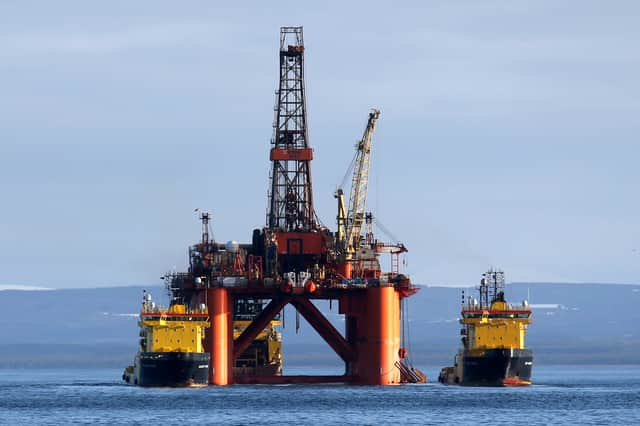

Now, a review by Professor John Underhill, director of energy transition at the University of Aberdeen’s interdisciplinary institute, has identified a policy change that he argues offers a solution for investment and growth, increases energy security, addresses environmental sustainability and global climate impacts.
He has also claimed the switch is consistent with Labour’s manifesto commitment of no new licenses.
READ MORE: Rosebank and other North Sea oil and gas fields could be given green light under new guidelines
The UK government has acknowledged that oil and gas will be needed for decades to come as part of the energy transition but has stressed new fossil fuels licences are not consistent with global efforts to tackle the climate crisis.
Labour ministers have insisted that the promise to end new oil and gas licences will remain intact, amid fears from the fossil fuels industry the move will heighten the reliance on overseas imports.

Professor Underhill’s review has called on UK ministers to allow near-field and infrastructure-led exploration and allow “bespoke oil and gas permits” around strategic and critical infrastructure, consisting of existing pipelines and fields.
The review has also called for strengthened regulation and an elimination of routine flaring, as is the case in Norway - alongside support for carbon storage and the electrification of platforms.
Professor Underhill has also called for measures to safeguard critical infrastructure and ensure existing pipelines and platforms remain economically viable to prevent premature shutdowns and stranded reserves.
He said: “We all want to see a cleaner, greener future but we must also be honest about the energy reality today. The UK still relies heavily on oil and gas and without a clear and pragmatic plan, we risk replacing home-grown supply with higher-emission imports, something that is worse for the climate.

“The current policy contrasts with reversals seen in countries like New Zealand and the Netherlands, where domestic production has been re-prioritised in response to energy security concerns. Norway has also recently announced it will continue to issue oil and gas licences.”
Professor Underhill added: “Allowing the issue of bespoke permits for near-field or infrastructure-led exploration is a practical way to arrest an otherwise ever-increasing dependency on imports, provide support for the sector at a time of stress, enhance energy security, avoid the premature closure of critical facilities, reduce our impact on global emissions and help avoid an unmanaged, disorderly and unjust outcome for communities be they based in Aberdeen or across the UK.”
READ MORE: Acorn carbon capture: Crunch talks as Scotland wind farm chiefs poised to wrestle over seabed
David Whitehouse, chief executive, Offshore Energies UK (OEUK), said: “OEUK welcomes this independent research and its conclusions.”
But climate campaigners have warned the proposal for bespoke licences would still result in a U-turn from the UK government on its flagship manifesto commitment.
Tessa Khan, executive director at Uplift, said: “Dressing up new oil and gas licences as ‘bespoke’ does not change the reality that this would breach Labour’s election promise to put an end to exploring for new oil and gas in the North Sea.

“People voted for a government that would end our dependence on fossil fuels and take the climate crisis seriously. More drilling is completely at odds with the scientific consensus that staying within safe climate limits requires governments to say no to new oil and gas fields.”
A UK Government spokesperson said: “We are committed to delivering the manifesto commitment to not issue new licences to explore new fields because they will not take a penny off bills, cannot make us energy secure, and will only accelerate the worsening climate crisis.”
Comments
Want to join the conversation? Please or to comment on this article.