
The EU clearly values a UK university education. The question is do we? – Professor Anton Muscatelli
There is cause to be optimistic about UK-EU reset despite the delayed negotiations on university tuition fees, writes Professor Sir Anton Muscatelli, president of the Royal Society of Edinburgh
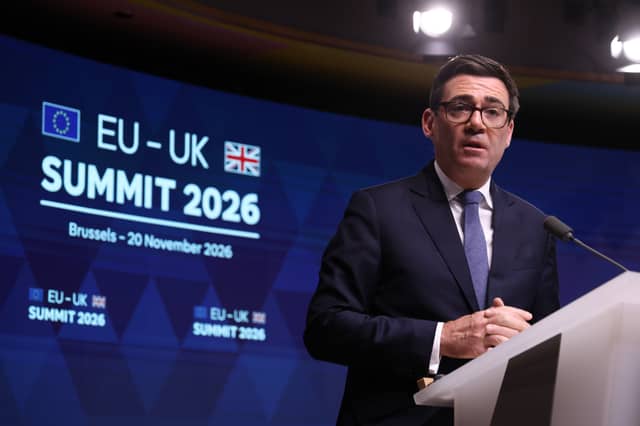

Like many of you, I watched the developments of the UK-EU negotiations last week with great interest. Setting aside the ‘Brejoin’ furore for a moment, there was undoubted excitement over the decisions taken on youth mobility. The Youth Experience Scheme will guarantee that some 100,000 young people from the UK will have life-changing, potentially career-making, opportunities to explore other cultures through work, study, volunteering and so forth. This is an excellent outcome.
The issue of tuition fees has inevitably caused more concern. The funding of universities is a key area of concern across the UK. In Scotland, there are huge strains on the funding model for Scotland’s universities.
The amount of funding per student in Scotland is already considerably below that in England’s universities and has not kept pace with inflation over many years. It is important that any deal with the EU does not make matters worse for our universities’ financial sustainability.
Young Europeans want to study in UK
I am optimistic about the UK-EU reset and do believe that agreement will be reached on student fees. Not least because the next steps in the UK-EU trade and co-operation agreement are important to both parties.
However, the point that I do not want to be missed or minimised here is that the EU – quite rightly – feels that access to the higher education system we have here in the UK is worth fighting for. We must not forget that. It has tremendous value and is clearly held in high regard the world over, even despite the choppy waters it is trying to navigate through.
Indeed, I have heard as much from schoolchildren and young people in Italy and across Europe. They feel, since Brexit, that the shutters have come down on their opportunity to study here, unless they happen to have been born into a socioeconomic class that can afford to come by paying much higher international fees.
The value of studying abroad should not be underestimated, indeed it is almost impossible to overstate. We are talking about a very formative period in people’s lives. The cultural bonds which come from closer educational ties within Europe will be of huge benefit to the UK going forward.
With that in mind, a deal to reduce UK fees for EU students would play extremely well on the continent. Access to UK higher education is an important element for the formation of human capital in Europe. We are very fortunate in the UK to have such a valuable bargaining chip when we sit down at the table in trade talks. Indeed, UK higher education can become an important element of future UK trade policy.
The trick will be balancing that with the real financial cost to the system. It will be crucial for both Scottish and UK governments to liaise closely with the sector as the negotiations progress.
University funding gap
The latest 2024-25 figures for the UK sector show that there is an annual gap of £2.52 billion between the total income and the full economic cost of teaching, research and innovation activities in our universities. The same Transparent Approach to Costing (TRAC) data for Scotland in 2023/24 – from an analysis by the joint Scottish government/Universities Scotland ‘Future Framework’ – found that annual gap to be around £200 million. That figure will go up as the 2024-25 data for Scotland emerges.
The current situation, as everyone is aware, is untenable. Currently we are running down our university facilities and, at the same time, we are able to invest less in our people. We are running down both the physical and human capital of one of our most prized sectors.
If EU students were to come but not pay international fees and instead pay the domestic equivalent, the Russell Group estimates that this would cost an additional £570m UK-wide. The figure for Scotland will depend on what ‘home fees’ mean in the Scottish context, as our students do not pay for their tuition.
Even if EU students were to pay the fee UK students pay in England in 2026-27 (just under £10,000), or match the Scottish government's provision for Scottish students, this would not cover the costs of teaching. One proposal for the negotiations is that EU students should pay the full costs of teaching – but the conundrum is that is in excess of what UK students pay.
The counterpoint to that is that these hugely talented EU students would come to study, and very often stay here and contribute substantially to our economy. We know that this will add to UK GDP, and this could be factored into any fiscal deal for the sector across the UK nations.
READ MORE: 'Bleak' warning as report finds universities are 'not sustainable' under current funding model
A reasonable cost
The UK as a whole needs to review the higher education sector’s sustainability. When the Royal Society of Edinburgh hosted a major conference on tertiary education last year, we highlighted the need for a review of funding. In Scotland, the Future Framework has initiated this important work and will hopefully set out solutions very soon. The timing of that will need to dovetail with any further adjustments due to the EU deal.
In the next six months, I sincerely hope we reach an agreement that sees more EU students able to study here, for a reasonable cost to the Exchequer in the four nations. In parallel to that, I hope that the UK government and the devolved administrations all understand the need to put the sector on a sustainable track for the future.
The EU clearly values our higher education sector and all the intellectual endeavour it supports. The question now is, do we?
Professor Sir Anton Muscatelli is president of the Royal Society of Edinburgh
Comments
Want to join the conversation? Please or to comment on this article.