
Land Reform Bill: Why Scotland's estates fear doom loop of laws that punish their economic ambitions
The characterisation of large rural estates as relics of a bygone age is sorely out of date, writes Benny Higgins
Most people running business are expecting no more than fairness – but they do hope for an environment that will supports their chances of thriving. Rural companies are in precisely the same position as any other businesses, reasonably expecting politicians to back their words on the need for economic growth with consistent policymaking.
This generally sensible position does, however, seem to get thrown out the window when it comes to dealing with the matter of land reform. The Scottish Parliament will this week start to conclude their deliberations on the latest Land Reform Bill and yet again many people who operate rural estate businesses are fearing the damage this legislation will do, rather than what good can come of it.
Naturally, disciples of the land reform movement will be pleased that the measures due to be brought in through this Bill may herald the fragmentation of rural land ownership, create onerous bureaucracy for land businesses’ managers and owners, and threaten them with large fines unless they toe the line.
Want the latest Scottish headlines sent directly to your phone? Sign up to our new WhatsApp Channel here.

Righting historical wrongs?
While there may well also be some harmless measures such as greater transparency around land ownership coming forward, it all seems rather negative and damaging.
Most of us who work and live in rural Scotland are aware of the history that has shaped the land reform debate in Scotland for generations and, over the last 20 years or so, there has been legislation passed that has transformed the rights of communities and individuals to acquire rural land, should they aspire to do so. Many have done just that.
There has been no shortage of emotion as political leaders have reached time and again to press the land reform button to demonstrate their credentials in righting historical wrongs. However, this focus on the past does beg the question: what does the future hold?
It is at this point, I suggest, that the polarised and often overly emotional debate about land reform should focus on the facts. As the late scholar and US Senator Daniel Patrick Moynihan once said: “You’re entitled to your opinion, but you’re not entitled to your own facts.”
Thousands of jobs
I can testify to certain facts regarding Buccleuch, the rural business that I lead as chairman, and which has actively embraced community aspirations. Even though we have adapted to many changes through the land reform agenda, there are those who are too ready to take a pejorative view of what a large estate business actually does.
Recently, we commissioned research into Buccleuch’s economic impact which yielded the following information in relation our rural business activities. Collectively, Buccleuch’s four rural estates, three in Scotland and one in England, enabled activities that generated many millions of pounds in gross value added (GVA) – the accepted measure of the value of company through its production and activity – for the UK economy. This also supported 3,770 jobs across the country in 2024. Our activities in this sector included agriculture, leisure and tourism activity.
It should be explained that measurement of this activity involves economic impact of suppliers and even takes into account the economic impact that our 361 direct employees make to their local economies. Added to that is the ‘wellbeing value’ of jobs, which has its own measurement method created by the Treasury.
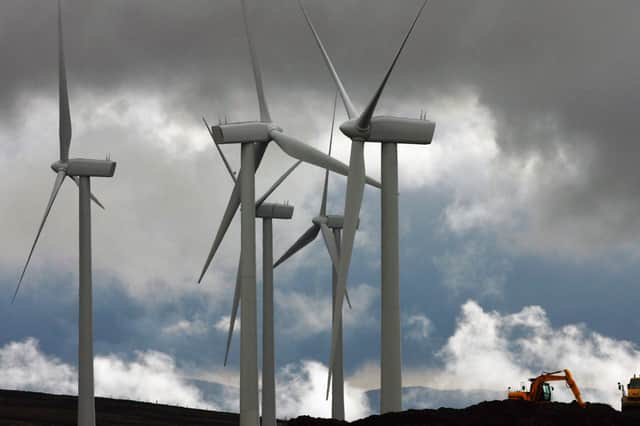
As regards renewable energy, we are involved in 15 separate projects which will play their part in meeting Scotland’s climate change targets, generating more than 2,000 megawatts of power, enabling multi-million contributions to community benefit schemes.
Finally, our property division has a very substantial investment portfolio and a healthy pipeline of projects, which are either under construction or in their early stages of development.
Fighting old battles
Of course, Buccleuch encounters the same challenges as many other businesses and we continually look to improve. However, what I suggest this snapshot of our economic impact shows is a more realistic picture of a large-scale, modern business – and we are by no means the only ones.
The characterisation of large estates as being relics of a bygone age is sorely out of date. Naturally, history and heritage continues to be reflected in what we do, but I do contend that there is a real reluctance in political circles, and among activists obsessed with fighting battles of the past, to recognise that things have moved on.
I don’t hear too many voices dwelling on the past among the thousands of people who enjoy our leisure, retail, and food and drink facilities at Dalkeith Country Park, for example. Also, there has been almost universal acclaim for the prospective Center Parcs village coming to the Borders which I’m proud to say will be located on Buccleuch land – the largest economic investment in the area for many a year.
Never-ending legislation not required
At Buccleuch, we have strived to work with communities and help them meet their aspirations – as seen by our sale of Langholm Moor to create the Tarras Valley Nature Reserve – and there’s no real need for never-ending legislation to make that happen. We do it willingly. Furthermore, we are committed to making the best use of land for the environment and local economies.
There are so many challenges facing all kinds of businesses – large and small in rural Scotland – but I suggest that unless we are prepared to acknowledge estate business have an important role to play, then we will be stuck in a doom loop of legislation that punishes rather than encourages economic ambition.
Benny Higgins is the executive chairman of the Buccleuch Group
Comments
Want to join the conversation? Please or to comment on this article.