
Gilruth faces ‘difficult choices’ in next week’s Holyrood Budget, think tank warns
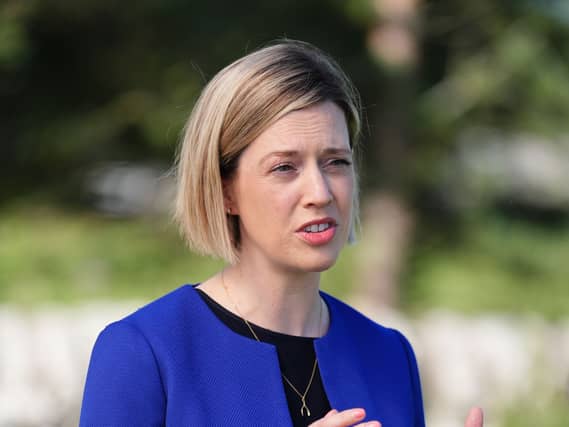
The Scottish Budget is due to be delivered on Thursday
The Scottish Government will face “difficult choices” in next week’s Holyrood Budget, with economics experts warning it “will be difficult to avoid” cutting public spending or increasing tax – even before any new funding commitments are made.
With Finance Secretary and Deputy First Minister Jenny Gilruth due to announce her first Budget on Thursday, the Fraser of Allander Institute said she was facing a “particularly challenging set of financial decisions”.
While the experts at the Strathclyde University-based think tank said the Scottish Government could use additional borrowing and some one-off revenues to “manage some of the immediate pressures”, the report added that this “may not be sufficient”.
And it said: “It will be difficult to avoid some combination of real-terms reductions in public spending and increases in taxation, even before accounting for new policy priorities.”
Last year’s budget saw the Scottish Government “effectively ‘papering over the cracks’,” the report said, with short-term measures and one-off funding used to balance the books.
But the think tank cautioned: “In 2027-28, those cracks will be even larger, and it will be much more difficult to avoid making difficult choices about the level and composition of public spending and taxation.”
Fraser of Allander Institute deputy director Emma Congreve said that a number of pressures were “coming together to create a particularly challenging Budget” for the government.
These include an expected drop in real terms in 2027-28 in the block grant from Westminster for day-to-day spending.
At the same time, the Scottish Government will also have to find the cash to cover a £720 million negative income tax reconciliation next year – with this arising after the cash raised from income tax in Scotland was lower than had been forecast, but revenues from England were higher than expected.
In addition, the Fraser of Allander Institute said the spending outlook for the Scottish Government was “equally challenging” – pointing out that public sector pay deals have “repeatedly exceeded budgeted assumptions”.
The report went on to note that the government has “fallen behind schedule” with efforts to cut the public sector workforce, adding the number of staff was “increasing rather than following the planned downward trajectory”.
And while it said the public service reform and efficiency savings would “likely feature prominently” in Ms Gilruth’s Budget on December 3, changes planned by the Scottish Government to local councils and the structure of the NHS were “predominantly longer term”.
The economics experts added that with the government “yet to demonstrate progress against some of its existing savings commitments”, there was “little reason to expect structural reform to deliver substantial cashable savings in 2027-28”.
It went on to highlight further financial pressures from the growth in welfare spending, with the report saying this “continues to grow faster” than the cash the Scottish Government receives from Westminster for benefits – particularly for disability benefits.
“The gap between spending on devolved disability benefits and their associated block grant adjustments is forecast to reach around £215 million in real terms in 2027-28,” the report warned.
Considering all these issues, it said: “The test of the Budget will be whether the Scottish Government is prepared to acknowledge the scale of these challenges and explain how it intends to manage them.
“The Government needs to demonstrate how its spending plans can be delivered in the coming year, while setting out a credible longer-term approach to the sustainability of Scotland’s public finances.”
Ms Congreve said: “A number of pressures are coming together to create a particularly challenging Budget for the Scottish Government.
“Not all these issues are new or unexpected, but reconciling a real terms fall in funding with longstanding funding pressures will make it a difficult to avoid difficult decisions on tax and spending.
“Longer-term reform matters, but it will not close the immediate funding gap. The test of this Budget is whether the Government explains how it will deliver public services in the coming year while setting out a credible plan for the future.”
The Scottish Government has been contacted for comment.
Comments
Want to join the conversation? Please or to comment on this article.