
The Sixteen, Cumnock review: 'energising, imaginative and compelling'
The Sixteen brought angelic flair to three new works in this Cumnock Tryst launch event, writes Ken Walton
The Sixteen: Voices of Angels, St John’s Church, Cumnock ★★★★
It’s a measure of the confidence in, and support of, Sir James MacMillan’s award-winning Cumnock Tryst Festival that hardly a spare seat remained for Saturday’s event at which MacMillan announced the programme for the 11th Tryst Festival (2-5 October, www.thecumnocktryst.com).
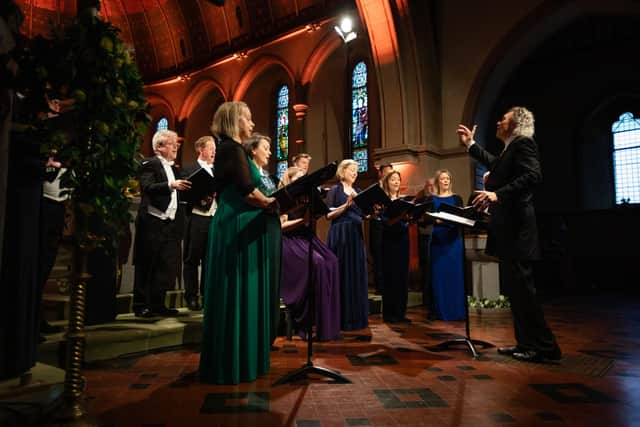

You won’t actually find Harry Christophers’ ace a cappella ensemble The Sixteen in the autumn line-up, but there was relevance in the choir's one-off presence on Saturday to perform a full-length programme entitled Voices of Angels. “We performed at the very first Festival in 2014”, Christopher said, “and have enjoyed an extended relationship ever since.”
That relationship extends to shared ongoing support from the Genesis Foundation and its philanthropic founder John Studzinski, which aided a collaboration involving three young composers, the late hymn-writer and Dean of Canterbury Cathedral Robert Willis, and the guiding hand of MacMillan to create three new angel-inspired works that formed the spine of Saturday’s programme.
Each was handled confidently, the composers reacting boldly and instinctively to the shape and nature of their respective texts, with varying degrees of individuality.
Where the overriding syllabic narrative of Ninfea Cruttwell-Reade’s The Call of Gideon was its energising catalyst, offset by oscillating visions of stillness, Millicent B James’ The Call of Isaiah explored more exotic reaches, shades of Middle Eastern chant intertwined with surreal imaginative effects. Lucy Walker’s Angels Unaware, impactful from the outset, and summoning echoes of Stanford through its rich and resounding textures, was a compelling listen.
Hardly surprising, given the trademark unanimity of The Sixteen, whose interspersed performances of earlier repertoire by Guerrero, Victoria and Palestrina, and finally of MacMillan’s gloriously ecstatic Nothing in vain, offered a comforting framework, if slightly harnessed by the raw acoustic.
Comments
Want to join the conversation? Please or to comment on this article.