
Dudok Quartet Amsterdam, Lammermuir Festival review: 'illuminating'
This was a thoughtful and thought-provoking performance of Tchaikovsky’s string quartets, writes Susan Nickalls
Dudok Quartet Amsterdam, Prestongrange Parish Church, Prestonpans ★★★★★
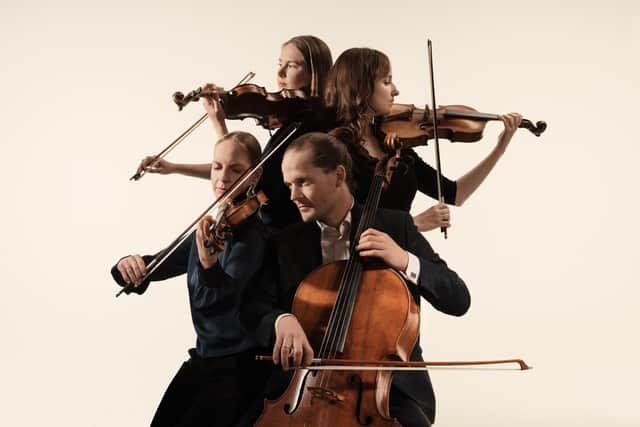
The Dudok Quartet Amsterdam distinguish themselves from other string ensembles in many fascinating ways. They use gut strings, stand up to play, take their name from a Dutch architect and look to other forms of creativity to inform how they think about music. At the end of this Lammermuir Festival concert the audience were gifted with an essay they commissioned from philosopher Maxim Februari, titled “Everything changes and Tchaikovsky changes along with it”.
This holistic approach shone through in their captivating performance of Tchaikovsky’s string quartets. Although No.1 is the most performed and well-known, it was the second, premiered nearly four years later, that they started with. Written in a matter of weeks, Tchaikovsky thought it one of his best pieces, and the quartet embraced this gnarly and challenging work with illuminating gusto.

From the outset the mood was tense and discordant with intervals of clashing seconds and fraught confrontations as Tchaikovsky swerved towards modernism. The musicians showed their mettle in the rhythmically contrary allegro giusto and enjoyed a moment of calm in the steadying waltz at its core. But the dark undercurrents continued into the spirited fugue to finish, with the tune passed from one instrument to the other at breakneck speed.
Back on more familiar ground in Tchaikovsky’s first quartet, the harmonious warmth of the chorale-like opening echoed the richness of the composer’s symphonic orchestrations. The famous second movement based on a beautiful Ukrainian folk song was exquisitely played. This Slavic imprint on the music intensified in the scherzo, with unison strings delivering rapid volleys of notes that crackled like gunfire, racing into an equally action-packed finale.
Following the quartet’s haunting arrangement of an aria from Tchaikovsky’s opera Eugene Onegin as an encore, we left with our souls uplifted and much to ponder about life and music.
The Scotsman’s arts newsletter is now sent twice a week - subscribe today
Comments
Want to join the conversation? Please or to comment on this article.