
How premium logistics can power Scotland’s exports


Ask a Scot to name their finest food and drink export and you’re likely to spark a fierce debate, says Mark Rosenberg, Chief Commercial Officer, Ports & Terminals, at DP World
Whatever their preference, everyone can agree that the sector is a phenomenal global success story.
The numbers speak for themselves. Last year, Scotland’s food and drink exports were valued at £7.1 billion. That’s up from £4.9bn in 2014, an increase of roughly 46 per cent over the past decade. This is driven by a strong appetite for its premium produce, such as Scottish salmon which had shipments topping £844 million in 2024.
More than a key contributor to the UK economy, Scotland’s food and drink industry has become a global benchmark for excellence.
However, despite extraordinary market growth, exporters are not immune from trade challenges. Post-Brexit border friction, fluctuating global tariffs and shifting consumer expectations have all made the operating environment increasingly volatile in recent years.
The good news is that new trade opportunities are opening routes to growth at a critical moment. Most notably, the UK-India Free Trade Agreement, which was signed yesterday (24 July). By cutting levies on 90 per cent of the produce from Scottish exporters - and those elsewhere in the UK - the landmark deal will transform the presence of the UK's exports in India. This is especially promising for food products like Scottish salmon, which have faced prohibitive 33 per cent tariffs. Once they are lifted, exporters will have access to the world’s third-largest fish market and a middle class that is expected to grow to a quarter of a billion by 2050. Understandably, many are preparing for significant long-term expansion into the market.
Premium produce requires premium logistics
While the potential for growth in both nearby and distant markets is clear, capturing these opportunities depends on the essential but less glamourous matter of logistics. Ageing infrastructure can increase costs and add complexity. Scotland has felt these constraints acutely. However, the challenges also present opportunities for strategic partnerships that can deliver far greater efficiencies across the supply chain.
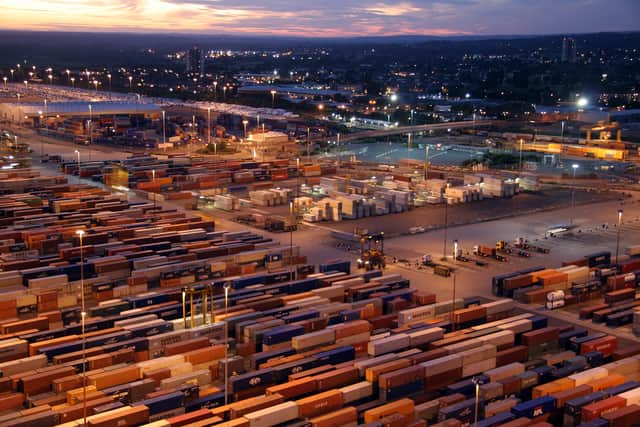
At DP World, we’re not shy of the challenge and have invested to ensure UK exporters can seize the trade opportunities of the day. Our deep sea container ports connect exporters across the whole of the UK with overseas markets. In 2013, we opened London Gateway - the UK’s first deep-water container port for more than 20 years - and have committed to its growth ever since. Just a few months ago we began work on a £1 billion expansion of its port facilities and rail infrastructure and announced a further £60 million investment in the Port of Southampton. Both will boost handling capacity and improve direct rail services, offering Scottish exporters fast, low-carbon routes to global shipping networks.
As exporters hurry to capitalise on the new opportunities, undoubtedly there will be many pitfalls to navigate, whether that’s complex regulatory challenges, untested consumer appetites and cultural nuance. That’s where the right logistics infrastructure becomes a critical enabler.
Labelling and packaging requirements, for example, vary by market and can create bottlenecks if not handled with care - something DP World supports through advanced, market-specific compliance services. Untested consumer appetites also mean shipments need to be agile, fresh and first-class. In this case facilities like The Chill Hub, our temperature-controlled warehouse at London Gateway, are indispensable for high-value perishable goods like Scottish salmon.
Alongside connectivity and adaptability, exporters need flexibility. With rail or barge connectivity at 95 per cent of our 20 European sites, Scottish producers have the necessary options to move goods effectively and on schedule should congestion occur. This is an area we continue to invest in, helping to build the resilience that traders will need for the decades ahead.
Scotland’s food and drink exporters have a long and proud history, but with new trade agreements opening doors to major, high-growth markets like India, this feels like the start of an exciting new chapter. By strengthening the logistics networks and alliances that move goods from A to B, we can help the blue-and-white ‘Made in Scotland’ label find new admirers around the world. That’s an opportunity we can all raise a glass to.
Find out more here
About our Partner DP World
Offering fully customisable contract logistics services to solve your global business needs
Follow on social media: