
How art appreciation can boost wealth accumulation


Experts are keen to emphasise the importance of having diversified investment portfolios.
To most investors this means having a mixture of cash and stocks and shares spread across a range of sectors. But for some it also means placing a certain money into alternative investments.
Art investment
One such alternative is art and the clear message is for a buyer to choose artists whose work they are personally drawn to and will enjoy owning, while regarding the potential of making money as an added bonus.
Ben Kumar, head of equity strategy at 7IM, says: “It can be quite seductive to think you’ve discovered the next Da Vinci in a jumble sale. But – watch any episode of Antiques Roadshow or Bargain Hunt – chances are you haven’t.
“When I get asked about these kinds of alternative assets, I always suggest that the best approach before buying is to assume you’re going to own it forever, and never be able to sell it. If you’re happy enough with that, go ahead. Then any gains are upside.”
What do artists think?
Scottish artist Frank To was born in Falkirk in 1982 and has built a successful career since graduating from the University of Huddersfield with a BA (Hons) Fine Art degree and then gaining a Masters of Fine Art from Duncan of Jordanstone Art College in Dundee. He works from his studio in Glasgow, and lectures at UHI Inverness.Frank has gained an enviable reputation for himself as a contemporary artist. One high-profile fan is Star Trek legend Sir Patrick Stewart who owns several To originals.
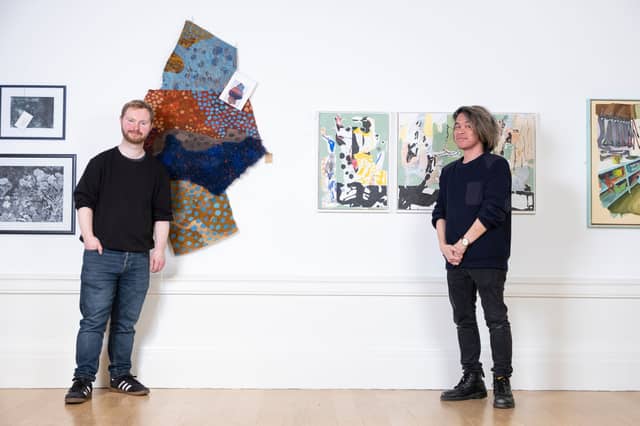
Frank is also co-president of the Society of Scottish Artists, which is currently displaying its 127th Annual Exhibition at the RSA Upper Galleries in Edinburgh.
When it comes to investing in art, Frank says: “I think it’s really important that people should buy art because they connect with it on a personal level. The financial aspect, such as investment, comes later and more naturally and organically. If you are wanting to invest in art, it’s important to have a relationship with the artist. Be part of their ongoing career. The more you invest in them, the more they flourish. Start by investing into art graduates.”
He explains that, as with any investment such as stocks, wine and watches, people really need to understand their own taste. They should also consider the artist in terms of development, innovation, and resilience. Think about whether the artist is in it for the long term, or if they are a “one-hit-wonder”, he says.
Frank adds that people should therefore always choose artwork they like. “That should be the main and only reason you should buy and invest in art,” he insists. “I would advise people to avoid galleries that do the hard-sale tactic on investment of art. The most recent one I have seen is a gallery stating that there is an average annual return of 26 per cent on investing in contemporary art if held in ownership up to five years. That’s impossible as no-one has a crystal ball. When you invest in art, you are investing in the artist and their career – not to get a fast return.”
He recalls people first buying his work when he was a graduate back in 2005. “What is quite unusual, and sweet, is that some of my collectors’ children are now purchasing my work,” he says. “It is important to highlight that these people have invested in my career, my journey. As well as gaining a monetary return, they are also getting joy of being part of my journey as an artist of which they have seen me develop from emerging to established.
“Always invest in the artist, the person. Not the hype or the fad. Buy work that resonates with you on a personal level and never let third parties such as art investors influence your decisions,” he concludes.
Investment theory
Ben at 7IM says: “With ‘normal’ asset classes, such as stocks and bonds, the investment theory is pretty simple – note, not easy! “The analysis is all about returns – when and how might you get your money back. With bonds, you get your quarterly coupon cheque, and then the whole lot returned. With a share, you might get a dividend, and then hope that the company expands and the share price rises accordingly.
“All well and good, but what you probably don’t get is a nice warm feeling from ownership. How fuzzy can you really feel about a share in Vodafone or a UK Government bond?”
“Shift to ‘alternatives’, though, and ownership becomes much more important. In fact, it’s almost the only thing you have to go on. Because whether it’s art, wine or classic cars, you don’t get any cashflows from your investment. The only way to make money is to sell it on, sometime in the future, to someone who’s more interested in owning it than you are.
“That’s a hard thing to predict ahead of time. So get your kicks from the owning, not the selling.”
CASE STUDY Liz Wilson
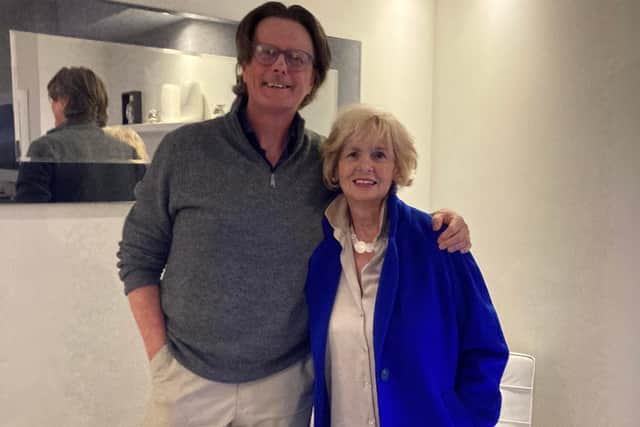
Liz says: “Art is our only investment. Over the years we have bought around 50 original art works and many of them will have increased significantly in value.
“Our biggest mistake, many years ago, was not purchasing a beautiful painting by Jack Vettriano that we saw in an exhibition at a gallery in Dunkeld. He was virtually unknown at the time and the large painting was £900. At the time we were in the midst of having a new kitchen in our house at great expense and really could not afford to buy it. We often reflect on what the value of the painting is now!
“We collect art primarily because we are drawn to something we like. Also we are keen to invest in up-and-coming artists and that’s more important to us than how much it will increase in value.
“We regularly go to degree shows, visit local and other gallery exhibitions, and buy at auctions. We would always advise new collectors to buy what they like so that they can get pleasure from admiring it in their homes.
“We try to identify artists who have a point of difference – an X-factor which separates them from the rest. The time to invest is before the market catches up.
“Many years ago, we saw an example of Frank To’s work in a friend’s home. We both really like his work and she put us in touch with him directly. Not only did we like his work, but we grew to like Frank and decided to invest in him.
“His works are unique and the monochrome, partially-resolved impression that they create is both enigmatic and intriguing. Any visitors to our home are immediately drawn to them and we are now the proud owners of six of his works, one of which we commissioned in 2024.
“In addition Frank gave us permission to use two of his works as covers for two of my husband’s books.”
Liz lives with her husband, Ian, pictured, in Broughty Ferry.
CASE STUDY Rebecca Hastings
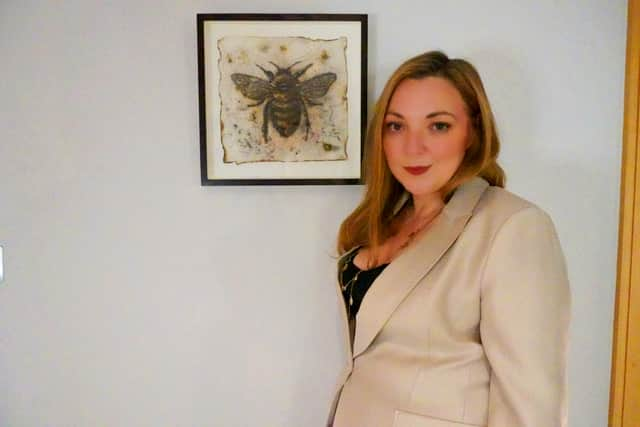
Rebecca says: “I’ve always enjoyed looking at art, but ultimately I think it’s really important to support living artists. You’re supporting that creativity while it’s happening.”
While Rebecca sees making money from art as an added bonus, she finds it interesting to research, and develop an understanding of what will increase in value.
She says that during Covid, Frank To did a number of drawings she liked and she commissioned half a dozen pieces from him to serve as unique gifts for people.
“We live in an era where we can buy anything and get it delivered to our door the next day. So people really appreciate something that’s thoughtful. An example is when my brother finished his PhD in neuroscience. I got Frank to create a brain image for him. Frank went off to the university anatomy department to look at brains and do his research before creating a lovely drawing with gunpowder igniting thoughts. An investment isn’t just for money’s sake; it’s an investment in your relationship as well.”
“I think investing in real-world art is going to become more important. I work in artificial intelligence (AI) strategy. You can use AI to create images and video, but machines can’t replicate what artists like Frank do.“Computers don’t have the lived experience and the emotional weight. I think that is going to become even more valuable.”
Rebecca is a partner at Owendale Advisory, Falkirk
CASE STUDY Rob Murray Brown

Rob moved to Edinburgh in 1985 and set up a shop and gallery on the city’s Howe Street which in time grew into a retail chain stretching from London to Aberdeen, specialising in hand-painted ceramics and housewares sourced from all over the world .
“So, collecting became a hobby, and I always thought looking at paintings was more fun than looking at share certificates – although I’m not so sure now!”, Rob explains.
Investment has never been a large part of his reason for collecting art: “This probably a good thing as it hasn’t made me much, although I wouldn’t change anything as it has been rewarding in other ways.
“I tried to mix new artists –I went to all the Scottish art college final exhibition shows for a few years –with more established ones.
“Choose either what you like or what looks like a good investment – more often than not they are not the same. Don’t expect a return on investment within 30 years and if you get some you have been very lucky.
“And remember, a picture for sale in a gallery –especially a posh one – is already valued many times over what you can get for it the next day. So try to buy direct or via auction.”
Rob lives near St Andrews with his wife, Rose.
Comments
Want to join the conversation? Please or to comment on this article.