
Why Scotland’s workplaces need a new model of leadership for constant change
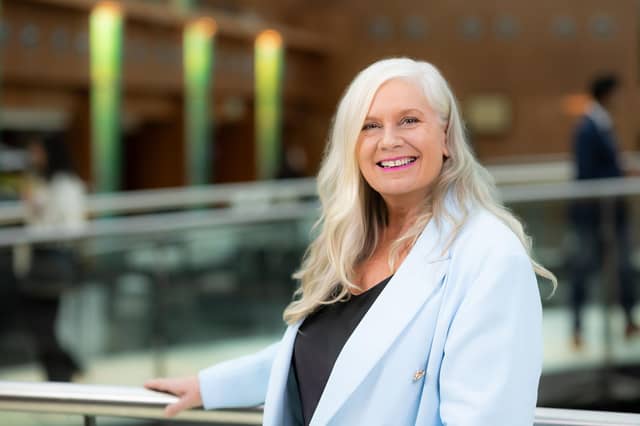

Born and raised in Scotland, Dr Alison Edgar MBE brings a distinctly Scottish perspective to how organisations lead through change, communicate under pressure and build cultures that perform.
Dr Alison Edgar MBE is a transformational business speaker and author who has spent over three decades leading and excelling across global organisations. Her corporate career placed her inside a company that once dominated its industry worldwide, where she witnessed firsthand how resisting change in emerging markets triggered a cataclysmic decline.
This experience shaped her mission to understand what drives high-performing teams and future-ready leaders, and how organisations can build cultures where people take ownership, accountability, and consistently deliver results.
Awarded an MBE for services to entrepreneurship and business in 2020 and an Honorary Doctorate of Education in 2024, Alison is recognised for her contribution to learning and development. Her work has taken her inside major global brands, where she helps teams navigate change, strengthen collaboration, and raise performance standards at every level.
In this exclusive interview with the Champions Speakers Agency, Dr Alison Edgar shares her insights on the leadership mistakes that stall change, what genuine resilience looks like in practice, why thinking like an owner now matters more than ever, and how better communication can transform workplace culture and performance.
Q1. Your work focuses on helping organisations adapt before disruption becomes irreversible. From your experience, what is the most common leadership mistake businesses make when facing change?
Dr Alison Edgar MBE: I once worked for an organisation that didn’t change when it should have, and I watched the consequences unfold from the inside. They were market leaders at the time, and instead of adapting, they buried their head in the sand.
I still remember sitting in a room in 2005 when the CEO said, “That Google thing will never catch on.” It was an astonishing oversight, and ultimately, it triggered the downfall of a company that had once dominated its market.
We’re already seeing echoes of that behaviour today. Organisations are hesitating on artificial intelligence. AI absolutely has its place, but if leaders don’t move with the world around them, they risk being left behind, just like that company was.
Another one of the biggest leadership mistakes I see is assuming that silence protects people. Leaders often try to manage change behind closed doors, shielding their teams from uncertainty and avoiding difficult conversations. But that approach creates anxiety and resistance.
The best thing leaders can do is communicate early and bring their people along for the journey. When employees understand what’s happening and why, they feel part of the solution, not a victim of the circumstances. Change done with people always lands better than change done to them.
Q2. Scottish businesses are often described as resilient, but resilience can be misunderstood. In practical terms, what does effective resilience look like in leadership and workplace culture?
Dr Alison Edgar MBE: Resilience is definitely misunderstood. It’s not about “toughing it out” or pushing yourself to the point of burnout. Real resilience in a workplace comes down to how leaders behave and how they communicate.
For me, effective resilience starts with leaders role-modelling honesty and vulnerability. That means showing your team that mistakes are normal and that plans don’t always work out. It’s important to show that even leaders fall flat sometimes but we get back onto the horse, we learn, and we move forward. When people see that, you give them the confidence to know that it’s OK and to do the same.
But that comes with a caveat. You also must remove blame from the culture. You can’t expect people to bounce back if they’re terrified of being punished for every slip-up. When leaders take accountability, “the buck stops with me,” and treat setbacks as learning moments, teams become more confident, creative, and ultimately, more resilient.
Scotland has resilience in its DNA, but the most successful businesses today pair that spirit with psychological safety, communication, and support.
Q3. You frequently talk about intrapreneurship and thinking like an owner. Why is this mindset increasingly important for teams today, and how does it differ from traditional corporate leadership models?
Dr Alison Edgar MBE: Intrapreneurship is rapidly becoming a core capability inside modern organisations. For most of the last century, companies operated through a traditional corporate structure: decisions were made at the top, communicated down the line, and employees were expected to execute without deviation. It was a system built on hierarchy, stability and control, and in slower-moving markets, it worked.
But that world has changed. Now, markets are volatile, technology is advancing at pace, and disruption is constant. Organisations can no longer rely on a handful of senior leaders to generate all the ideas or respond to every challenge. If employees wait passively for instruction, opportunities will slip through the cracks.
Intrapreneurship flips that dynamic on its head. It creates teams that think like owners. People who can spot problems early, propose solutions, take responsibility and adapt quickly. But here’s the thing that I’m noticing recently.
High performance doesn’t work if the organisation doesn’t prioritise their people. In Intrapreneurship, the benefits run both ways. It fuels high performance for the organisation, all whilst delivering deeper fulfilment for employees.
When individuals feel trusted and able to influence outcomes, their commitment rises, creativity increases and people feel part of something that they can influence. They feel they have purpose and fulfilment, and in turn, that increases retention and people who actually care about the work they are doing.
Q4. Communication breakdowns are a recurring issue in organisations under pressure. What communication failures do you see most often, and what should leaders be doing differently?
Dr Alison Edgar MBE: One of the most persistent challenges I see inside organisations is the rise of departmental silos. Teams start operating as if they are separate entities rather than parts of the same business.
Communication drops, assumptions increase and blame fills the gaps. A familiar example is the dynamic between sales and marketing: sales believe the leads aren’t good enough, marketing believes sales aren’t converting, yet neither side communicate this with each other. The only outcome that produces is mistrust and a passing of the blame.
Alongside this sits a second issue: unclear prioritisation. People are handed tasks with little to no context on what matters most. That’s where I use Alison Edgar’s Big Balls® methodology, a way to classify work based on urgency and importance.
Some tasks are critical and time-sensitive, others are important but can wait, and some aren’t urgent at all. If leaders delegate without making those distinctions clear, they cannot be surprised when deadlines slip or projects stall. People can only work with the information they’re given.
Another challenge is that organisations believe they are customer-centric, but the day-to-day reality often says otherwise. High performance is only possible when every decision connects back to the customer and the value being created.
In my own business, we call it “follow the pay plan”: if the work serves the customer and puts money in the bank, it moves to the top of the list. If employees aren’t clear on that expectation, it’s impossible for them to meet it, let alone exceed it.
This exclusive interview with Dr Alison Edgar MBE was conducted by Tabish Ali of the Motivational Speakers Agency.