
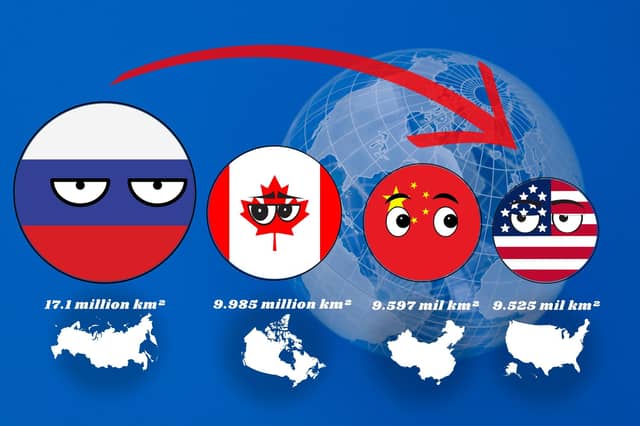


After the United Nations 2022 report that India would overtake China as the world’s most populous nation, it made us consider how ‘big’ our own countries are and if it matters. As Cairn Info reports, the size of a country “encompasses a number of dimensions such that associated costs and benefits are diverse” so there is not a one size fits all answer.
We can know that total surface area is important for understanding a country’s agricultural capacity and the environmental effects of human activity there. However, despite experts like economist Jože P. Damijan observing that smaller countries are often “richer” and demonstrate a “lower tendency to engage in armed conflicts” (unlike their larger counterparts), he also states that country size is “important” but its smallness cannot be called irrefutably good nor bad.
Here are the ten biggest countries in the world as we reveal their land mass and what percentage of the Earth’s surface they cover according to the World Economic Forum.
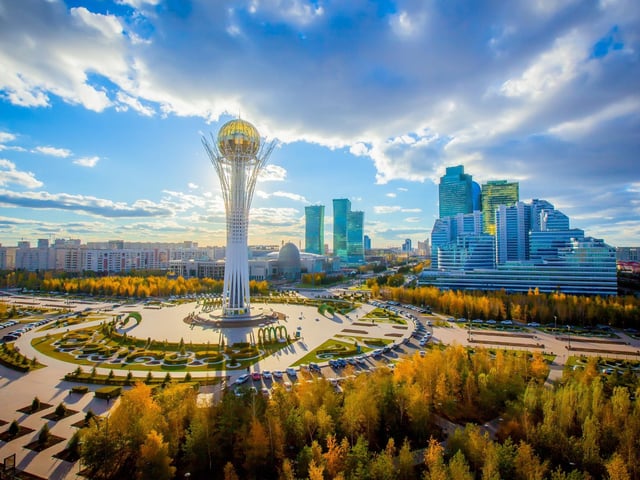
9. Kazakhstan
Kazakhstan is the world’s largest landlocked country (bigger than all of Western Europe) with a total area of 2,724,900 km². It accounts for 0.534% of the Earth’s surface. Photo: janetheone via Canva Pro
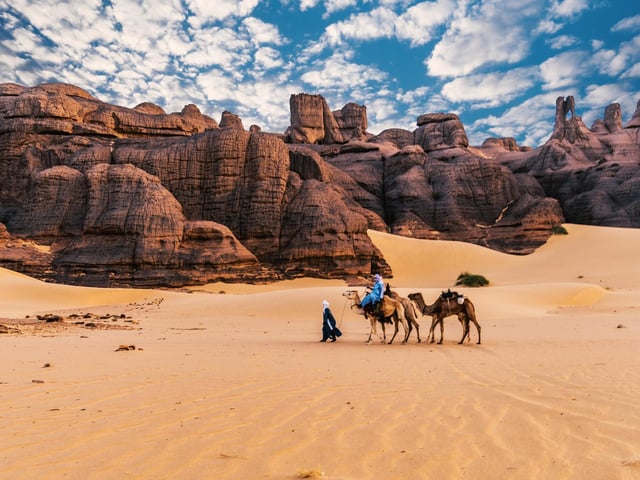
10. Algeria
Algeria is the largest nation in Africa, in fact it is 200 times larger than the smallest country in this region, The Gambia. Algeria has a total area of 2,381,741 km² and covers 0.47% of the Earth’s surface. Photo: Noureddine Belfethi via Canva Pro