
Exclusive:The 'crazy' reason why some ScotRail staff have not worn video cameras to cut crime
British Transport Police chief’s drive to get all front line rail workers to wear the devices

Attempts to persuade more ScotRail staff to wear video cameras to cut crime have been hampered by shorter workers being unable to reach their chargers, British Transport Police (BTP) has revealed.
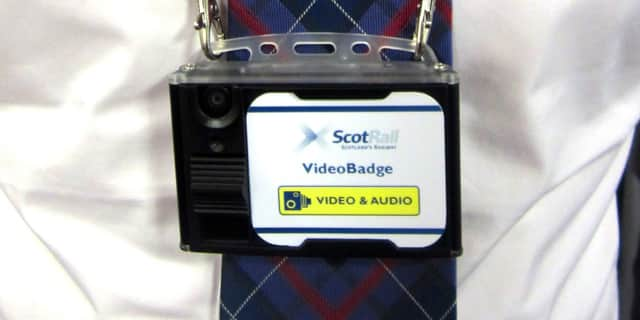
The force’s Scotland commander wants all front line staff on trains and in stations to use the cameras, but ScotRail said only half its 1,000 devices were being used.


This is despite body-worn video (BWV) being introduced by the country’s main train operator 11 years ago, with some £2 million being spent on the equipment, which is clipped on to uniforms or lanyards.
Research has shown the cameras reduce the number of assaults on staff and their severity, but their use is not compulsory.
BTP figures to be presented to the Scottish Railways Policing Committee on Thursday showed violence against rail staff increased between January and March, which the force said “remains a key concern due to its impact on staff confidence, wellbeing and service delivery”.
The number of incidents was up by 21.7 per cent from 115 to 140 compared to the same period last year.
These included more assaults on late evening trains, and staff being spat at or pushed during ticket checks.
BTP Chief Superintendent Lorna McEwan told a meeting of the Scottish Police Authority: "The percentage of staff using it is higher than before, but we are not where I'd like to be - I'd like to walk into the railway and they've all got it on.”
She officers had came across the charger problem when trying to find out why more staff weren’t using the cameras.
Chf Supt McEwan said : "Staff in ScotRail have got BWV that they can take out, but you'll see that many of them don't do that.
“We actively work with ScotRail, all the other train operators and Network Rail to encourage people to wear it, to show the benefits.
“It’s the best evidence because it's recorded and you can hear the audio, which you don't get from CCTV.
“We actively ask people why they aren't wearing it to try and unblock blockers.
"Sometimes it's as simple as where they've located the charging points. I'll give you a crazy example of one recently.
"The reason some of the ladies weren't taking it out was they are about my height and the chargers were way up high, so they couldn't get them.
“It was a simple fix. I know it sounds ridiculous, but that's the level of detail we're having to go to to understand and try to unblock it.”
The BTP chief said some staff were also suspicious that footage could be used against them, but “we're doing a lot of work to dispel that".

ScotRail launched a trial in 2015, with the number of cameras increased to 300 two years later and to more than 1,000 in 2024.
However, it said only 540 front line staff had taken cameras with them during their shift since April 1.
Graeme Baillie, its safety and sustainability director, said: “BWV play an important role in deterring anti-social behaviour and supporting potential prosecutions.
“Anyone who wants to use a camera has the option to do so, and we strongly encourage our staff to use one when working.
“We will continue to work with our staff, trade union colleagues and the BTP to actively encourage and promote the benefits.”
The Rail, Maritime and Transport union, which represents many front line ScotRail staff, provided no explanation for the low uptake.
Scottish organiser Gordon Martin said: “There are a range of safety measures such as improved CCTV and BWV that can play a role in a safer railway.
“However, there is not a consensus amongst rail staff regarding these measures and the most important thing is creating a safer environment for our members and passengers alike.”