
Surprise inflation hike: Here's how much rail fares might rise next year in Scotland

ScotRail passengers may again see lower rise than for cross-Border operators
Rail passengers could face fare increases of nearly 6 per cent next year - but ScotRail’s ticket prices are likely to again rise less sharply.
A potential rise of 5.8 per cent for cross-Border and other English train operators was signalled by the publication on Wednesday of July’s retail prices index (RPI) measure of inflation, on which rail fare increases have traditionally been based.
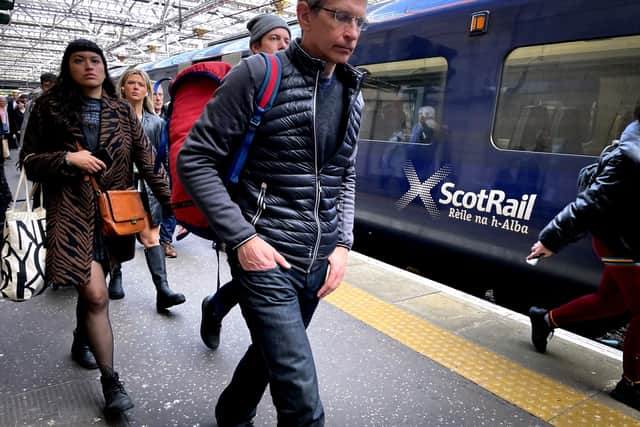

RPI increased by more than expected to 4.8 per cent from 4.4 per cent in June, with rail fares normally hiked by 1 per cent more than the July rate.
However, Transport Scotland said any ScotRail fares increase would be based instead on the consumer prices index (CPI) measure of inflation, which excludes items like mortgage payments, and was 3.8 per cent in July, up from 3.6 per cent the previous month.
This year, ScotRail fares were increased by 3.8 per cent in April while those of English operators went up by 4.6 per cent in March. That followed an 8.7 per cent ScotRail hike in April last year and 4.8 per cent in July 2023.
A spokesperson for Transport Scotland said: “Any potential fares increase for 2026 is under consideration and, as per previous commitments, will be based on CPI, not RPI.”
However, the Scottish Government agency sought to highlight the permanent scrapping of ScotRail peak fares in 12 days’ time on September 1, which are in some cases twice the off-peak fare.
Like the Scottish Government, the UK Government has not confirmed how it will determine the cap on fare rises next year, and whether it will retain the RPI +1 per cent formula.
The UK Department for Transport said there would be an update on changes to fares later this year.
Its spokesperson said: “Transport Secretary [Heidi Alexander] has made clear her number one priority is getting the railways back to a place where people can rely on them.
“No decisions have been made on next year’s rail fares but our aim is that prices balance affordability for both passengers and taxpayers.”
The latest inflation figures came as train punctuality across Britain was at its worst for more than five years.
Figures from the Office of Rail and Road regulator showed trains reached 66.7 per cent of their scheduled stops within 1 minute of schedule in the year to July 19.
The latest ScotRail figures showed 89.7 per cent of its trains arrived within five minutes of schedule over that period - one percentage point below target.
Maryam Eslamdoust, general secretary of the TSSA rail union, said: “It’s vital that the government protects the travelling public from any unnecessary rise in rail fares as a result of this inflation spike.
“The last thing passengers need is to be clobbered by higher fares and pushed off the railways at a time when we need people to be making more journeys for work and business reasons and in so doing powering the economy.”
Comments
Want to join the conversation? Please or to comment on this article.