
SNP claims rail fares 25 per cent cheaper in Scotland than in England

Scottish government provides nearly 80 per cent more ticket funding than the average across Britain
Rail fares in Scotland are almost 25 per cent cheaper than in England, according to an SNP analysis of official figures which also showed nationalised ScotRail enjoys the most government funding per passenger journey in Britain.
The party which controls the Scottish government said the difference was likely to widen further because the statistics for the year to last March were before its abolition of peak fares six months ago.
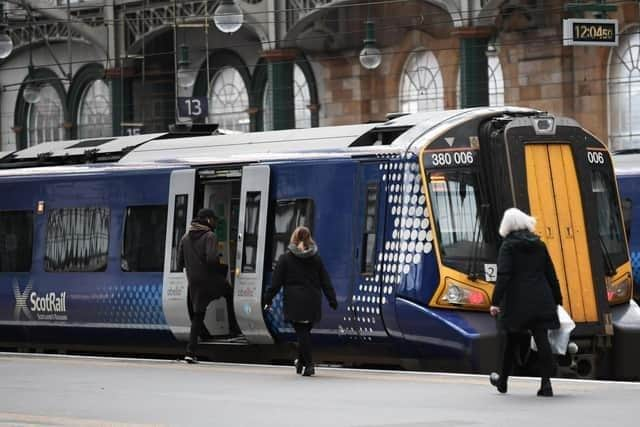

First Minister John Swinney has also announced the latest ScotRail fares freeze from April 1, although the UK government has frozen fares charged by England-based operators for a year from this week, in the first such move for 30 years. ScotRail fares were frozen for six months in 2023.
The SNP used 2024-25 figures published by the Office of Rail and Road (ORR) regulator based on the average journey length of 37.4km (23.2 miles) in Britain to calculate that average ticket costs were £5.42 per journey in Scotland compared to £6.73 in England.
That was based on the ORR stating that the average passenger fare per passenger kilometre was 18p in England, 15.9p in Wales and 14.5p in Scotland.
However, the ORR pointed out: “There are substantial differences in the proportion of passenger fares and government funding across Great Britain, with passengers in Scotland receiving the most government funding per passenger kilometre travelled.”
The Scottish Government provided 34p per passenger km compared to 19p across Britain - 79 per cent more - and 16p for the southern and eastern rail regions in England, the latter stretching north to the Border.
East Lothian SNP MSP Paul McLennan claimed: “Rail fares are by far and away cheaper in Scotland than anywhere else on these islands – that’s thanks to the SNP bringing our railways into public ownership.”
The ORR said the SNP figures “do not appear to be an unreasonable calculation” even though average journey lengths were “almost certainly different” in Scotland and England.
However, an industry source told The Scotsman the picture was more complicated because about 20 per cent of rail revenue in Scotland was allocated to cross-Border train operators.
They said: “The SNP is assuming that all revenue/journeys attributed to ScotRail are the whole revenue/journeys in Scotland, which is inaccurate.”
The source also said the cost per mile for some journeys in Scotland might be higher than for some trips in other parts of Britain, such as Wales.
Another industry source said: “A key point in the ScotRail costs is that it pays for all of the Network Rail fixed track access costs incurred in Scotland, including the west coast main line south of Carstairs and the east coast main line south of Dunbar, over which it runs no trains.
“This distorts the support costs per franchise, making ScotRail more expensive in term of government support and giving the UK Department for Transport’s cross-Border train operators a reduced support cost.”
Scottish Liberal Democrat transport spokesperson Jamie Greene said: “If we want a people to choose rail over taking the car then it needs to be regular, reliable and affordable.
But the [Scottish] Government is going too slowly when it comes to opening new stations like Newburgh, and timetables are patchier than they used to be, and that’s holding businesses back.”
Glasgow Scottish Greens MSP Patrick Harvie said: "The best way to encourage people to leave their cars at home is to ensure rail is affordable, accessible and widely available for longer journeys.
"When the Scottish Greens secured the pilot to remove peak rail fares there were many in government who were sceptical, but it has worked and regular commuters are saving hundreds of pounds a year."
Comments
Want to join the conversation? Please or to comment on this article.