
Glen Sannox: CalMac's newest ferry to be taken out of service for third time, amid 'vibration' issue
Repair work to be carried out on Merseyside
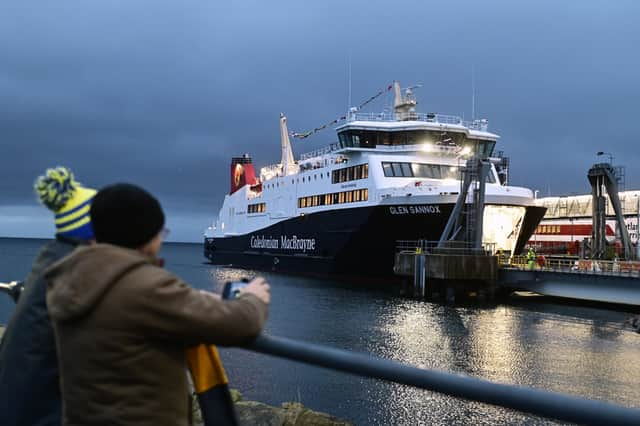
CalMac’s newest ferry is to be taken out of service for at least a month as part of efforts to reduce excessive vibration on the vessel.
The Glen Sannox will be withdrawn from its route serving Arran on November 5 before being taken to a Merseyside dry dock for a programme of works.
CalMac said while “every effort” would be made to complete the overhaul on schedule, the scope of the work required was “complex,” meaning the ferry may remain out of service longer than the planned window.
It comes just weeks after the 850-passenger vessel had been forced to undergo a second set of repairs after less than ten months in service.

The latest planned work is part of a routine programme of maintenance and improvements, but CalMac said it would also include measures to “reduce the effects of vibration”.
A small crack in a weld near to the steering gear of the ferry was identified in March, just two months after the ship went into service. It is understood the issue may be linked to the vibration, which could be emanating from its propellers and stern thruster. Subsequent work was carried out on the weld repair to the five-inch defect, which is close to the vessel’s waterline.
The Caledonian Isles and the catamaran, MV Alfred, will service the Arran route while their sister vessel is undergoing the repairs. The former ferry was out of service at Inchgreen in Inverclyde after CalMac said her port stabiliser was removed from operation due to what it described as a “technical issue”.
It said limitations were in place regarding that weather and sea states in which the vessel could safely operate, but that after the removal of debris from her bow thruster tunnel, the ferry was “fully operational” and would return to service subject to weather conditions.
There were no sailings between Ardrossan and Brodick on Thursday. Early morning departures from both ports had been cancelled for Friday due to poor weather.
The Caledonian Isles, which in the absence of Glen Sannox is due to operate the normal winter timetable on the Ardrossan to Brodick crossing, with MV Alfred operating an amended Troon to Brodick timetable, only returned to service in early October after 20 months’ worth of repairs. It is understood the ferry is scheduled to go for her annual drydocking in January.
CalMac has said if the overhaul of Glen Sannox is completed before December 28, she will return to service on the Troon to Brodick route. Following this period, it added, “full network deployment options” would be considered if the ferry is not available for service.
READ MORE: Ferries control shake-up call to avoid repeat of 'relentless focus on troubled contracts'
Glen Sannox, built by the state-owned Ferguson Marine shipyard in Port Glasgow, was originally due to sail in May 2018. But her and her sister vessel, Glen Rosa, were beset by design problems, cost overruns, and procurement issues.
Having originally been budgeted at £97 million, the total cost of building the two ferries spiralled to around £420m, sparking widespread condemnation. The Glen Rosa, which was originally slated for 2019, is expected to be delivered next year.
Sue Webber, the Scottish Conservative shadow transport secretary, expressed dismay at the fact the Glen Sannox required yet more repair work so soon after welcoming its first passengers.
She said: “It’s staggering that the Glen Sannox is needing repairs for a third time in its first few months of service. Betrayed islanders were kept waiting while this vessel was delayed for seven years, due to SNP mismanagement of the nationalised yard – and yet it’s still plagued by faults.
“Nationalist ministers have squandered hundreds of millions of taxpayers’ money on the ferries scandal, but shamefully not one of them has resigned or been sacked for the chaos they have caused.”
A CalMac spokeswoman said: “MV Glen Sannox is scheduled to begin annual overhaul on 10 November, leaving the Arran service on 5 November to begin the transit to Cammell Laird in Birkenhead. While there, a programme of maintenance and improvement work will take place, including measures to reduce the effects of vibration identified during operation.

“The scope of this work is complex, and although every effort will be made to complete it as quickly as possible, the vessel may remain out of service longer than the planned three-and-a-half-week window and return date of 10 December. We will provide further updates once the detailed work plan has been confirmed.
“To ensure certainty for customers, services on the main Arran route will continue with MV Caledonian Isles and MV Alfred until the Glen Sannox returns. If MV Glen Sannox completes overhaul before 28 December, she will return to service on Troon-Brodick.”
The spokeswoman added: “We are working closely with partners and doing all that we can to minimise disruption to services and keep communities informed during this year’s annual overhaul period.”
A Transport Scotland spokesperson said: “In addition to MV Glen Sannox’s annual maintenance, additional activities will be carried out to address known issues caused by vibration. This is aimed at improving reliability and performance of the vessel.
“CalMac will continue to operate a two-vessel service to Arran with the MV Alfred from Troon and MV Caledonian Isles from Ardrossan during this time.”
It comes as a retired CalMac ferry, the Hebridean Isles, is en-route to a breakers’ yard, having been taken out of service last year.
The 40 year-old ship is being towed to a dismantling facility at Esbjerg in Denmark, where engine parts, navigation and other electrical equipment could be repurposed for use on other CalMac vessels.
Comments
Want to join the conversation? Please or to comment on this article.