
Edinburgh council backs new cruise ship passenger levy as 'fair' move following tourist tax

Edinburgh City Council wants the powers to introduce a levy on cruise ships.
One of Scotland’s largest councils has backed the introduction of a levy on cruise ship passengers, arguing the move would be a “fair” way of guaranteeing charges for all overnight visitors.
Edinburgh City Council used a formal consultation response to express strong support in principle for a levy to help it manage tourism sustainably at the Scottish capital’s ports.
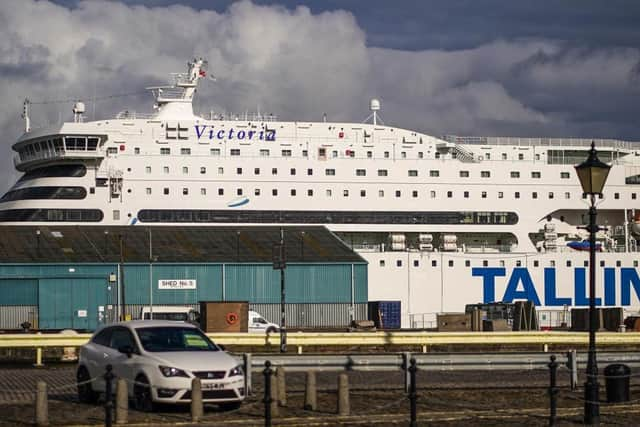

The local authority has estimated the levy could raise more than £1 million a year for Edinburgh and the region.
The stance was outlined on Thursday, in the wake of Edinburgh last year voting to become the first city in Scotland to introduce a tourist tax.
Visitors will have to pay a 5 per cent charge on all overnight stays under the tourist tax, starting from the 2026 festival season.
A public consultation on plans to bring in a levy on cruise ships was launched by the Scottish Government in February. If passed, a cruise ship levy would operate in a similar way to the tourist tax, giving councils the power to decide whether or not to introduce it.
Almost 217,500 cruise ship passengers visit Edinburgh and the surrounding region each year, with most docking in Leith, Newhaven and South Queensferry.
Edinburgh Council leader Jane Meagher said: “Next summer we’ll become the first city in Scotland to launch a visitor levy, but under the Scottish Government’s legislation cruise ship passengers will be exempt.
“We consider it fair to treat all overnight visitors to Edinburgh the same, whether they choose to stay in a hotel, a short-term let, a campsite or a cruise ship.
“With public finances under increasing pressure, we believe this legislation should be used to empower councils to raise more income locally to better manage cruise ship tourism and pollution in our waters. As such, income raised should be ringfenced for the local area.
“In our waters we're seeing more ships docking year on year, larger ships, and with that comes an environmental impact. Cruise ship tourism affects local communities and services just as other tourism does.”
The Federation of Small Businesses instead urged the Scottish Government to learn lessons from the tourist tax before introducing powers to impose an additional charge on cruise ships.
In a formal response to the Government’s consultation process, Vikki Manson, FSB Scotland’s deputy head of policy, said: “Given the varying stage of visitor levy consultations across Scotland, we strongly urge the Scottish Government to pause consideration of a cruise ship levy until the initial levies have been implemented and their effects on the tourism sector thoroughly evaluated.
“A measured, evidence-based approach is essential to avoid unintended consequences for small businesses, local economies, and Scotland’s reputation as a welcoming destination for global travellers.”
Highland Council has meanwhile principally backed proposals in a response agreed on Thursday.
Cromarty Firth councillor John Edmondson called on Invergordon to benefit from the new cruise ship levy proposal.
The town receives the vast majority of cruise traffic in the Highlands, with 4,300 passengers docking last week alone.
Cllr Edmondson said the Invergordon port “dwarfs all the other cruise passenger visits in the Highlands.”
With around 222,000 visitors a year, Mr Edmondson told councillors the Invergordon port “represents almost the population of the Highlands coming in every year”.
However, before council discussions were held, Port of Cromarty Firth chief executive Alex Campbell spoke out against the idea of a cruise ship levy.
In his own consultation response, he said a cruise ship levy “would not benefit” the Highlands, and could end up “damaging” communities who rely on cruise income.
Highland Council’s consultation response said European ports who have introduced a levy charge between €3-€14 [£2.50-£12] per passenger.
Comments
Want to join the conversation? Please or to comment on this article.