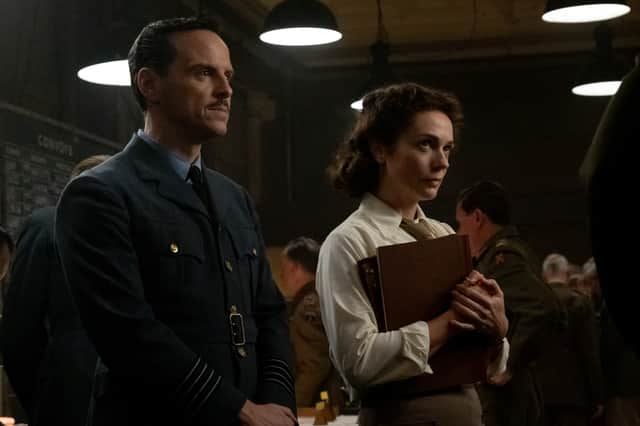
Pressure: The canny Scots meteorologist who changed the date of D-Day

The story of Captain James Stagg, who delayed the launch of the D-Day landings by 24 hours, is told in new film Pressure
He was the extraordinarily gifted yet unassuming meteorologist who held his ground in the face of one of the greatest decisions of World WarTwo.
Now, the story of Captain James Stagg, who was raised in Dalkeith, is being told in new film Pressure, which charts the Scot’s role in helping secure the path to allied victory after quietly convincing Supreme Commander Dwight D. Eisenhower to postone launching the D-Day landings for 24 hours
It was Stagg’s last-minute intervention - and his observation of a break in the incoming low pressure system - that was to change the course of history on June 6, 1944.
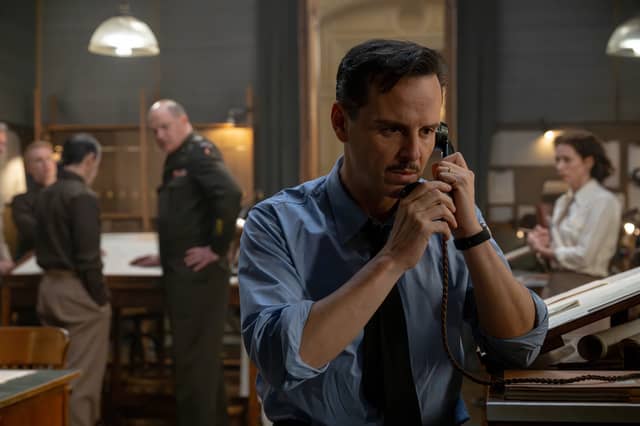
Stagg, who was highly decorated for his role in executing the largest seaborne invasion the world has ever seen, is played by Andrew Scott, who described the meteorologist as a “singular character”.
Scott said: “He is quite differenrt to any I’ve played before. He’s not particularly charming or likeable – but that doesn’t mean that he isn’t extraordinarily gifted. Our attitude towards him changes as the movie progresses, and we start to show interest in what he knows, rather than what he shows.
“He’s a great intellect, and deeply passionate and deeply humane, actually – but that’s not something that he shows people right from the beginning.
“I suppose it’s a film about what we reveal, and who we are at heart.”
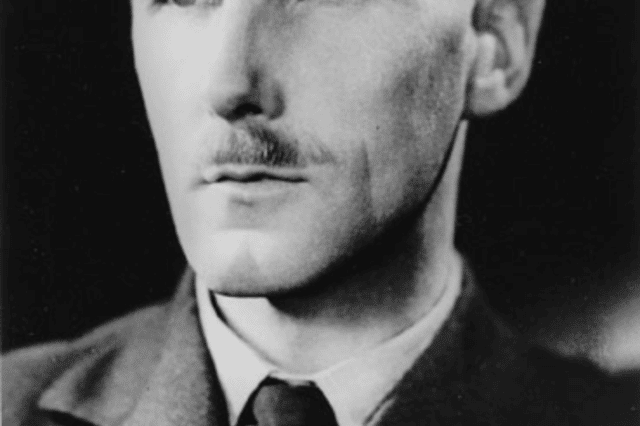
Pressure is based on the acclaimed 2014 play by David Haig, who met with Stagg’s surviving family to guide the character of the meteorologist.
Stagg’s son Peter, a former rugby player who played for Scotland and the British Lions between 1965 and 1970, was among those consulted.
Haig said: “I’ve been fascinated by James Stagg, his family and his achievements for the last 12 years. I was so convinced that it would also be a good film that I wrote the first draft of the screenplay in parallel with the stage play.”