
Top private school 'failed to protect pupils' from sexual and physical abuse

Known abusers were protected while there had been a ‘shameful’ failure to protect pupils
One of Scotland’s leading private schools “wholly failed” to protect children from “appalling” sexual and physical abuse over the course of at least four decades, according to a landmark inquiry.
Pupils attending Fettes College could have been saved from the abuse they endured had complaints been heeded and acted upon, with a headmaster and several teachers among the perpetrators in a cycle of suffering that spanned the 1950s through to the 1980s, according to the Scottish Child Abuse Inquiry.
In a scathing assessment of the Edinburgh school’s handling of the issue, the inquiry’s chair, Lady Smith, said Anthony Chenevix-Trench, the headmaster between 1971 and 1979, had “protected two, and possibly more, members of staff who had, to his knowledge, abused children at Fettes.”
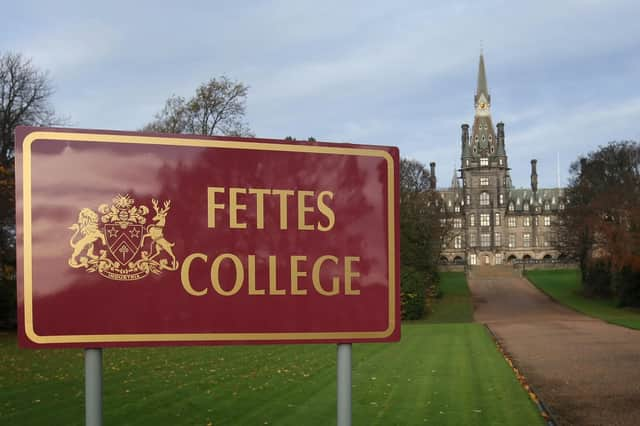

The governors of Fettes College said they apologised “unreservedly” to those affected, insisting the “culture of safety and welfare at our school now is unrecognisable from the past.”
Lady Smith’s findings relating to the provision of residential care for children at Fettes said racism was also prevalent at Fettes well into the 21st century, while girls were treated as “second-class citizens” after the school went co-educational.
She stated: “Children were wholly failed by the school. They could have been readily protected, and it is shameful that did not happen.
“Had complaints been listened to and acted upon at the outset, many children would have been saved from abuse. The suffering they still endure, over 50 years later in the 2020s, could all have been prevented.
“Children were sexually abused, they were physically abused, and they were emotionally abused. Members of staff sexually abused children from the 1950s until the 1980s.”

Former prime minister Sir Tony Blair, who has not been involved in the inquiry, was a pupil at Fettes.
It was a boys-only boarding school until 1972 when it started taking female day pupils, before becoming fully co-educational in 1983.
Lady Smith said perpetrators of abuse included the late Chenevix-Trench, and former teacher Iain Wares, who is facing allegations of abuse.
Wares, who also taught at Edinburgh Academy, currently lives in South Africa where extradition proceedings to return him to Scotland are ongoing.
Lady Smith said Wares “preyed” on children and had a “predilection for touching young boys sexually that he could not control.” She said his abuse was “prolific,” a regular occurrence, and involved “very many children.”
One of his former pupils told the inquiry of the abuse he suffered while Wares was his teacher, telling the inquiry: “He was not only putting his hand up my shorts but he was groping my genitals and basically squeezing them. The first time it happened to me I couldn’t breathe. I was shocked and didn’t know what to do.”
Commenting on the appointment of Chenevix-Trench, Lady Smith said: “Chenevix-Trench was appointed as head of Fettes having previously been head of Eton College. Fettes hoped that appointing a man who had been head of Eton would enhance its reputation.

“He was in fact a man who was unfit to be appointed to lead a school on account of his having lost the trust of senior masters at Eton, having a problem with drink, and having a propensity to beat boys excessively.
“He was appointed despite these matters having been expressly disclosed to Fettes by Eton.
“Chenevix-Trench was also attracted to young blond teenagers at Eton, a predilection of which the provost of Eton College was aware.”
Lady Smith found children were physically abused at Fettes both by teachers and by other pupils, and there was a “culture of silence” as victims feared retribution and being ostracised if they complained.
She noted an incident during an initiation ceremony in the 1980s when a boy was hung upside down out of a third-storey window by his ankles.
She also said it was “not uncommon to find boys hanging by their underpants from coat hooks and unable to get down, put there by other boys they had annoyed”.
Her report, which forms part of the Scottish Child Abuse Inquiry’s boarding schools case study, also described a “sexualised culture” which existed at Fettes before and after the introduction of co-education.
On racism at the school, Lady Smith highlighted that “mocking by staff and pupils of anyone who was not British was normalised into the 1990s”.
She said one example was allowing mock slave auctions of prefects to raise money for charity, which continued into the first decade of the 21st century.
In 2022, a former pupil who was abused by a former teacher at the school was awarded £450,000 in damages.
Lady Morag Wise, chairwoman of the governors at Fettes, said: “We apologise unreservedly to those who suffered abuse at the school. There can be no excuse for the behaviour that we heard about at the inquiry hearings. We applaud the extraordinary bravery of everyone who shared their experiences.
“Many young people were failed by those in positions of authority at Fettes, who could and should have acted differently. Their actions fell well below the standards expected and would be utterly unthinkable at the Fettes of today.
“The culture of safety and welfare at our school now is unrecognisable from the past. Although Lady Smith’s report notes the positive findings of the 2025 inspections by Education Scotland and the Care Inspectorate, we must never be complacent, and we are united in our resolve to ensure that the mistakes of the past are never repeated.”
The inquiry, which aims to raise public awareness of the abuse of children in care, is considering evidence up to 17 December 2014, and which is within the living memory of any person who suffered abuse.
Comments
Want to join the conversation? Please or to comment on this article.