
The incredible 3D model of giant Scotland art deco-era exhibition celebrating British Empire
The exhibition showcases Scotland’s art deco history

An animated 3D model of Glasgow's 1938 Empire Exhibition is to form the centrepiece of a new exhibition on Scotland's art deco history.
Art Deco Scotland: Design and Architecture in the Jazz Age is to run at Glasgow School of Art as part of a year-long programme of exhibitions, festivals and events celebrating Glasgow's 850th anniversary.
The show is an an exhibition of images, collectable items and a film and textual interpretation across nine themes through which the art deco style appeared during the inter-war period in Scotland. It accompanies a new book of the same title, written by Bruce Peter, professor of design history at The Glasgow School of Art.


Iconic Scottish buildings including Nardini’s Cafe and Ice Cream Parlour in Largs and the Paramount Cinema, Glasgow, feature in the exhibition, alongside Bathgate’s Regal Cinema.
The animated, photo-real 3D model of the Empire Exhibition in Bellahouston Park, created by The Glasgow School of Art’s School of Simulation and Visualisations, will be on display. The model shows more than 100 principal buildings and structures that comprised the exhibition, together with an accurate 3D map showing the relationship of the various buildings, road and pathways and water features, to the topography of the park.
Aimed at showcasing the achievements of the British Empire, promote trade and strengthen imperial bonds, the largely now-forgotten exhibition attracted over 13 million visitors during its six-month run.
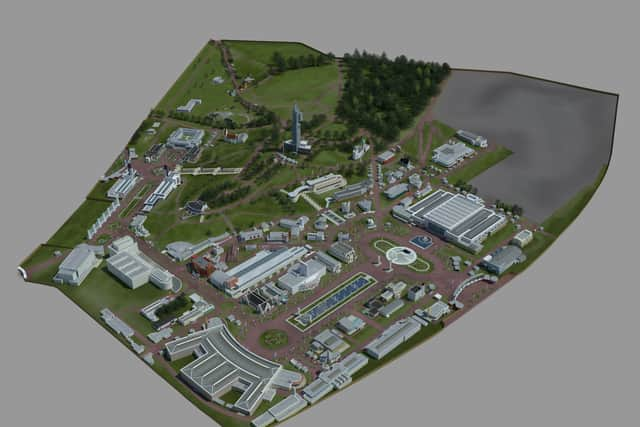
The 3D model project was originally funded in 2006, but is ongoing and includes new work aimed at reassessing narratives of the exhibition from a postcolonial perspective. An archive has also been created of related cultural assets and video interviews recording opinions of experts in the fields of architecture and architectural history, as well as the recollections of members of the public who attended the exhibition in 1938.

In Scotland, during the inter-war years, art deco spread widely and was applied in many different settings, from fashionable new villas and hotels to everyday spaces such as shops, lidos, tramcars, cafes and cinemas.
Art deco-era trans-Atlantic liners Queen Mary and Queen Elizabeth were built in Scotland by the John Brown and Company shipyard at Clydebank. The Empire Exhibition was staged in Glasgow’s Bellahouston Park between May and December 1938.
Prof Peter said: “It has been fascinating to discover how much art deco appeared in 1930s Scotland and how widely it was spread. Readers of the book and visitors to the exhibition will be amazed by the quality, quantity and elegance of the style’s manifestations here in the inter-war years.”
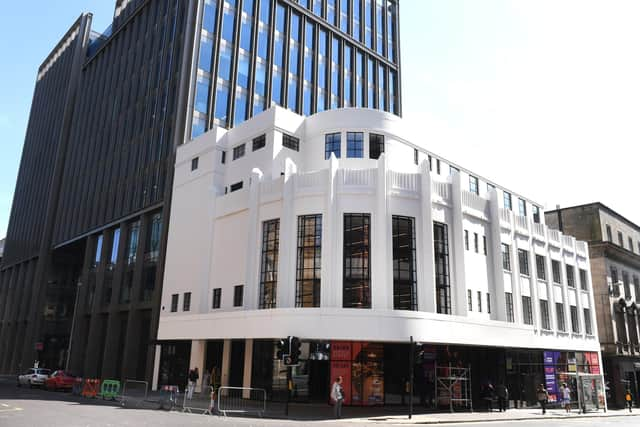
Although art deco came to prominence against a backdrop of economic depression and political upheaval, the style became associated with ideas of modernity and progress.
The movement also had resonances with developments in visual culture across the wider European continent and in the USA, with which Scotland shared strong historic and modern cultural links, as well as with a British Empire by then in decline.
Published by Historic Environment Scotland, the book is Scotland’s contribution to an international celebration this year of the centenary of the staging in Paris of the Exposition Internationale des Arts Décoratifs et Industriels Modernes, a great exhibition of modern decorative arts that much later gave the art deco style its name.
The exhibition will run in the Reid Gallery Corridor at The Glasgow School of Art from April 5 to 28.
Comments
Want to join the conversation? Please or to comment on this article.