
‘Jaw dropping’ Highland wall discovery could be ancient deer trap dating back to Neolithic age
The historical significance of the discovery means it has potential to be one of the earliest known megastructures in Europe.
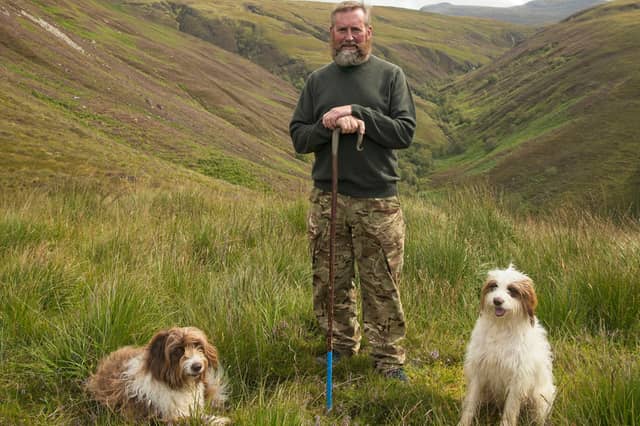


The discovery of a stone wall with a curious structure high on the mountainside above Ullapool led deer stalker on a four year mission to reveal how early humans lived off the land.
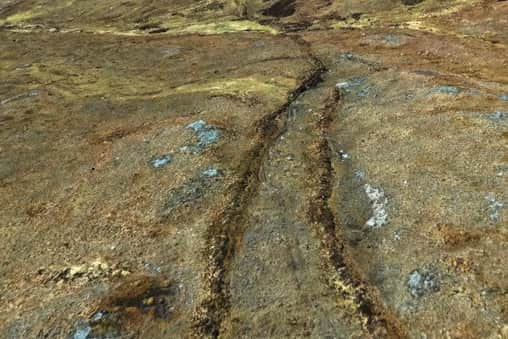
Highland historian and local man Duncan Mackenzie couldn’t shake his intrigue at the formation - two parallel “twin walls” made from stone and turf, running in tandem, 10 metres apart and around two kilometres in length at the longest section.
“I remember standing, staring at it thinking ‘what could this be?’ The twin wall structure, is really strange,” he said.
Research lead him to look at early Inuit life and parallels were drawn with their methods of mass hunting Caribou.
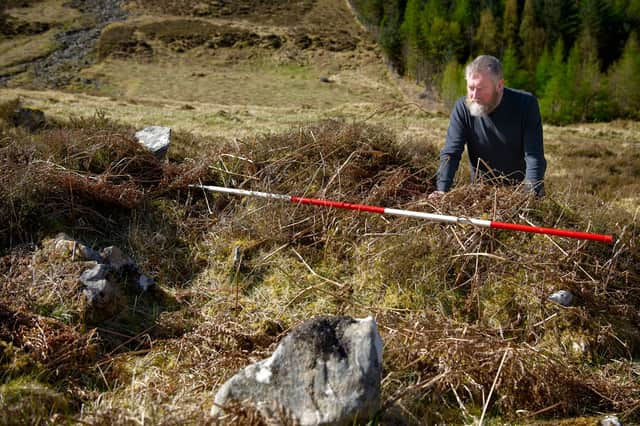
Years of painstaking work later, Duncan’s theory - supported by a Scottish archaeology expert - is that the wall was a sophisticated deer trap.
The structure would have led migrating beasts along a walkway, flanked by trees, to a steep drop at the end where they could be forced into the water of Loch Ghille.
And the historical significance of this discovery means it has potential to be one of the earliest known megastructures in Europe.
Duncan, 70, who has stalked deer on the same estate in Ullapool for 27 years, said: “You can guide deer without scaring them.
“It is possible they followed the wall towards the loch shore and then were startled and plunged into the loch. This may have been during a mass migration, or maybe just done once a year.”
Duncan enlisted the help of archaeologist Ian McHardy, who is based on Lewis.
He told the Scotland on Sunday: “I have seen similar structures, there are some on Lewis and elsewhere in Scotland, they are called elrigs. But none of them are as jaw dropping as what Duncan has found.
“The walls are parallel for at least one kilometre, the longest wall is around two kilometres. You have to ask ‘why build two walls?’”
He said the only logical explanation for this formation is that they were built to be used as a trap.
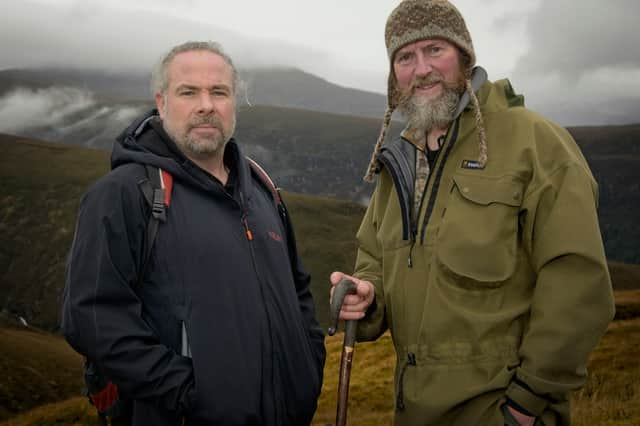
“The two parallel dykes have vertical faces but they are both on the inside, facing each other. So you have to assume that the purpose of this was to keep something inside,” Ian added.
Comparisons have been drawn with the Blinkerwall - a prehistoric, submerged stone wall in the Bay of Mecklenburg in the Baltic Sea, lying 21 meters underwater, off the coast of northern Germany.
Built around 10,000 years ago by Stone Age hunter-gatherers, it is understood to have been used as a bottleneck to channel migrating reindeer.
Duncan and Ian’s work and that of Lochbroom Heritage has been recognised by a RICHeS grant from the Arts and Humanities Research Foundation. This will now enable a scientific examination of the deer trap and surroundings to begin.
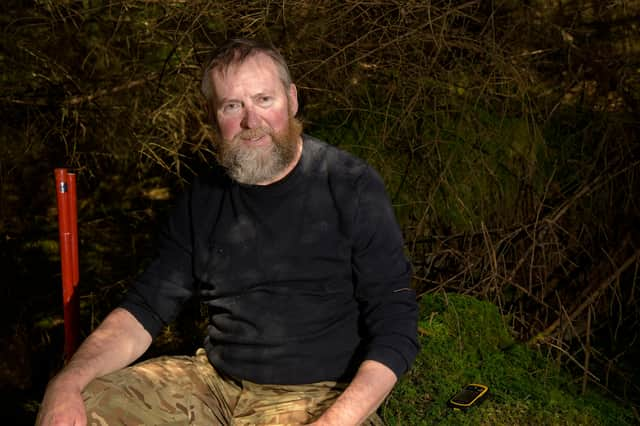
There are high hopes that an excavation, planned next summer, will provide more clues and confirm their theory.
A study of the soil around the structure and the loch - the “kill zone” - has the potential to determine what lived and died there thousands of years ago.
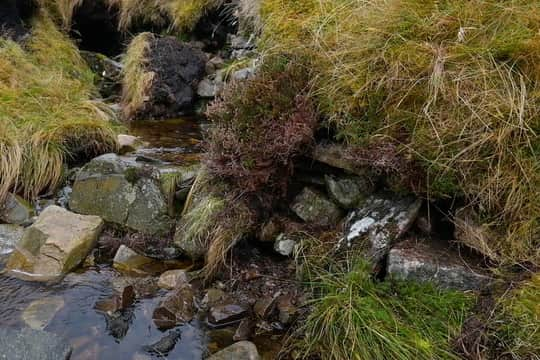
Ian added: “There is one location where a stream has cut through the dyke after it has been made and it looks like there is peat over the dyke. This suggests it is older than peat and and from the Neolithic or early Bronze Age.”
Duncan’s fascination with the land around Ullapool is a labour of love that has spanned a decade. He previously plotted a community that stretched to over 20 square miles and lived for hundreds of years in Inverlael, east of Ullapool.
It is deemed the most significant historic settlement on the mainland north of Perth.
Its inhabitants existed thousands of years after those responsible for the deer trap but the lush, fertile surroundings mean communities would have continued to thrive there.
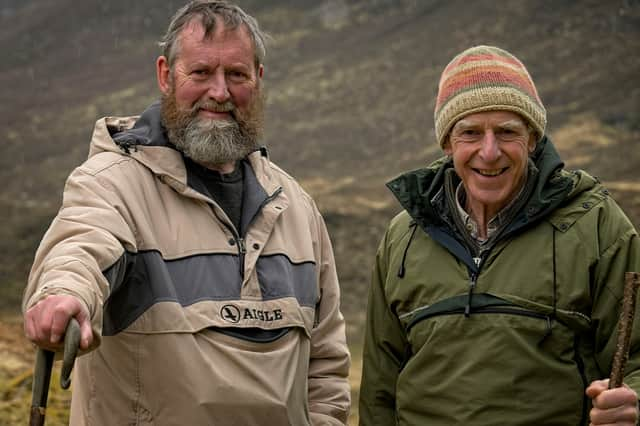
Working with a local Clan Chief, Duncan - whose ancestors lived on the land for generations until they were evicted in the Highland Clearances in 1821/22 - has been able to gather a picture of what life looked like for that community.
Clan Chief Hector Munro of Foulis provided written records that are now housed in the Highland Archive Centre in Inverness.
These rare documents - stretching back to 1370 - give an insight into inter-clan feuds and arranged marriages.
They record a prosperous community: one that produced a staggering 20 tons of oats; 18 barrels of salmon and almost 2000 pounds of cheese in one year alone.
Duncan said: “This landscape is full of archaeology and we must preserve it for the community and the nation.
“It is a vital part of my DNA and I’m determined the history of my own family, and the hundreds of families who once lived here, should never be forgotten’.”
Duncan’s explorations will feature in a new documentary set to debut on the BBC Alba next week.
Legacy of the Glen was filmed over four years.
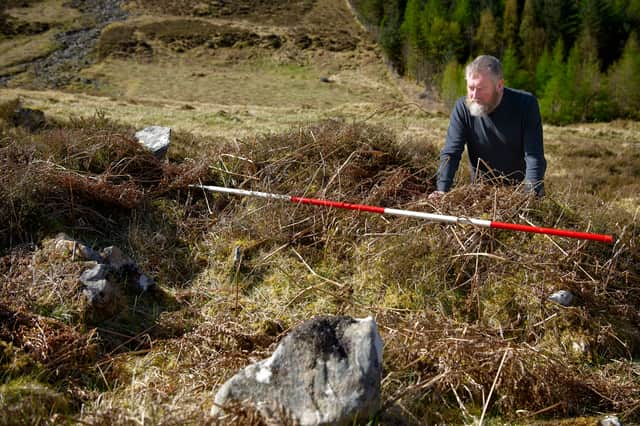
Richard Else, the film’s Executive Producer, added: “This film wouldn’t have been possible without the knowledge that exists in the Highland and Islands.
“Our archaeologist, Ian McHardy based on Lewis; the Highland Archive Centre in Inverness and Clan Chief Hector Munro near Evanton, have all made enormous contributions to understanding the story of Inverlael and the people who once lived there”.
Duncan’s journey of discovery: Duncan Mackenzie Dìleab a’ Ghlinne / Legacy of the Glen can be seen on BBC ALBA on Tuesday, November 24 at 9pm and thereafter on iPlayer.
Comments
Want to join the conversation? Please or to comment on this article.