
Inside the Edinburgh Rape Crisis row: Why JK Rowling is urging chief executive Sandy Brindley to resign

Sandy Brindley has refused to step down following the publication of the report
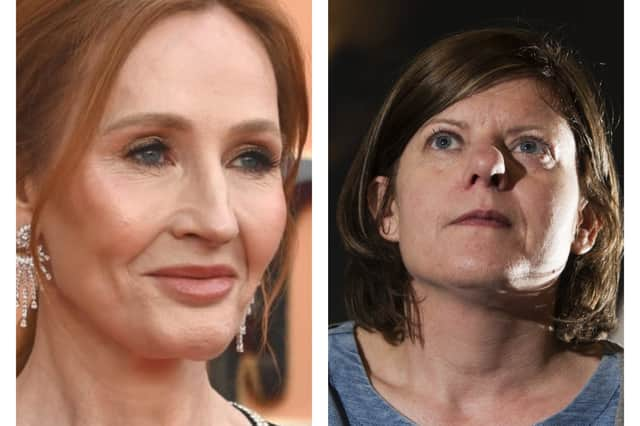
The head of a rape charity responsible for the Edinburgh branch that was heavily criticised for failings in a recent report is facing more calls to step down, including from author JK Rowling.
Sandy Brindley, chief executive of Rape Crisis Scotland, has come under fire after an independent review earlier this month found rape victims were damaged by catastrophic failings at the Edinburgh Rape Crisis Centre (ERCC).
Ms Rowling, who has already spoken out against Ms Brindley, has written a letter to the chief executive, saying some women had “self-excluded” from using the services available at ERCC due to the presence of trans women on staff.

The review into ERCC found the former chief executive of the centre – Mridul Wadhwa – had failed to protect women-only spaces, failed to set professional standards of behaviour, and did not understand the limits on her role’s authority.
Ms Wadhwa, a trans woman who has worked in the gender violence and equalities sectors in Scotland since 2005, stepped down following the publication of the report.
What has JK Rowling said?
In a letter to Ms Brindley published on X, Ms Rowling criticised Ms Brindley for incidents which had occurred at ERCC during her tenure. The Harry Potter author also described Ms Wadhwa as a man.
She said: “While you've been in charge at Rape Crisis Scotland, a man now serving time in prison for multiple sexual assaults was 'treated' at the Edinburgh centre. The man in charge of the Edinburgh centre called rape survivors who wanted single sex services 'bigots'.
“Under your leadership, multiple women self-excluded from the Edinburgh centre because of the male CEO you defended and praised.” Rowling added: “On your watch, a 14-year-old girl who'd been raped felt unable to access support because she wasn't guaranteed a single sex space. For years, you've been told by women's groups and rape survivors themselves that your policies were harming vulnerable girls and women. You didn't care. You wouldn't listen. Backed by government funding, you behaved with arrogance and complacency.”
Rowling also claimed what she described as Ms Brindley’s “cosy relationship with the SNP Government”, made her “feel untouchable”, due to its support of gender identity ideology.
She said: “You weren't ever going to respond to women's concerns unless someone high profile challenged you. Finally, you've decided to respond publicly to one of the women with concerns - me. And how do you address those concerns? You claim you're my victim.”
Rowling, who set up Beira's Place, a support service for female victims of sexual violence, two years ago, said she had done so because survivors “who found it deeply traumatising to be told they must consider men as women if the men want to be seen that way had literally nowhere else to go”.
She said: “You've placed higher importance on validating trans-identified men than on needs of female survivors. If I'm not moved by your tears, it's because too many women have cried as a consequence of the ideology you insisted they should embrace they were at their most vulnerable.”
What has Sandy Brindley said?
Last week, Ms Brindley apologised to rape survivors let down by failings at the Edinburgh centre.
She said she had no involvement in the appointment of Ms Wadhwa, but defended the policy of including trans people in support services for victims of sexual violence.
“What I would say is that most rape crisis centres in Scotland provide support to men, women, trans people and non-binary people,” she said.
“There is no inherent reason within that, that you could not have a trans person working within a rape crisis centre. I think what is crucial, however, is that if you do have a rape crisis service that is supporting all survivors is that there’s dedicated women-only spaces within that.”
At the weekend, reports claimed Ms Brindley had offered tabloid newspaper reporters the phone numbers of women who used the centre to back up her refusal to resign. This came under criticism from both Rowling and the mother of a 14-year-old girl who had been a victim of rape.
Comments
Want to join the conversation? Please or to comment on this article.