
Scottish government announces independent review into role of Lord Advocate

Former lord advocate to chair inquiry
The historic and contentious roles and functions of the Lord Advocate is to be the subject of an independent review in order to determine if the status quo remains the “most appropriate and effective” set-up for Scotland.
First Minister John Swinney said the review will make detailed and practical recommendations to ministers on whether changes should be made to the current arrangements, including the role of the solicitor general, and if so, what form those changes should take.
The review, helmed by Lord Boyd of Duncansby, himself a former lord advocate, will look at the unique dual role of his former office, examining its “advantages and disadvantage.”
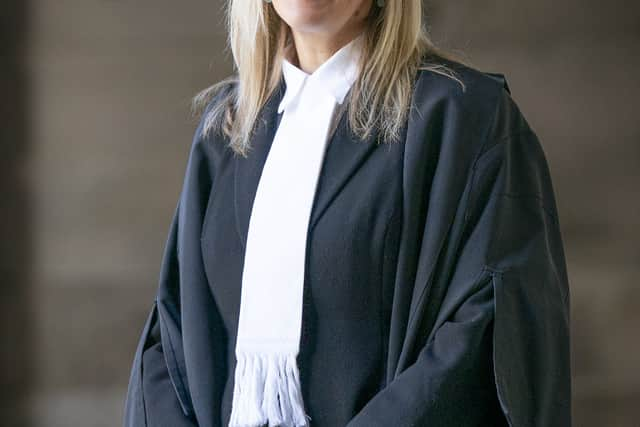

However, Mr Swinney, who said the role of the lord advocate was “deeply woven into the fabric of Scots law,” stressed that no decision had been made in announcing the review itself, with its terms of reference making clear that it will be “open to all conclusions,” including the current arrangements. It will also look into alternative lw officer models, including those used in other parts of the UK.
The role of the lord advocate, who simultaneously serves a ministerial role as the Scottish government’s principal legal adviser and head of Scotland's independent prosecution service, the Crown Office and Procurator Fiscal Service (COPFS), has come under growing scrutiny in recent years.
The role was enshrined in the Scotland Act - meaning it would be for Westminster to make any changes - but has been a source of contention since the early days of devolution although the discontent has been more vocal over the past decade.
Mr Swinney said that no matter how “long standing” a system it was, it should not be beyond examination, adding: “It is right that we consider whether the current arrangements continue to serve modern Scotland as effectively as they can.”
The announcement comes just six months after the Scottish government published a report on the roles and functions of Scotland’s law officers, produced by former Scottish Law Commission chief executive, Malcolm McMillan. It described the current arrangements as “appropriate.”
But Mr Swinney said that report was not forward-looking, and did not address “detailed questions” that would have to be considered to “ensure public expectations on the independence of decision making could be assured if the current arrangements were subject to change.”
Responding to the announcement at Holyrood, Scottish Conservative leader, Russell Findlay, said the SNP promised to look at the position of the lord advocate in 2021, and said there was no need for another review, asking Mr Swinney why he would not just “end the dual role role now.”
But Mr Swinney replied: “I think that’s the last way we should go about determining policy - driven by political invective and insults.”
Scottish Liberal Democrat leader Alex Cole-Hamilton said the solutions to the “inherent conflict of interest” in the lord advocate’s dual role were “staring us in the face,” and called for an indpendent director of public prosecutions and a “complete overhaul” of the fatal accident inquiry system.
Mr Swinney said it was Mr Cole-Hamilton’s “opinion” that there was a conflict of interest, adding: “That is not demonstrable fact. The lord advocate, in all sorts of other different procedural explanations, all of which are publicly accessible, demonstrates how they ensure the constant application of independence of decision making in all circumstances. I reject the idea of conflict of interest unreservedly.”
Scottish Labour’s Katy Clark said there was “considerable concern” that the dual roles of the lord advocate were incompatible, and asked if any discussions had taken place with the UK government concerning the review.
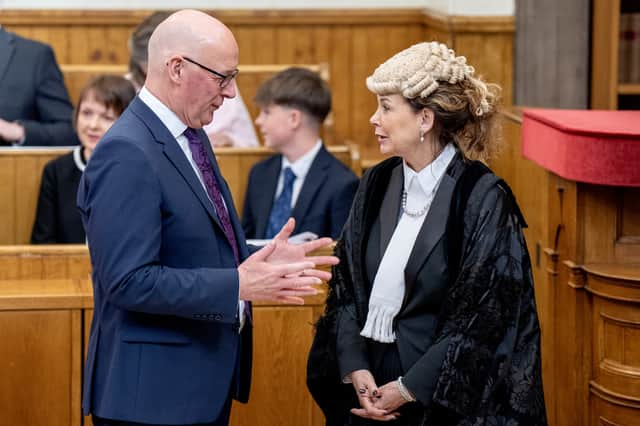
In response, Mr Sweeney said he “recognised the debate that is being aired,” and said it was important for it to be solved. However, he said there were “myths” that also needed to be explored, and said he had written to the secretary of state for Scotland advising him of the review.
Lord Boyd, who served as solicitor general before being appointed as lord advocate in 2000, a role he served until 2006, said the issues the review will consider were of “fundamental importance” to the administration of justice in Scotland.
“Any recommendations must safeguard the independence and integrity of the prosecution system, sustain public confidence, strengthen accountability, and ensure that ministers continue to receive high-quality, professional legal advice,” he added.
The review is expected to begin in early 2027, with a report expected to be published in the latter half of that year.
In 2021, the issue of the lord advocate’s dual role flared up during a Holyrood inquiry into the government’s mishandling of complaints against the former first minister, Alex Salmond. Written evidence submitted to the inquiry by Mr Salmond was later redacted at the request of the COPFS, which dismissed concerns the decision was politically motivated.
In January this year, meanwhile, a row broke out at Holyrood after it emerged Ms Bain sent a minute to Mr Swinney in which she revealed details of allegations against the former SNP chief executive, Peter Murrell, who was subsequently imprisoned after he admitted to embezzling more than £400,000 from the party.
Ms Bain said the email was designed to “ensure the government is reminded of its legal responsibilities to restrict its comments,” but opposition politicians claimed the intervention presented Mr Swinney with a political advantage.
In March, the government ruled out changes to the lord advocate’s unique dual role. Following an independent review, which was commissioned before the controversy surrounding Ms Bain’s email, justice secretary Angela Constance said the report clearly set out “how and why the current system works and its considerable strengths.”
Mr Findlay has previously called for the dual role to be “binned,” while his UK counterpart, Kemi Badenoch told the Scottish Conservative conference earlier this year that she would end the “conflict of interest” and split the lord advocate’s responsibilities.
Comments
Want to join the conversation? Please or to comment on this article.