
The Tourist Plate: Highland man hopes T plate invention for tourists will improve safety on Scottish roads

Campaigner hopes to roll out idea across the country after ‘terrifying’ experience on Tenerife roads
A Highland man is hoping to improve road safety by selling tourists his latest invention, dubbed the Tourist Plate, which he came up with after a ‘terrifying’ trip to Tenerife.
Robert Marshall, 44, was on holiday with his partner in Spain during 2021 when he experienced numerous drivers tailgating his car while he was already stressed with driving on the opposite side of the road.
He remembers telling his partner: “I wish these people just knew I was a tourist so they can stay away from being right up behind my car.”


Mr Marshall, who is the owner of exclusive events venue Glenspey which he formerly ran as McInnes House hotel for eight years, dealt with tourists every day on the A9 and started to ask them how they felt driving there with many repeating the same words: “It’s terrible, I feel so nervous, it’s the opposite side of the road.”
He said: “I was racking my brain on how we could solve the problem.
“I think the thought just landed into my head - just a T plate, something that tells people ‘I’m a tourist, please give me time’.”
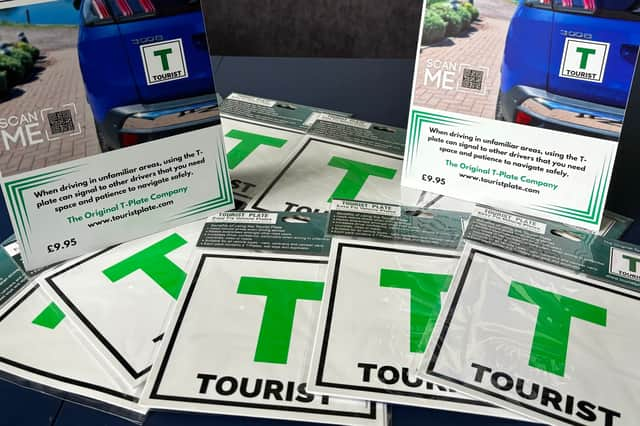
He said the design - a green T with a white background and the word ‘Tourist’ underneath - was intentionally simplistic and his six-year-old nephew had even known what the plate was for.
When he started creating the signs and showing his hotel guests, many tourists thanked him saying they had been a “nervous wreck” driving up from places such as Edinburgh Airport and would feel much more confident with a T plate.
Car plate helps stressed tourists on foreign roads
“As soon as people see the T plate, they back away,” Mr Marshall, who is from Glasgow but lives in Kingussie, said.
“Somebody being right up on your bumper while you’re on the opposite side of the road to what you’re used to and unfamiliar with signs in a different country, it makes you more stressed.”
The plate has only recently been made available to the public but Mr Marshall has already received “fantastic” feedback.
The A9 in particular is known as one of Scotland’s most dangerous roads - a total of 48 people died between 2014 and 2024 after collisions on the Inverness to Perth road according to Scottish Government data.
Three American tourists died in a crash on the notorious road during August 2022 while on a trip from the US to visit locations from the TV show Outlander.
In a separate incident, an American tourist appeared in court after an A9 crash that happened in July 2022 that took the lives of an Inverness couple and their two-year-old grandson.
Mr Marshall added: “The figures of tourist crashes are horrific - especially along the A9. As long as the plate helps somebody, even one person, that doesn’t need to be stressed out then it’s good for me.”
Road safety campaigner tries out T plate on the A9
Laura Hansler, an A9 dualling campaigner, tested the plate out on her car during a Friday afternoon.
The 52-year-old went along with Mr Marshall on a drive along the A9 from 2pm to 4pm and found that other motorists were “phenomenal” and acknowledged the sign on the back of the car.
Before the test drive, she said she had no idea the “change of behaviour would be as pronounced as it was”.
Ms Hansler, who is from Kincraig, added: “I was making sure I was holding back to 50mph so they would gain on me and you would then get that split second from drivers of ‘wait a minute’ and there was a marked pull back. It was quite phenomenal.
“They were leaving a good couple hundreds of yards in some cases.”
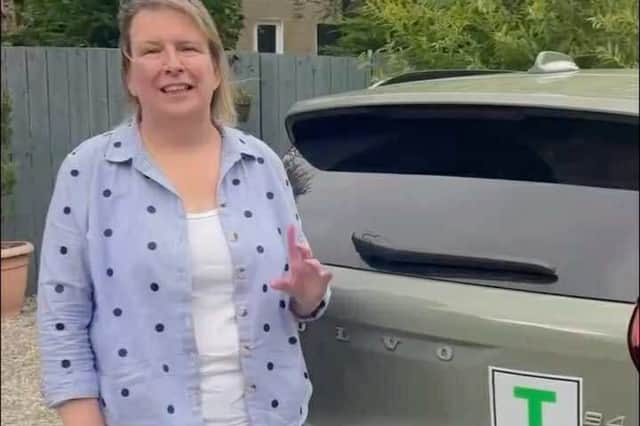
Since that video, two road safety charities have been in contact with the pair and meetings are now scheduled with hopes that they can eventually roll out the plates across Scotland. Mr Marshall and Ms Hansler have also said they are planning to do some door-knocking to spread the word about the plates.
Mixed debate surrounding effectiveness of new Tourist Plate
Road safety consultant Neil Greig said although he “didn’t have an issue with the plates”, he thought the claims for improved safety were “pretty overblown” and that it would be “unlikely” to make a really impatient driver change their behaviour.
“If they allow a driver to feel more confident when travelling abroad then that is a potential benefit,” he added.
“However, other drivers will have very little awareness of what the T plate stands for as it has no official status or mention in the Highway Code of any country.
“You just have to read how little defence the L plate gives learners these days to show that plates and stickers have minimal impact on road safety. The key, as always, is for every driver to take personal responsibility for their driving, wherever they are.”
Make sure you keep up to date with news from across Scotland by signing up to our free newsletter here.
An AA spokesperson said there is “no reason” that less confident tourists shouldn’t display a P plate which is a “universal sign to other drivers that the person behind the wheel might not be experienced”.
“UK drivers driving abroad should also display a ‘UK’ sticker which again suggests they might not know the roads,” they added.

However, Mr Marshall said not everyone wanted to use a P plate.
“Even an older local guy said to me ‘I’m really stressed when I’m out on the road, could I use a T plate just to keep people off my tail? I’m too old to use a P plate because people will laugh at me, can I use this?’
“And I said, of course, if it’s going to help someone then they should use it.”
Tourist Plates can currently be bought online for £9.99 and Mr Marshall said he hopes the signs will become available from car rental centres at airports across the country.
Comments
Want to join the conversation? Please or to comment on this article.