
Plumbing trade sounds warning over lack of apprenticeship funding
Concerns over wider financial impact of recruitment woes

Scotland’s economy risks being damaged by a lack of funding which has left plumbing and heating firms unable to take on new apprentices, according to a leading trade association.
The Scottish and Northern Ireland Plumbing and Heating Federation (SNIPEF) warned that eight years of frozen apprenticeship funding from the Scottish Government had led to many sectors reaching “breaking point,” and said that without fresh investment, one of the country’s most essential workforces would face “increasing pressure”.
In a stark warning, the federation’s chief executive, Fiona Hodgson, said that while companies wanted to invest in new recruits, many are unable to do so without targeted support, putting them in a “no win situation”. It said that while companies of all sizes were being impacted, those hardest hit were smaller firms and family businesses.
A recent analysis carried out by the federation of its members in the first quarter of the year found that just 22 per cent of businesses are likely to recruit a plumbing apprentice in the next six months. This comes despite a critical skills shortage and, according to the federation, reflects deeper structural concerns, such as the cost of training, limited supervisory capacity and a lack of long-term confidence in the labour market.

Ms Hodgson said: “These figures are alarming. Our members want to invest in new talent, but they can’t do so without targeted funding support. Recruiting an apprentice should never have become a burden, but our members are in a no-win situation where rising costs, funding stagnation and the workforce shortage have made apprentice recruitment unviable for many.
‘Business growth starved by years of government inaction’
“Years of government inaction have created a situation where business growth has been starved, yet the responsibility to secure the future of the profession continues to fall on businesses with ever dwindling means to do so.
“It is urgent that the government step in to support our businesses, re-opening that pathway for our apprentices to survive and forge meaningful and rewarding careers in an industry that is vital to the country’s economy.”
The warning comes as the federation - which has more than 750 member firms - is preparing to host the 50th iteration of its annual apprentice of the year competition, an initiative that has launched the careers of more than 1,200 apprentices since its inception. However, Ms Hodgson stressed that such progress was being put at risk as a result of the funding pressures, with businesses foregoing apprentice training for financial reasons.

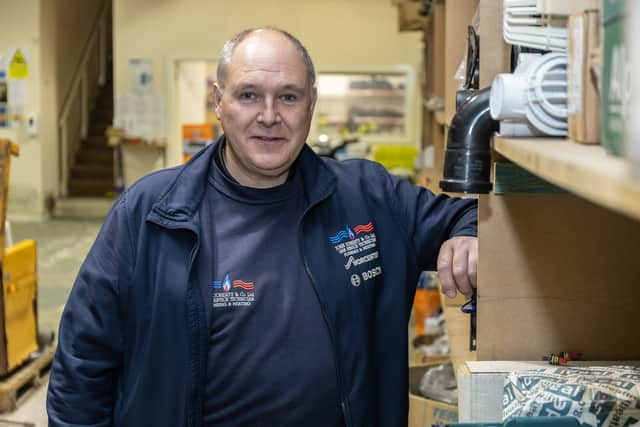
One example is the eponymous plumbing, heating and joinery firm founded by John Doherty in the West Dunbartonshire town of Old Kirkpatrick some 26 years ago. A long-time advocate of apprenticeships, he currently employs a team of 19 staff members, which includes three apprentices – two plumbers and one joiner. But this will be the first year he has not trained a new apprentice as a result of the cost pressures and a lack of funding.
“The apprenticeship model is how I got my start in the industry, and it set me on a career path to build my business to where it is today,” he explained. “But for the very first time I will not be looking to recruit in the coming year. We did the maths on costs, and we reckon that our three apprentices will cost us £60,000 per annum, factoring in wage increases as well as general running costs such as tools and workwear. This is not sustainable for smaller businesses like my own.
“Direct funding for employers at national and local level is available, but these have their drawbacks as they have mostly been reduced to one-year grants with wage requirements that surpass those agreed upon by the Unite the Union and the industry itself. This puts businesses in a position of financial uncertainty, especially if they are unable to renew grant funding for an apprentice’s second, third or fourth year at college.”
Mr Doherty, whose clients include the likes of Scottish Water, West Dunbartonshire Council, and Hampden Stadium, expressed concern that the impact on micro-businesses and small firms would have far reaching implications.

“80 per cent of our industry is made up of small businesses, so if the vast majority are finding apprenticeships unsustainable, what does that mean for the future of the industry?” he asked. “If we have to rely on the largest companies to recruit, apprentices will find themselves in highly specialised or niche roles, lacking the experience to be effective in the wider industry.
Government ‘must step in to secure next generation’
“The government must step in to support our profession to secure the next generation of plumbers. Employers need to know the government values our industry, so that we can provide the opportunities that we were once afforded. Otherwise, I fear for the future of the profession.”
A spokesman for the Scottish Government said: “We are engaging industries and employers across the country, and will continue to do so as we reform the skills system and introduce a new skills planning approach, which will enable targeted action to address national and regional skills requirements.
“Recognising the need to address current skills needs while reforming the system, we are providing £185m this year to support apprenticeships. But we are also looking at how we secure maximum benefit from this investment, including how public funding is utilised.
“Brexit is a major driver of skills gaps and is holding Scotland back, in addition to current UK immigration policy, which is why we continue to propose a tailored approach to migration for Scotland.”
Comments
Want to join the conversation? Please or to comment on this article.