
Stamp duty and LBTT: What is stamp duty? Why is Kemi Badenoch scrapping it? Does stamp duty exist in Scotland?

Kemi Badenoch wants to scrap stamp duty for people’s primary homes - and there is a push to axe a similar tax in Scotland
A commitment to abolish stamp duty has been made by Conservatives leader Kemi Badenoch in keynote speech at the party’s conference in Manchester.
Ms Badenoch used the address to set out her vision of a country where “profit is not a dirty word”.
But the most eye-catching pledge was the commitment to free up the housing market by abolishing stamp duty on people’s primary homes.


The Tories leader described stamp duty as a “bad tax”. But just what is stamp duty, and what would her pledge mean if the Conservatives were able to win back power and follow through on the commitment.
Here, The Scotsman answers all your key questions.
What is stamp duty?
Stamp duty, or stamp duty land tax (SDLT) to give it its full name, is a fee payable on the purchase of a property in England and Northern Ireland.
Stamp duty is a progressive tax, meaning the higher the property price, the more you’ll pay, according to a series of thresholds or bands.
How much stamp duty do you need to pay when buying a property?
The current rates of stamp duty in England and Northern Ireland are as follows:
Up to £125,000: Zero.
The next £125,000 (the portion from £125,001 to £250,000): 2 per cent.
The next £675,000 (the portion from £250,001 to £925,000): 5 per cent.
The next £575,000 (the portion from £925,001 to £1.5 million): 10 per cent.
The remaining amount (the portion above £1.5 million):12 per cent.
So, for example, for a property worth £500,000, you’d pay nothing on the first £125,000, 2 per cent on the next £125,000 and 5 per cent on the next £250,000.
Do first-time buyers and second home buyers pay stamp duty?
If you are a first time buyer, you don’t pay any Stamp Duty for the first £300,000 of the property value and 5 per cent on the next £200,000.
If the property is worth more than £500,000, you are not eligible for relief and just pay the normal rates.
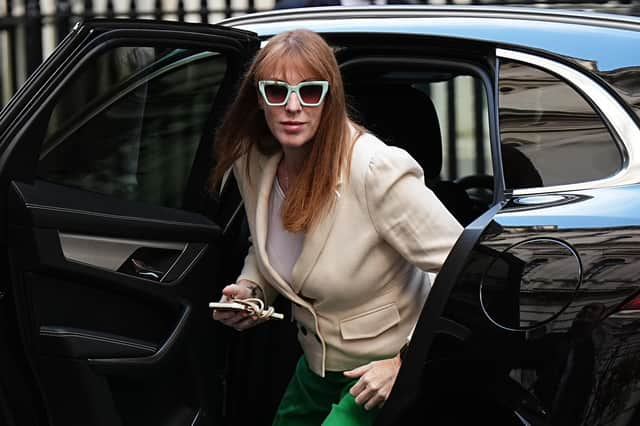
If you are buying a second home, you need to pay an extra 5 per cent of the property value on top of the normal stamp duty. This applied in the case of former deputy prime minister Angela Rayner, who underpaid stamp duty by £40,000 on an £800,000 flat in Hove purchased in May.
Does stamp duty exist in Scotland.
No, not in the same form, although Scotland and Wales have their own systems.
Stamp duty was scrapped in Scotland on April 1, 2015, and was replaced by a similar Land and Buildings Transaction Tax (LBTT).
This is a fully devolved tax, with the Scottish Parliament setting the rates independently of Westminster. Changes to stamp duty rates no longer have any direct impact on Scots.
How much Land and Buildings Transaction Tax do you play when buying a home in Scotland?
The amount of LBTT depends of the type of property a person is buying - and the price of it. Here’s how it breaks down in Scotland:
First-time buyers
£0 - £175,000: 0 per cent.
£175,001 - £250,000: 2 per cent
£250,001 - £325,000: 5 per cent.
£325,001 - £750,000: 10 per cent.
Over £750,000: 12 per cent.
Main home
£0 - £145,000: 0 per cent.
£145,001 - £250,000: 2 per cent.
£250,001 - £325,000: 5 per cent.
£325,001 - £750,000: 10 per cent.
Over £750,000: 12 per cent.
Second home
£0 - £145,000: 8 per cent.
£145,001 - £250,000: 10 per cent.
£250,001 - £325,000: 13 per cent.
£325,001 - £750,000: 18 per cent.
Over £750,000: 20 per cent.
Are the LBTT rates likely to change?
The Scottish Government is carrying out a review of LBTT, which started early this year, aimed at looking at “the residential and non-residential LBTT arrangements to ensure the policy intent is still met”. The review will continue until after the next Holyrood elections in 2026.
A buyer has 30 days after the purchase of a property to pay the LBTT owed.
What has Kemi Badenoch said about stamp duty?
In the final passages of her speech, Ms Badenoch committing to abolishing stamp duty on people’s primary homes.

She said: “Stamp duty is a bad tax. We must free up our housing market, because a society where no one can afford to buy or move is a society where social mobility is dead.”
Stamp duty brought in an estimated £13.9 billion in the past financial year for England and Northern Ireland, but a large proportion of this is from additional homes and other buildings.
The Institute for Fiscal Studies (IFS) has estimated that abolishing stamp duty on primary residences will cost around £4.5 billion.
But, claiming Chancellor Rachel Reeves was planning a significant increase in stamp duty, the Conservatives said they had “cautiously” estimated the policy would cost £9bn.
Mrs Badenoch insisted she could meet this promise while sticking to her new “golden rule”, saying this was the “fiscally prudent” thing to do.
What have the Scottish Conservatives said about LBTT?
On the back of Ms Badenoch’s speech, the Conservatives north of the Border have urged the Scottish Government to scrap LBTT.
The Scottish Tories insisted this would be a “bold” move that would “encourage aspiration”.
The party argued abolishing LBTT for those buying their main residence would “help people get on to and move up the property ladder”.
Scottish Tory housing spokeswoman Meghan Gallacher said: “This is a policy for the aspirational and the SNP should enact it in Scotland as soon as possible.

“Everyone who works hard in Scotland and Britain should have the opportunity to own their own home. We are calling for the SNP to abolish LBTT, Scotland’s version of stamp duty, on primary residences.
“This bold tax cut would encourage aspiration and help people get on to and move up the property ladder.”
Ms Gallacher said the Tories “believe in bringing down bills for the strivers who want to put in hard graft and get ahead”.
Comments
Want to join the conversation? Please or to comment on this article.