
SNP three short of majority with Reform in second, poll finds


The SNP is set to win 62 MSPs, with Reform on 19 and Labour on 17.
The SNP is on course to fall three MSPs short of a majority with Reform UK in second, a new poll has found.
According to the Diffley Partnership, the SNP is set to return 62 MSPs after May 7.
The poll, conducted using the Survation online panel, would see Reform UK Scotland winning 19 seats.
Scottish Labour would return 17 MSPs, while the Scottish Greens would have 12, one higher than the Scottish Conservatives. The Scottish Liberal Democrats would win eight seats, the survey suggests.
The SNP continues to have a substantial lead on both the constituency and regional list votes, the pollsters found, at 38 per cent and 29 per cent respectively.
A fifth of respondents said they would back Reform UK on the constituency ballot, while 19 per cent said they would do so on the list.
Scottish Labour received the third-highest voter share in the poll, with 18 per cent of voters supporting the party in their constituency, and 17 per cent saying they would do the same on the list.
Some 12 per cent of survey respondents said they would vote for the Tories on each ballot.
The Scottish Greens would also receive 12 per cent of the list vote, but only two per cent of the constituency vote.
And one in 10 Scots said they would opt for the Scottish Lib Dems on the constituency vote, with nine per cent saying the same for the list vote.
Voters continue to be divided over Scotland’s future in the UK, the Diffley Partnership also found, with 52 per cent saying they would vote Yes in another referendum and 48 per cent saying they would vote No.
The Edinburgh-based firm found opinion was also split on whether election results would constitute a mandate for another referendum.
Some 52 per cent of respondents said they believed either an SNP majority or a pro-independence majority after the election would count as a mandate for independence, while 48 per cent disagreed.
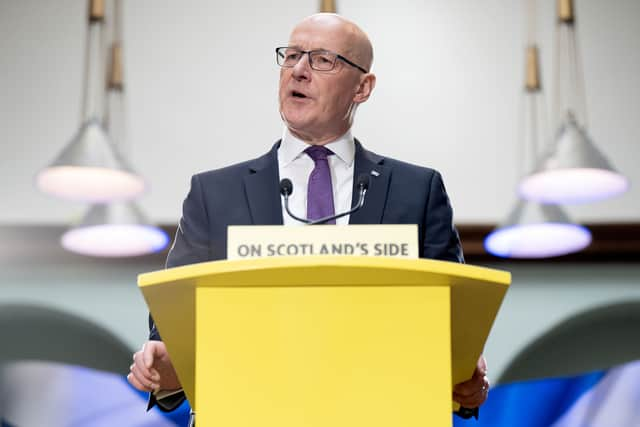
Asked who they would prefer as first minister, 58 per cent of survey respondents opted for SNP leader John Swinney over Scottish Labour leader Anas Sarwar, while 42 per cent chose Mr Sarwar over the current First Minister.
Some 68 per cent said they preferred Mr Swinney over Reform UK Scotland leader Lord Malcolm Offord, while 32 per cent opted for Lord Offord over Mr Swinney. Some 60 per cent choose Mr Sarwar over Lord Offord, compared with the 40 per cent who preferred Lord Offord.
Mr Swinney also had the best favourability among respondents with a net score of -4, compared with Mr Sarwar on -19 and Lord Offord on -21.
Nearly half of voters (47 per cent) say they would prefer a single‑party majority government following the election, with an SNP minority government being the most acceptable option to voters, with 42 per cent favourable and 44 per cent unfavourable.
Some 34 per cent expressed a positive view of a minority Labour government, with 54 per cent expressing a negative view.
Meanwhile, 52 per cent of people said they had an unfavourable view of any governing arrangements with Reform, with 36 per cent holding a favourable view.
Scott Edgar, senior research manager at Diffley Partnership, said: “This polling suggests a complex and finely balanced contest.
“While the SNP remain clearly ahead and on course to be the largest party, albeit short of an overall majority, support for the other parties is broadly dispersed.
“If these figures were repeated on polling day, Scotland would be heading towards a fragmented parliament, meaning relatively small shifts in support between now and next Thursday could have a significant impact on the final distribution of seats.
“At the same time, voters are divided on both the independence question itself and on whether a pro-independence majority in the parliament would amount to a clear mandate for another referendum.
“Attitudes towards minority and coalition arrangements are similarly mixed, suggesting that post‑election decision‑making will take place in the absence of a clear consensus.”
Results are based on a survey of 1,012 respondents from April 17-23.
Comments
Want to join the conversation? Please or to comment on this article.