
Exclusive:'Failing victims': Tory leader Russell Findlay slams 'secretive' system as his acid attacker up for parole
Scottish Conservative leader Russell Findlay has criticised Scotland’s parole system as his acid attacker has prospect of release

Scottish Conservative leader Russell Findlay has slammed the ongoing “secrecy” of Scotland’s parole system as he faces the imminent release of his attacker.
William Burns was given a 15-year jail sentence after throwing sulphuric acid into Mr Findlay’s face while disguised as a postman.


The criminal will on Wednesday be eligible for parole, but Scotland’s process means his victim has no access to details of the hearing.
Mr Findlay said the parole system was failing victims by not prioritising their needs. Burns appeared before the parole board in June, then July last year, but the panel could “not make a decision”.
The hearing was delayed to this week - but authorities would not tell Mr Findlay why.
“Scotland’s parole process remains rooted in Victorian-era secrecy, which is incompatible with a justice system that purports to value transparency and victims’ rights,” he said.
“All that I’m allowed to know is that a parole hearing is scheduled for Wednesday. But its location, and the identity of those involved, are a secret.
“Neither am I allowed to know what evidence will be lead, which means that it cannot be tested. Finally, I also won’t be told the reasons for granting or denying parole.”
Burns’s sentence, handed down at the High Court in Aberdeen, saw him jailed for ten years with five years’ supervision upon release. He had pleaded not guilty to the charge of assaulting Mr Findlay to the danger of his life, but a jury found him guilty.
Mr Findlay was working as an investigative journalist for the Scottish Sun at the time of the attack. He answered the door of his Glasgow home to Burns, who threw acid in his face before knocking him to the ground.
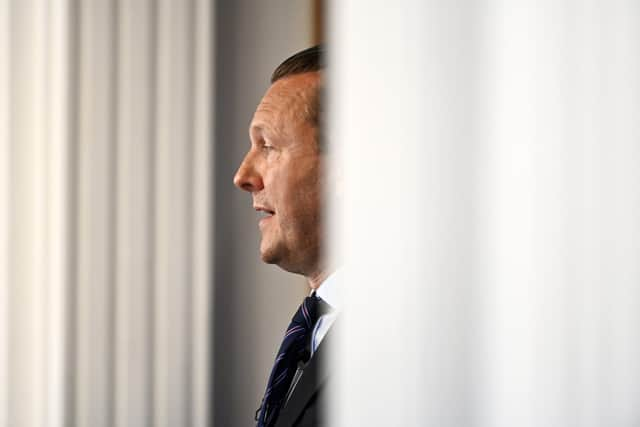
Mr Findlay, whose daughter was in the house at the time, chased Burns down and sat on him to restrain him until the police arrived. In his defence, Burns claimed the journalist had told him he had a compromising photo of him with a young blonde woman.
Want the latest news and top stories from across Scotland landing directly on your phone’s lock screen? Sign up here to our WhatsApp News Channel.
Burns had just months earlier been freed early from a 15-year jail terms for shooting a woman during a post office robbery in 2001.
In 1996, he was locked up for six years for threatening a security guard with a gun after he stole a cake from a Marks and Spencer branch in Paisley.
In Scotland, offenders who have been sentenced to more than four years in prison are entitled to be considered for parole after serving half their tariff.
If the board refuses release, most offenders will be reconsidered for parole no more than 12 months later and every year until their release.
The Scottish Government is consulting on the rules around parole, including the issue of transparency.
In recent years, release decisions for certain hearing types have been published on the Parole Board for Scotland website.
Victims have also been allowed to observe certain types of oral hearings.
Mr Findlay said: “If SNP ministers genuinely wanted to help crime victims, they would start by dragging the parole system into the 21st century.”
A Scottish Government spokesperson said: “The parole system could work better for everyone, which is why we are making changes through the Victims, Witnesses, and Justice Reform Bill, and why we currently have a public consultation on parole reforms that includes key areas of communication and transparency.
“It will be informed by direct engagement with victims and their families as well as other justice partners. Hearing about direct experience is essential to developing a more person-centred, trauma-informed system.”