
Scottish businesses warn customers will pay as UK to have highest inflation in G7
The Federation of Small Businesses, Scottish Retail Consortium and the Scottish Chambers of Commerce all said customers would have to pay more
Scottish businesses have warned of an even tighter squeeze on household finances as UK inflation is projected to surge to the highest in the G7 this year and next.
In its latest outlook report, the International Monetary Fund (IMF) said price inflation in the UK would increase more sharply than expected in 2025 and 2026 compared with previous predictions from July.
The IMF’s report also increased its UK growth forecast for this year but reduced its prediction for 2026 amid concerns over the labour market.
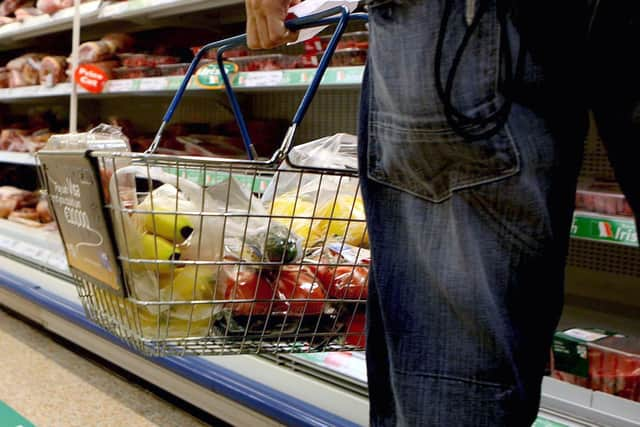

The Federation of Small Businesses (FSB) Scotland said “many firms won’t have any choice but to put up their own prices”.
The Scottish Retail Consortium (SRC) said increased costs are “proving difficult to absorb and unfortunately this is having to be passed on”.
And the Scottish Chambers of Commerce (SCC) said “many businesses are left with no choice but to pass the increased cost onto consumers”.
In the world economic outlook, the body highlighted that inflation is picking up in the UK and US.
Most recent figures from the Office for National Statistics (ONS) showed that UK consumer price index (CPI) inflation struck 3.8 per cent in July and August, marking the highest levels since January 2024.
The uptick has been particularly linked to accelerating food and hospitality prices, with many firms and industry groups claiming this has been partly driven by increased labour and tax costs.
The IMF said it expects UK inflation to average at 3.4 per cent in 2025, increasing from its previous prediction of 3.2 per cent.
The forecasts also showed that UK inflation is expected to slow slightly to 2.5 per cent next year, but this is nonetheless above the 2.3 per cent prediction from earlier this year.
It means UK households are expected to face the highest rate of price inflation across all the G7 group of advanced economies over the two years.
It also highlights a challenge for the Bank of England as it seeks to bring inflation back to the 2 per cent target rate.
FSB Scotland chairman Guy Hinks said: “Nine in ten small firms in Scotland are already saying their cost of doing business is higher than at the same time last year, with increasing tax, labour and utility bill costs being the biggest drivers for them.
“The prospect of more inflation coming down the line will be very concerning, particularly as they are still coping with the extra costs caused by the most recent period of high inflation in 2022/23. In these circumstances, many firms won’t have any choice but to put up their own prices, which risks creating a vicious cycle of rising costs fuelling further inflation.
“Of course, price rises aren’t an option for all businesses, so others will have to look to make cuts elsewhere.”
David Lonsdale, director of the Scottish Retail Consortium, said: “Concerns about elevated levels of inflation – and in particular food prices - are weighing on consumer spending and retail sales, especially for less affluent households who typically spend proportionately more of their household budget on groceries.
“Retailers are striving to keep down prices for customers however the sheer burden of statutory costs bearing down on the retail sector and its supply chain is proving difficult to absorb and unfortunately this is having to be passed on. It is imperative that both the UK and Scottish government Budgets don’t compound the costs crunch facing the retail industry. The focus should be on helping rather than hindering retailers’ ability to keep down prices on shop shelves for customers.”
SCC chief executive Liz Cameron CBE said the IMF’s World Economic outlook for 2025 “reflects the uncertainty that businesses across the UK are facing”.
She said: “While the UK’s inflation is projected to peak at 4 per cent, we are also set to be the second-fastest growing economy in the G7 by the end of 2025.
“This seemingly paradoxical forecast is both a testament to the underlying resilience of Scottish businesses, and a stark warning of the challenges looming on the horizon.
“Businesses are continuing to grapple with the triple hit of higher National Insurance Contributions, an increased minimum wage, and the highest energy bills in Europe. Add to that the full effect of international tariffs coming into force, and many businesses are left with no choice but to pass the increased cost onto consumers. This inevitably dampens demand, drives down sales, and contributes to a gloomy economic outlook.
“This echoes what we’re hearing from businesses across the country: our latest survey shows that excessive costs are forcing firms to pull back on hiring talent, delay productive investment, and raise prices.
“But there’s reason for optimism. Businesses continue to show their resilience in uncertain times. Recent wins include the UK Government’s trade deal with India and investment announcements from the US show that, despite headwinds, the UK economy remains attractive.
“That’s why the SCC is clear: there must be no new tax rises in the upcoming Autumn Budget, as well as targeted support to help more of our firms feel the benefits of this growth. This means VAT reductions for the hospitality and tourism sectors, reforms to transmission charges to bring down energy bills, and a multi-year freeze on spirits duty to support Scotland’s world-renowned drinks industry.”
The report also said the UK economy is expected to grow by 1.3 per cent this year, after being boosted by strong growth in the first half.
It represents an improvement against the previous IMF forecast of 1.2 per cent.
However, the IMF has now cut its growth prediction for next year from 1.4 per cent to 1.3 per cent as global trade pressures threaten to impact on many economies.
Canada and France also saw their growth projections reduced amid pressure from tariff headwinds, while the US saw its forecast rise slightly.
Global growth for this year has also been upgraded from three per cent to 3.2 per cent in the report, with many economies proving to be more resilient than expected in the face of tariff pressures.
The IMF said growth early in the year surpassed expectations as spending was brought forward, while many economies have also benefited from smaller increases in US tariffs than originally announced.
Chancellor Rachel Reeves said: “This is the second consecutive upgrade to this year’s growth forecast from the IMF.
“But know this is just the start. For too many people, our economy feels stuck.
“Working people feel it every day, experts talk about it, and I am going to deal with it.”
Tory Shadow chancellor Sir Mel Stride said the IMF assessment made for “grim reading”, adding: “Since taking office, Labour have allowed the cost of living to rise, debt to balloon, and business confidence to collapse to record lows. Taxes are rising to record highs and families are being squeezed from all sides.
“Working people are feeling the impact every time they shop, fill up the car, or pay their mortgage.
“Labour should be getting spending under control to bring down borrowing and avoid damaging tax rises, but Starmer and Reeves are simply too weak to do it.”
Comments
Want to join the conversation? Please or to comment on this article.