
Exclusive:Scots 'living on financial knife-edge' with many just one emergency bill away from crisis

A new study has found Scots are continuing to be impacted by the cost-of-living crisis with many struggling to meet emergency costs.
Scots are continuing to live “on a financial knife-edge” with many just one unexpected bill away from crisis, a new study has revealed.
The research sheds light on the continuing cost-of-living crisis with a warning that “few Scots can see any light at the end of the tunnel”.

The alarm comes after inflation jumped to the highest level in more than a year. Consumer Prices Index (CPI) inflation soared to 3.5 per cent in April, up from 2.6 per cent in March and the highest rate since January 2024, the Office for National Statistics (ONS) said.
Higher costs hitting Scots
In April, council tax bills soared across Scotland while ScotRail fares increased by 3.8 per cent.
On Friday, Ofgem confirmed that household energy bills will fall by 7per cent from July.
The typical bill will drop by £129 to £1,720 per year when the regulator’s new price cap – which sets the limit on how much firms can charge customers per unit of energy – comes into force.
But new findings from the Understanding Scotland Economy Tracker highlight the precarious financial position of many Scots, revealing that significant numbers are just one unexpected bill away from crisis.
Many would struggle to pay emergency bills
The study by the Diffley Partnership on behalf of the David Hume Institute, found that one in five people, 22 per cent, cannot cover a £100 emergency expense without borrowing money with the figure doubling to 44 per cent for a £500 cost - demonstrating a widespread lack of financial resilience.
The research also exposes how economic insecurity is affecting wellbeing and productivity, with 95 per cent of respondents saying that people are less effective at work when financial stress disrupts sleep or nutrition.
The latest research, which spoke to more than 2,000 Scots aged 16 or older in the first week of May, shows that one in four report having lost sleep due to concerns about money matters.
The findings reveal strong public support for structural solutions with nine in 10 thinking employers have a responsibility to pay wages that meet people’s basic needs.
A total of 80 per cent said that failing to meet basic needs now will cost more in the long term while seven in 10 think there is a collective responsibility to maintain a safety net in tough times.
In Scotland, around 40 per cent of people on Universal Credit are in work.
Scots split over solutions
Since February, the number of Scots who think the cost-of-living and inflation is a priority has risen - up 2 percentage points to 36 per cent, behind healthcare and the NHS on 49 per cent, according to the study.
There is less consensus around how to fund protections - with 39 per cent of respondents stating they would pay more in tax to ensure an effective social security safety net, while 38 per cent disagree.
Scott Edgar, senior research manager, at the Diffley Partnership, said: “This data shows that while some economic indicators may be stabilising, many people in Scotland are still living with significant financial uncertainty.
“These pressures don’t exist in isolation, they can affect people’s health, their ability to work, and their overall sense of security. It’s important we understand the scale of the issue and the potential long-term impact on the economy and society.”
Susan Murray from the David Hume Institute said: “These findings confirm too many Scots continue to live on a financial knife-edge.
“When people lack the means to absorb even small shocks, it doesn’t just harm their wellbeing, it undermines our collective economic potential.
“A resilient economy needs more financially secure households. The majority of the public clearly understands this connection with strong support for fair wages and a robust safety net.
“Sadly despite some economic indicators beginning to change, few Scots can see any light at the end of the tunnel.”
Energy support on the rise
Citizens Advice Scotland were contacted by more than 4,000 people in the first three months of 2025 looking for advice on fuel vouchers and energy trust finds. Two fifths of people who contacted the organisation for energy-related issues asked for advice on this kind of emergency support.
People seeking advice from Citizens Advice Scotland had an average energy debt of £2,500 while the average energy debt in rural Scotland is more than £3,100.
An additional 1,100 people sought advice about getting discretionary credit for their prepayment meters.
Emma Jackson, head of social justice at Citizens Advice Scotland, said the polling “echoes the evidence and insight we see from our advisers across all corners of Scotland”.
She added: “People are experiencing real harm with many living with constant dread and worry because of the financial situations they’ve been forced to live with.
"It's encouraging to see a high level of support for our collective responsibility to maintain a safety net. Now we need action. If we're to see the changes to social security required to ensure dignity, fairness and respect for everyone, we need urgent action from politicians."
SNP ministers blamed
Scottish Conservative shadow secretary for finance and local government, Craig Hoy, said: “It comes as no surprise that Scots are losing sleep over money worries, given the nightmare pressures piled on them by this SNP government.
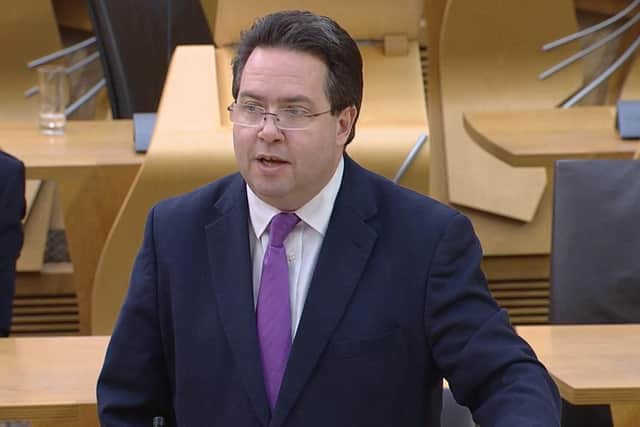
“It’s not just that they face the highest income tax rates in the UK. It’s that the SNP’s policies on energy and net zero, their failure to tackle waste, and their regulations on everything from rent to minimum unit pricing and heat pumps to LEZs, have piled additional costs on household budgets.
“More and more people also feel pressure to pay for services that, under the SNP, are no longer available or will have unacceptable waiting times. Meanwhile, the UK government is flatlining the economy and imposing their own cuts agenda.
“Scottish households want to keep more of their hard-earned income, to see public services run responsibly, and to get value for money for their taxes. But with two left-wing governments, they are likely to face more anxiety and sleepless nights.”
Efforts ‘undermined’ by Westminster
A Scottish Government spokesperson said: “We continue to allocate over £3 billion a year to policies which tackle poverty and the cost of living.
“Additionally, we will allocate over £15m to support advice services such as Citizens’ Advice Scotland, StepChange and others to provide vital support to those with money worries and debt. We are also encouraging public bodies to promote empathy and dignity for people struggling with debt, and our Housing Bill will improve renter’s rights.
“The Scottish Budget for 2025-26 prioritises action to eradicate child poverty, including through investment in breakfast clubs, employability services and developing the systems needed to effectively scrap the impact of the two-child cap in 2026.
“Energy debt is at an all-time high and we continue to call on the UK government to deliver a social tariff in the form of an automatic and targeted discount on energy bills.
“We have also repeatedly called for the UK Government to deliver an essentials guarantee to ensure people can always afford their basic needs. Instead, our efforts are being undermined by the policies of the UK government, like the two-child limit, which is increasing poverty and hardship for many families.”
Comments
Want to join the conversation? Please or to comment on this article.