
Register of Scotland's ancient woodlands takes step closer to reality

NatureScot is aiming for the project to go live next year
Plans for a comprehensive register mapping the condition of Scotland's ancient woodlands have taken a step forward.
NatureScot, the public body responsible for the natural environment, is aiming for the online map to go live in 2027.
It will record the location of ancient woodlands but also eventually provide information on their condition for the first time.
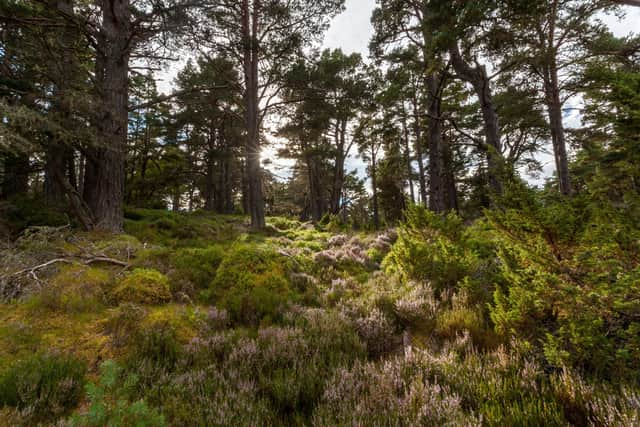

The register could also include recently planted native woodlands and “ghost” woodlands. The latter are sites which are now almost treeless but retain some woodland species.
“Scotland’s ancient woodlands are incredibly biodiverse landscapes supporting hundreds of different species of plants and animals so it’s vital we protect and restore them,” a spokeswoman for NatureScot said.
“The new ancient woodland register will not only provide a way of recording the location of our valuable ancient woodlands, but it will also include details on their condition. Work on the register is underway with plans for it to go live in 2027.”
Ancient woodlands are defined as those which are recorded as being of semi-natural origin on either the 1750 Roy maps or the first edition Ordnance Survey maps of 1860.
A “prior information notice” (PIN) has now been published to the website Public Contracts Scotland in relation to the register.
It says the scope of the contract will include defining the "protected and restored" condition that ancient woodlands must achieve.
The register will hold the name and location of sites, but may also include contextual data such as lists of species.
The PIN says NatureScot has a budget of £50,000 for the scheme in 2026/27, and a further £25,000 is available in 2027/28.
Simon Ritchie, the policy and advocacy manager for Woodland Trust Scotland, said: “This is something we campaigned successfully to have included in the [SNP-Green] Bute House Agreement back in 2021 and we have been continuing to push for it.
“A comprehensive, authoritative register on where our ancient woodland is, and what condition it's in, is vital.
“It provides certainty - for those of us whose focus is protecting and restoring nature, for those who want to build houses or electricity grid infrastructure, and for the general public.
“We all need to know where our ancient woodland is so we can best protect it, restore it, invest in it, and enjoy it. In the 21st century, that shouldn't be a big ask.
“There already is data available across a range of different maps but it's patchy, inconsistent and incomplete. Scotland has fallen behind other parts of the UK in recording the state and condition of our ancient woodland.
“We have existing protections in the planning system for ancient woods and trees but these can't be applied effectively while we lack accurate maps. It will benefit developers as well as conservationists by providing clarity with authority.
“It is great news that there is movement on this longstanding government commitment and we will be pushing for this to come as quickly as possible so our ancient woods have the protection they need and deserve."
Reform MSP Graham Simpson, who is Holyrood’s nature champion for ancient woodlands, has long called for a register.
He said it was “encouraging that some progress is being made but it looks like the comprehensive register that we need is some way off”.
Mr Simpson said ancient woodlands are “irreplaceable ecosystems that have developed over centuries and they are under pressure as never before”.
Comments
Want to join the conversation? Please or to comment on this article.