
Exclusive:Poll: Scots do not trust either SNP or Labour to fix soaring energy bills
Bills will rise on April 1 - and new polling has revealed Scots do not trust either the SNP or Scottish Labour to stop the trend

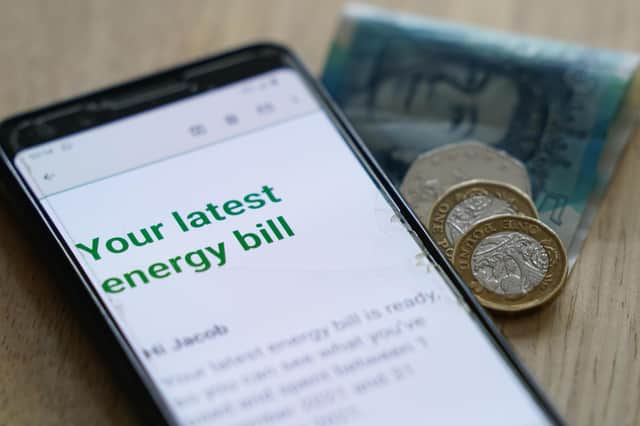
Scots do not trust either the SNP or Scottish Labour to bring down soaring energy bills, a poll has revealed, as householders brace to be hit by a “wave” of hikes from Tuesday.
The survey, published exclusively by The Scotsman, shows almost four in five Scots expect energy bills to rise further over the next five years.


And the poll, carried out by Opinium for iNHouse Communications, shows while Scots believe renewable energy is the key to bringing down costs, just 24 per cent approve of Scottish Labour’s approach to net zero, while only 27 per cent back the SNP’s plan.
The survey results come just days before what consumer support body Citizens Advice Scotland has branded “April Cruel Day” - with council tax, energy prices and National Insurance contributions among costs that will all rise sharply from Tuesday.
The energy price cap, which sets the maximum amount suppliers can charge, is rising by 6.4 per cent on April 1. That means that for every £100 currently spent on energy, consumers will shortly be paying £106.40. It marks the third consecutive hike and pushes the cap 18 per cent higher than last summer.
The Opinium poll of 2,099 Scots found an overwhelming 78 per cent expect their energy bills to rise over the next five years. To fix this, Scots backed the answer laying in renewables, with 54 per cent saying that investing in renewable energy projects was key to bringing energy bills down.
Energy is seen as Scotland’s future growth engine, with 60 per cent saying renewable investment will drive economic growth, 45 per cent saying energy will be one of the most important sectors in the next five years, and 32 per cent picking it as the single biggest driver of growth — more than any other industry.
However, this growing importance of energy has not yet translated into political trust, with both Scottish Labour and the SNP returning a net negative rating on energy policy.
The UK government is blamed more than anyone else for rising energy bills, with 32 per cent of Scots pointing the finger at Westminster. This is higher than the 29 per cent who blame energy companies, and far ahead of the 10 per cent who blame the Scottish Government.
Dave Hawkey, senior research fellow at think-tank IPPR Scotland, warned both Labour and the SNP they needed a coherent narrative.
He said: “Households are right to back renewables. Getting gas out of our energy system will end our exposure to volatile global markets, into which the UK paid a whopping and unexpected £49 billion in 2022. It is also critical to our role in saving the planet, with gas accounting for more than a third of our climate emissions.
“So politicians are right to back renewables and to do all they can to ensure the economic benefits are felt locally. But the political debate is lopsided, focusing on electricity while ignoring our dependence on gas for heating. This is an amazing omission given gas makes up half of a typical Scottish energy bill.
“Voters need politicians to present a clear plan to keep our buildings safe and warm as we shut down the gas grid over the next 20 years. Getting the right heating and insulation into two-and-a-half million homes across Scotland is a massive logistical challenge that needs co-ordination, planning and preparation.
“The most important thistle politicians are yet to grasp is how we cover the associated investment costs fairly. Time is running out. Politicians need to be bold and stop dithering on how we pay for the heat transition.”
The launch of GB Energy, based on Aberdeen, has been met with significant criticism. Juergen Maier, the chairman of Labour's new state-owned energy firm, was last month unable to say when GB Energy would help cut energy bills, as has been repeatedly promised.
The admission prompted First Minister John Swiney to accuse the UK government of “hoodwinking” the public over GB Energy’s ability to bring down bills.
Jen Watson, iNHouse Communications policy lead and Scotland expert, warned failing to reassure the public was hurting Scottish Labour.
She said: “This polling confirms that energy is now at the heart of Scotland’s political and economic debate. Voters want cheaper bills, economic growth, and a renewables-led transition, but they don’t yet trust anyone to deliver it.
“There’s a huge political opportunity here. Energy is not just a policy issue – it’s a credibility test. The party that can show it’s serious about delivering clean, affordable energy will be the one that cuts through.
“Scottish Labour’s biggest challenge is apathy. Most of its own voters don’t know who they trust on energy. To change that, Labour must work with the UK government to show real leadership on delivery and outcomes.
“The SNP retains an edge on energy with a 4-7 point lead, but it's not a commanding one. With so many of their own supporters divided over net zero policy, there's a clear need to reset and reframe their offer.”
James Crouch, head of policy and public affairs research at Opinium, said: "With the next Scottish Parliament elections on the horizon, polling shows energy will be central to Scotland’s political debate.
“Both Labour and SNP voters need a credible plan for clean, reliable energy that cuts bills. However, both parties also face credibility challenges on this issue and must search for a concrete offering that they can provide the electorate ahead of May 2026."
The looming household bill increases are not limited to energy costs.
Council tax is soaring across the vast majority of Scotland’s 32 local authorities from Tuesday. Falkirk Council has set Scotland's largest council tax increase after councillors agreed a 15.6 per cent rise. But other authorities have also agreed hefty increases, with East Lothian, Scottish Borders and North Lanarkshire approving 10 per cent rises in council tax, while Edinburgh agreed 8 per cent, Fife 8.2 per cent and Glasgow 7.5 per cent.
John Dickie, director of Child Poverty Action Group in Scotland, urged both the UK and Scottish administrations to help reduce costs.
He said: “Despite progress being made in Scotland to boost family incomes and reduce child poverty, the harsh reality is that too many families are still having to make impossible decisions between paying energy bills, putting food on the table or getting into debt.
“At the same time current UK policies such as the two-child limit and disability benefit cuts are and will actively reduce the capacity of our hardest up families to pay their bills. We need to see both the UK and Scottish governments working together to boost family incomes as well as reduce the costs, including energy costs, that they face.”
Matthew Lee, senior policy officer at Citizens Advice Scotland (CAB), claimed the 78 per cent figure expecting bills to soar from the Opinium poll was “shocking, but not surprising”.
He said: “Last winter, CABs in Scotland gave energy advice to more than 9,300 people. The average energy debt was £2,500 per person, with two in five needing help with fuel vouchers or energy trust fund applications.
“We recently had someone called Daniel visit his local CAB for debt advice. Despite paying £61 per month for gas, his account was more than £900 in arrears. He also had £1,100 of electricity debt. Daniel lives on a limited income because health problems mean he can’t work. Unaffordable energy costs have pushed his finances to breaking point.
“Our figures and the experiences like that of Daniel show the reality for thousands of people who simply can’t afford essentials like heating or electricity without emergency support. At a time when incomes are falling or stagnating and prices are rising, urgent action from the UK government is needed. We need debt write-offs or a social tariff so we can start to remove the policies that cause destitution by design and avoid people falling into debt.”
Responding to the polling, Scottish Labour net zero spokesperson Sarah Boyack said: “Families across Scotland have faced rising energy bills as a result of volatile international markets, which is why the UK Labour government has made energy security a priority.
“Labour has established GB Energy, which is based here in Scotland and is working at pace to deliver cheaper, cleaner energy for people across the country.
“The Labour government is taking the long-term action needed to drive down bills for good, but it has also taken immediate steps to protect the worst off from rising bills by expanding the Warm Home Discount, so one in five Scottish households now benefit.
“The SNP also has a responsibility to use the powers it has to reduce bills, support struggling families and promote energy security. They have also not made the urgent progress needed on legislation to improve the heating of our homes.
“A Scottish Labour government would help to reduce bills by upgrading homes and by unlocking Scotland’s vast renewables potential.”
The SNP has been approached for comment.
Comments
Want to join the conversation? Please or to comment on this article.