
Exclusive:Charity warns end of life patients 'being written off' amid call for legal right to palliative care
The Scottish government is being urged to embed a right to palliative care into law following the assisted dying debate.

A leading end of life and hospice charity has warned SNP ministers that people diagnosed with a terminal illness are being “written off” by Scotland’s health and care systems.
The alarm raised by Marie Curie Scotland comes after MSPs rejected Liam McArthur’s assisted dying legislation that would have legalised assisted death for those with a terminal illness.


Marie Curie is campaigning to embed a right to palliative care into Scots law. During the lengthy assisted dying debate, many MSPs raised concerns about the quality of palliative care in some parts of Scotland - amid a warning many people could opt for an assisted death due to the postcode lottery and potential high costs of palliative care.
It comes as former prime minister Gordon Brown said there is a “moral obligation” to make “urgently needed improvements” to end-of-life care across the UK.
READ MORE: Assisted dying Scotland: High emotions as MSPs plead for votes on most-profound Holyrood decision
He called on the four governments in the UK to co-operate in a bid to ensure dying people can be “guaranteed the most compassionate and highest quality of care” regardless of where they live.
Mr Brown complained there is a “postcode lottery” in the UK, which means not everyone who needs it can benefit from “high levels of care” as they approach the end of their life.

Marie Curie has warned that Scotland’s NHS and care systems are “not set up” to adequately look after people at the end of life with the vast majority of care funding handed over to hospitals.
Last year, of the £1.3 billion spent on healthcare for people in their last year of life in Scotland, £1.1bn was to care for them in hospital while only 14 per cent of healthcare spend on people in their last year of life was on community care.
SNP ministers have committed to spend £9.4m on hospices in the next year’s budget, after an increase from the £6.5m announced in January was confirmed after negotiations with the Scottish Lib Dems.
Amy Dalrymple, associate director of policy and public affairs at Marie Curie Scotland, told The Scotsman that “there needs to be sustainable funding”.
She added: “It’s all symptomatic of the fact palliative care has not had sufficient attention as an integral part of our health and social care systems.”
Ms Dalrymple pointed to health policy documents published by the Scottish government that have “very little mention of people dying”.

“If they talk about people dying, they talk about the deaths that they want to prevent - drug deaths and things like that, which is completely understandable”, she said.
“But there is little recognition that part of what a health system does is support people when they are dying and care for them when they are dying - and that a good death is the best outcome for some people, and a rapidly increasing number of people.”
She added: “By 2040, 10,000 more people are going to be dying in Scotland and we’re not set up to support them.
“A right to palliative care is about saying people should not be written off by our health and care systems when they get a terminal diagnosis. They retain the same rights to the care support they need as you or me.
“They shouldn’t be reliant on charity donations. They shouldn’t have to travel huge distances away from their families to get the care that they need. They should be able to have the best possible quality of life as close as possible to home - the same as the commitments there are for every other person who uses health and social care services.”
But Ms Dalrymple warned that “it’s not happening”.
“It, frankly, should not need legislation”, she added.
“We’ve built a coalition of political support across the parliament for legislation for a right to put that legal framework that should not be necessary, to make sure that people get the care and support they need. This is not a party political issue.”
Ms Dalrymple said the disparity between end of life care and other health services is partly down to “the reliance on unpaid care and family carers” and “the fact that the numbers are increasing and the complexity is increasing as well”.
She said: “There is greater need because there are more people. But as we’ve gotten better at people not dying from strokes and heart attacks and other events, people are dying at an older age with more complex multimorbidities.
“So the care that they need is more complex at the end of life and therefore requires more resources, more time and maybe more specialist knowledge.
“So there is an increased need for more skilled care. People’s families are maybe less able to support them when their needs are more complex.”
Scottish Conservative shadow health spokesperson, Dr Sandesh Gulhane, said: “After nearly two decades of SNP mismanagement, our NHS does not have the proper resources to support terminally ill patients.
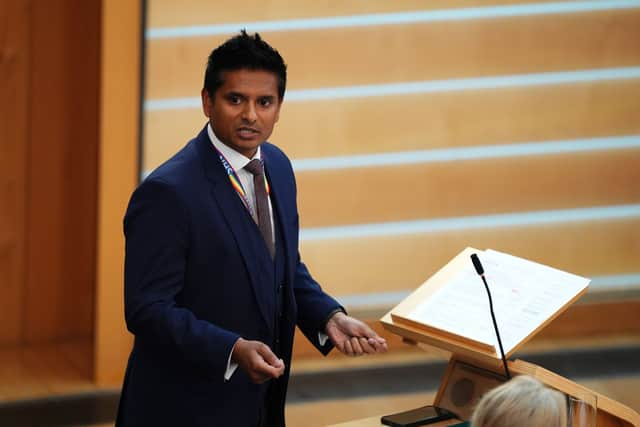
“We know that due to demographic changes we are facing an ageing population, with an increased number of people expected to die in the coming years.”
He added: “Instead of giving local authorities the money and resources to properly fund social care, the SNP wasted tens of millions on their doomed national care service policy.
“SNP ministers must do more to improve palliative care and ensure that those at the end of their life have the dignity and care they deserve.”
Scottish Labour health spokesperson, Jackie Baillie, said: “It is clear that more must be done to improve the state of palliative care in Scotland.

“Too many Scots are being let down in their final days but the SNP has no answers.
“We need a palliative care system that meets people’s individual needs and protects patients’ dignity and wellbeing until the very end.
Public health minister, Jenni Minto, said: "We want everyone in Scotland - regardless of age, diagnosis, or location - to have access to timely, high-quality and person-centred palliative care, and we are determined to build a health and social care system that meets the needs of our ageing population.
"We take the concerns raised by Marie Curie and others seriously and will continue to engage closely with the Scottish hospice leadership group and wider partners on what more can be done. These conversations are an important part of ensuring our strategy delivers for everyone who needs it.”
Comments
Want to join the conversation? Please or to comment on this article.