
Exclusive:OEUK call for North Sea oil energy assets to be deemed 'critical infrastructure' due to Russian threat
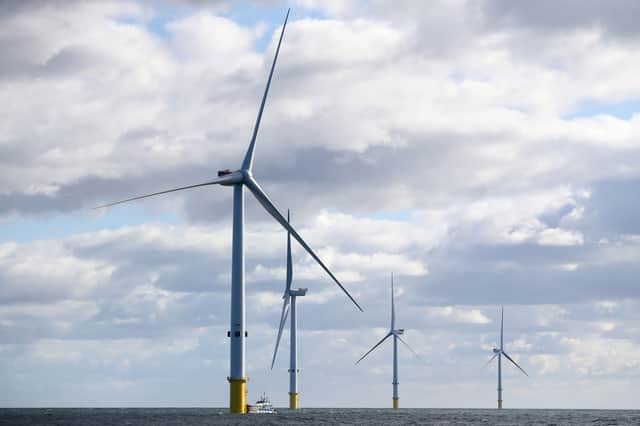
Concerns have been raised over energy security amid fears Russia could target oil, gas and wind assets in the North Sea.



Scotland’s offshore energy industry is calling on the UK government to designate isolated assets as critical national infrastructure amid the escalating security threat from Putin’s Russia.
The call comes after several incidents involving drones loitering and potentially monitoring offshore energy infrastructure and a potential energy security risk in the North Sea as Russia’s stand-off with NATO continues.

The demands come from Offshore Energies UK (OEUK) as Sir Keir Starmer’s government comes under pressure over defence and security after the Prime Minister’s defence secretary and junior ministers quit on Thursday over a spending row.
Industry bosses believe a crucial and missing part of energy security is protecting offshore assets.
Some energy infrastructure covering the generation, storage and transmission of power and fuels, both on and off-shore, is classed as critical national infrastructure (CNI) and enjoys added security protection. But oil and gas assets, as well as offshore wind farms, are currently classed as commercial resources.
READ MORE: With Russia already 'at war with us', UK must urgently defend key North Sea energy infrastructure
Reports of mysterious vessels and drones near North Sea wind farms have been reported to UK security services, while a Scandinavian investigation alleged Russia has a programme to sabotage wind farms and cables in the North Sea.
In December, Poland suffered a huge co-ordinated cyber-sabotage attack against its key energy infrastructure - with more than 30 wind and solar assets and a combined heat and power plant targeted.
Graham Skinner, security policy manager at OEUK, has told Scotland on Sunday that “the designations of critical national infrastructure haven’t changed at the same pace as our security situation has changed”.

He added: “Whilst I think they were reasonably focusing on the absolutely very highest critical aspects of our infrastructure, what we see in terms of the new grey and hybrid environment, and especially as targets are hardened, the state actors that are looking to disrupt our economy and our businesses are looking for other lower level targets.
“Therefore, given the importance of energy to our industrial sector, it’s absolutely time to review those designations and ensure that infrastructure such as ours, that is vital, is included in those designations.”
Mr Skinner said being designated as CNI would “allow those companies to really understand what the risks are to their business and what the expectations are from the government in terms of what controls do we need to put in place to protect them”.
He added: “It also brings us into those wider conversations about what is the national priority and what needs to be maintained. It helps the government at the same time - so it’s a double-edged point here.
“It helps the government understand the implications around our infrastructure and the implications for the UK and allows them to understand what might happen if we, for example, see a sort of co-ordinated attack in the way that the Polish government had on their energy infrastructure.”
If offshore assets were classed as critical infrastructure, it would mean “designated personnel would be vetted and invited into security meetings where they would get additional information about the threats”, Mr Skinner added.
“At the moment, we understand the high-level threats but the clarity of that is something which the security services can’t share at a general public level for obvious reasons”, he said.
“It would pull those designated industries more comprehensively into national government exercises, table-tops, military planning etc. It absolutely elevates the importance of those installations right across government activity.”

UK offshore energy infrastructure has experienced incidents with drones hovering as Putin’s hybrid conflict with NATO has escalated.
“We have had a handful of incidents over the last couple of years, which has perhaps deliberately highlighted the gap in our response capability offshore”, Mr Skinner warned.
“We’ve seen drones attending and loitering near offshore installations.
“The government is very clear that counter drone threats are always going to be owned by the police and the military. That’s absolutely fine, but if we need to counter drones offshore then that would be for the government to provide.”
He added: “We don’t know who has sent them there but they’re in the middle of the North Sea, they are very far from shore - so it’s unlikely to be hobbyists. It’s more likely to be something with significant criminal capability or state backing.
“It seems that they are there to be seen - to highlight a gap, to demonstrate weakness, to create anxiety. They might be monitoring or gathering information about our operations.
“At the moment, there is limited capability to even investigate those incidents.”
In April, ‘Operation Granite Resolve’, a desktop exercise, tested the offshore industry’s response to simulated threats involving suspicious vessels, drones and cyber attacks.
Mr Skinner said the exercise tested “reasonably foreseeable escalations”.
He added: “We considered people boarding installations with malicious intent, we considered what if a drone just landed on an installation. How would you assess the risk from that?
“What we found was that while we’re safe and secure at the moment, with the current level of threat, we probably only need a small escalation in terms of the grey-hybrid warfare before we find ourselves in a position where we don’t have all the answers.”
Mr Skinner warned that “if a co-ordinated attack caused us to have a shut down across multiple installations, on a cold winter’s day”, that “really would have an impact on the UK”.
He added: “We can’t just keep our heads in the sand and think we’re in the same place we were 10 or 15 years ago, where we didn’t have any threat to worry about and we could do the energy transition in a different way.
“What we need is an energy transition that is good for Britain’s national security right now. That might mean actually emphasising the benefits of UK oil and gas in the short term.”
Mr Skinner stressed that “the landscape has fundamentally changed”.
He said: “The first invasion of Crimea was, perhaps, a warning. We’ve been pre-conditioned to assume that we live in a peaceful world since the fall of the Berlin Wall. It’s taking us time, both in government and in industry, as a nation, to change our psyche - to have a more of a secure, resilient outlook on life.
“When you look at the Scandinavian countries, you see how they have a different approach. They are very much talking about total resilience across the whole nation and actually total defence from Norway - which is a key tenant of bringing industry and the security forces together. We are, in some ways, in catch-up in terms of our general thinking.”
Around 43 per cent of the UK’s energy is imported from Norway through protected pipelines, while a small proportion is made-up of imports from the United States and other nations.
“The other 43 per cent, that comes from the UK, is not currently given the same level of protection”, Mr Skinner added.
He said that the UK government, through Ed Miliband’s department for energy security and net zero “has the power to change those designations” of critical national infrastructure.
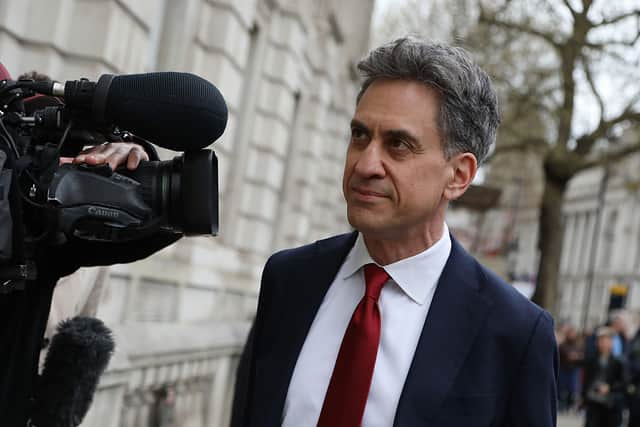
Mr Skinner said: “But we don’t currently have any indication if there’s any intent to change their approach to oil and gas infrastructure.
“We really want to see the policies by different political parties de-polorised. I think this is one place where we should be building consensus across parties, because this is fundamentally national security.
“The fact that it’s become so political between the parties actually puts us on a weaker footing going forward. We absolutely want all parties to recognise and lean into the importance of our offshore energy industry.”
Andrew Neal, professor of international security at the University of Edinburgh, told Scotland on Sunday that “Russia has spent years mapping our undersea energy and data connections”.

He said: “Its underwater research vessel, the Yantar, has loitered over UK critical infrastructure and operated drones near it, often with its transponder switched off. Western intelligence reads this activity as preparation for sabotage or cable-tapping.
“Russia could definitely target North Sea energy infrastructure.
“As a highly connected island country, we would be simple to disrupt. Disruption would not be total, but repair would still be slow and costly. The drone activity your industry sources describe fits a wider pattern of Russian reconnaissance across European waters.”
Professor Neal stressed that “the difficult part is attribution”.
“Most damage to subsea infrastructure is still accidental, caused by anchors or trawling, and adversaries know this”, he added.
“Hybrid operations exploit the grey zone between accident and attack, which allows them to impose costs while denying responsibility.
“Designating offshore energy as critical national infrastructure is the right instinct. It would help firms justify the cost of protection and give industry a clearer picture of the threats it faces.
“The dilemma is that designation also signals to an adversary which assets we value most, and where weaknesses might be found. These assets need protection, but a degree of uncertainty about how and where they are protected can itself be a kind of defence.”
Professor Neal highlighted “a cost problem”.
He said: “Security fears push up insurance premiums and can make marginal offshore projects unviable.
“Russia can damage our energy sector without firing a shot, simply by amplifying the perception of risk.
“Even though the threat is credible and doing nothing is no longer an option, the response and its potential consequences still has to be carefully considered.”
Dan Marks, energy security research fellow at Royal United Services Institute, warned that disruption to Britain's oil, gas and renewable electricity supplies "could be highly consequential for the UK".
He added: "Both are resilient from the point of view of the system as a whole, but persistent low level incidents and threats could undermine confidence in the maritime environment.
"Energy sector resilience to sabotage, hybrid attack or even open attack is under discussion across Europe and the energy industry more broadly."
Mr Marks warned that "weak monitoring and reporting mean that the UK does not have a clear picture of what is happening around assets critical for its society and economy".
He added: "Similarly, which agency or actor is responsible for what during a hybrid incident remains unclear.
"Private infrastructure operators are uncertain what their responsibilities would be and who they would be liaising with.
"The most urgent question is therefore around offshore security governance: who should offshore actors report incidents to, what will be done with the information, who would be responsible during an incident.
"Mr Marks highlighted "numerous technological solutions", including cable monitoring and repair. substation hardening and having service vessels on standby.
He added: "None will be deployed unless there is clarity on funding and on regulation for security, despite some of these measures being relatively low cost and others having the potential to save money over the life of a project."
SNP energy minister, Stephen Gethins, warned that “every time international conflict sends the cost of fuel and power bills spiralling, Scottish families and businesses pay the price”.

He added: “Domestic energy security, including that provided by our valued offshore energy sector, is an essential guard against that and the UK government must therefore do everything in its power to ensure the security of Scotland’s offshore wind and oil and gas assets.
“None of us should be under any illusion about the threat Russia poses to democratic Europe and Scotland is a part of the solution when it comes to European energy security.”
Scottish Conservative candidate for Aberdeen South, Douglas Lumsden, said: “Our oil and gas sector is being decimated by hostile SNP and Labour politicians who have no clue about its importance to our energy needs.

“These are common-sense calls from the industry at a time when conflicts around the world have made it even more important to maximise our own resources in the North Sea.”
A UK government spokesperson said: “Energy resilience and security is our top priority.
“We work closely with stakeholders, including Offshore Energies UK, to protect vital offshore and subsea energy infrastructure against a range of threats.”
Comments
Want to join the conversation? Please or to comment on this article.