
Exclusive:Flagship North Sea floating wind projects stall as SNP warned not to 'squander' renewables potential
The Scottish government has been warned not to “squander” Scotland’s renewables potential after it was revealed projects have stalled.
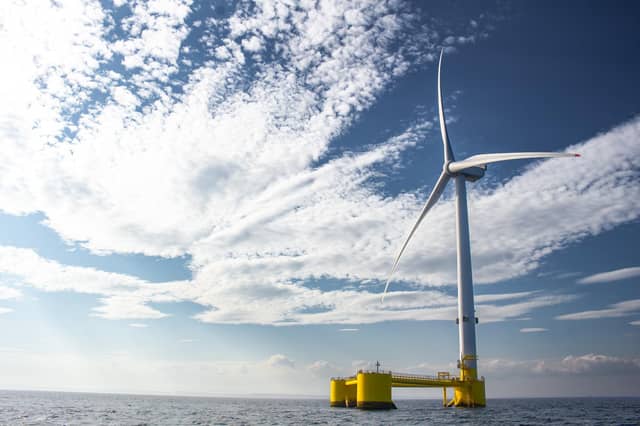


The energy future of the North Sea has been plunged into deeper crisis after it emerged the SNP's flagship floating offshore wind developments tied to cleaning up oil and gas platforms have stalled.
Alongside the ScotWind projects, SNP ministers brought forward the innovations and targeted oil and gas (INTOG) leasing rounds in 2023 for offshore wind projects - with 12 proposed floating wind developments securing £262 million in option fees for the public finances.

But only one targeted oil and gas project, for a single turbine, is under construction and only one more proposed development has received planning consent - with thousands of potential jobs on the line for the building and manufacturing of the renewables infrastructure.
When the leases were announced, Crown Estate Scotland claimed the projects were “expected to present a significant supply chain investment opportunity in Scotland”.
The UK government has blocked controversial plans to allow Chinese turbine manufacturer, Ming Yang, from opening up a £1.5bn turbine factory in the Highlands, which would have specialised in floating wind technology used by the INTOG projects.
These 12 projects were a combination of innovative test projects for emerging technology alongside separate developments that would have supplied oil and gas platforms with clean renewable energy.
But The Scotsman understands that some oil and gas giants are now questioning whether to invest in the projects over economic fears about the North Sea, including the controversial energy profits levy.
As well as the potential to create thousands of jobs, the INTOG projects are also due to play an important role in Scotland’s efforts to tackle climate change and assist the energy transition.
Crown Estate Scotland, which issued the licences, told The Scotsman the targeted oil and gas agreements, for up to a combined 5GW of power, could now become more flexible and examined on a case-by-case basis, including connecting to the grid rather than fossil fuel platforms, to help ensure the projects remain viable and take account of changing circumstances in the North Sea.
READ MORE: Swinney calls on Burnham to review Ming Yang's controversial wind factory plans blocked by Labour
The move comes after Shell handed back a flagship ScotWind project, the 2GW CampionWinds development, to Crown Estate Scotland and BP announced last month that it was quitting the North Sea basin.
Renewables bosses have issued a stark alarm over the “fierce headwinds” the sector is facing including increased costs, the impact of unstable geopolitics and a lack of a political consensus in Scotland and across the UK on net zero and climate targets.
One INTOG developer told The Scotsman “the landscape has dramatically changed” since the leases were brought forward, adding “the North Sea is facing the same potential problems as we are seeing across the world”.
Another company warned “the economics have changed”, arguing “some energy companies’ margins in the North Sea are not what they used to be”.
They added: “The energy profits levy and other policy levers are putting up barriers that will have a knock-on impact on the wider North Sea energy transition.”
Scottish Labour energy spokesperson Daniel Johnson said: “Scotland has extraordinary energy potential and the SNP must not squander it.
“It is deeply worrying that projects appear to be stalling on the SNP’s watch.

“The SNP must work with the industry and the Crown Estate to get projects up and running and deliver jobs and energy security for Scotland.”
Scottish Conservative energy spokesman, Liam Kerr, said: "Alarm bells should be ringing among SNP ministers with the news that these major projects are not making any significant progress.
“As a result of the SNP having turned their back on oil and gas, the very companies the SNP need to invest in offshore wind do not feel comfortable doing so.”

He added: “From the SNP’s presumption against oil and gas to Labour’s extension of the energy profits levy, companies in the North Sea are facing a perfect storm.
“If Scotland’s future energy needs are to be met, then SNP and Labour ministers need to finally focus on creating the positive environment necessary to achieve that.”
In March 2023, Crown Estate Scotland announced the world’s first leasing round designed to enable offshore wind energy to directly supply offshore oil and gas platforms. By November 2023, it was confirmed that seven TOG projects had secured exclusivity agreements.
Total Energies’ Culzean project, which will power the company’s Culzean platform, is the only TOG development under construction and consists of a single 3MW floating wind turbine.
Flotation Energy and Vårgrønn’s joint venture has received consent for their flagship Green Volt project, the only TOG scheme to reach that milestone - but construction is yet to begin on potentially the world's largest floating wind farm.
The Cenos project, being developed by the two companies, is currently in the planning process.

Curelean Winds has yet to make any progress with their Beech and Cedar developments, while plans have been submitted for the Aspen development.
Harbour Energy’s lease agreement for its proposed 15MW Judy development has not progressed.
It is not known how many jobs or Scottish investment all projects could potentially provide. The Green Volt project has pledged 2,800 direct jobs during construction and 100 roles during the operational lifetime of the development.
The targeted oil and gas projects were brought forward to help fossil fuel giants meet decarbonisation targets in the UK government’s North Sea transition deal.
Under the agreement, the industry agreed to cut offshore oil and gas production emissions by 10 per cent by 2025, 25 per cent by 2027, and 50 per cent by 2030 - with the diesel used by the majority of platforms potentially replaced by clean renewable power.
The North Sea Transition Authority, which oversees the agreement, has stressed that “platform electrification will be critical in meeting emissions reductions targets”.
Katy Heidenreich , Offshore Energies’ UK's supply chain and people director, said: “Offshore Energies UK is committed to energy transition and the UK’s net zero ambitions-
The innovation and targeted oil and gas leasing round (INTOG) is designed to accelerate offshore decarbonisation by enabling offshore wind to power oil and gas platforms, with surplus electricity exported to the wider market.”
She added: The offshore oil and gas industry is already making significant progress in decarbonising its operations, having reduced production emissions by around a third since 2018 and more than halved methane emissions over the same period.
INTOG offers an important opportunity to build on that progress through offshore electrification.
“While challenges remain around grid connections, power pricing, regulatory arrangements and the commercial frameworks needed to support investment, the offshore energy sector remains committed to working with government, regulators, wind developers and operators to find practical solutions that unlock these projects."
A spokesperson for Crown Estate Scotland, said: “We are working closely with several offshore wind developers as part of the Innovation and Targeted Oil & Gas (INTOG) leasing round which was launched by Crown Estate Scotland in 2022 as an approach to help decarbonise oil and gas production and to further develop Scotland as a destination for innovation and technical development.
READ MORE: Shell hands back ScotWind lease risking £3bn of Scottish investment amid 'fierce headwinds'
“It is widely recognised that offshore wind developments around the world are facing a range of pressures but despite this, we remain committed to supporting and enabling the floating offshore wind sector and shared decarbonisation targets.
“In line with the Targeted Oil & Gas (TOG) offer document, Crown Estate Scotland will consider granting a lease on a case-by-case basis, where a developer has a current electricity offtake agreement and can show credible future demand for such agreements, or they demonstrate to our satisfaction that they have used best endeavours to secure such agreements.”

SNP energy minister, Stephen Gethins, said: “We recognise the impact that reserved policies such as the Energy Profits Levy are having, which is driving an accelerated decline of North Sea oil and gas, and now they appear to be affecting decarbonisation opportunities.
“Scotland needs a parallel track approach, with a managed transition of North Sea oil and gas taking place alongside the accelerated deployment of renewable energy, helping to secure investment, jobs and a just transition.
“We continue to call on the UK government and its regulators to scrap the energy profits levy and to support projects that contribute to Scotland's offshore wind ambitions and net zero objectives.”
Comments
Want to join the conversation? Please or to comment on this article.