
Exclusive:NHS Fife refuses to release information around Sandie Peggie statement in Beth Upton trans row case

The Scottish Conservatives accused the health board of ‘secrecy and cover-up’
NHS Fife has been accused of secrecy after refusing to release information relating to a controversial statement it published during the ongoing Sandie Peggie tribunal.
The health board was branded "irresponsible" by the nurse's lawyers after publishing the lengthy statement online last month, which it subsequently edited multiple times.
Scotland's information watchdog also criticised the health board’s "petulant tone" and said he would investigate whether to report NHS Fife for contempt of court.


The Scotsman asked the health board for information on who wrote and approved the statement, as well as for copies of earlier drafts and internal correspondence relating to it.
But NHS Fife refused to provide this, citing an exemption under Freedom of Information (FOI) laws covering “prejudice to effective conduct of public affairs”.
Scottish Conservative equalities spokeswoman Tess White said: “This is yet another shameful example of secrecy and cover-up from NHS Fife.
“Their mid-tribunal smear against women’s rights groups was utterly disgraceful. Now they’re dodging legitimate questions about who signed off these defamatory remarks. The public deserve answers – but this health board is allergic to scrutiny.”
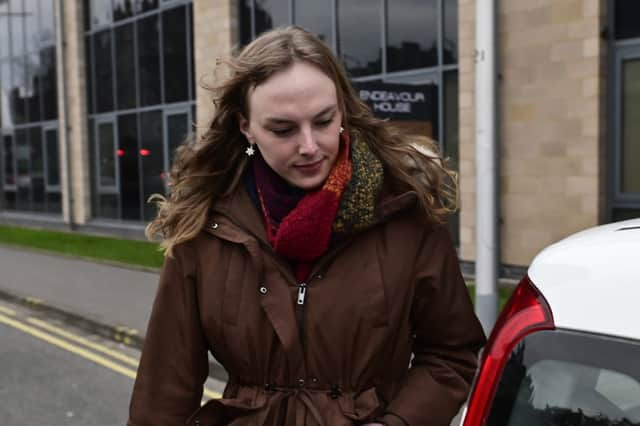
The statement by NHS Fife, published on July 18, sought to defend its actions in relation to the employment tribunal. This centres on a nurse, Ms Peggie, who was suspended from her job at the Victoria Hospital in Kirkcaldy in 2024 after complaining about having to share a changing room with trans medic Dr Beth Upton.
The health board said the debate around the tribunal had “evolved into much more worrying behaviour, including a threat of physical harm and sexual violence”. An earlier version of the statement referred to the wider involvement of the campaign group Sex Matters, which is supporting Ms Peggie, but this was later removed. A note was added saying the board was “not seeking to suggest that Sex Matters have contributed to the behaviour or issues mentioned”, before this addition was itself removed.
David Hamilton, Scotland’s Information Commissioner, condemned the statement’s "petulant tone". He said it had “cast doubt” on whether NHS Fife had complied with an earlier ruling he had made about the disclosure of the tribunal’s cost.
Responding to The Scotsman’s FOI request, the health board said the exemption applied because the information “would otherwise or be likely to prejudice substantially the free and frank provision of advice and exchange of views for the effective conduct of public affairs”.
It said: “The exemption recognises the need for staff to have a private space within which to seek advice and views before reaching an informed decision. Disclosing the content of free and frank briefing material on these matters would substantially inhibit such briefings.
“Therefore, taking account of all circumstances of this case, we have considered if the public interest in disclosing the information outweighs the public interest in applying the exemptions. We have found that, on balance, the public interest lies in favour of upholding the exemptions.
“We recognise that there is a public interest in disclosing information as part of being open and transparent. However, there is a greater public interest in allowing a private space within which NHS staff can provide free and frank advice and views in briefings and draft formats.
“It is clearly in the public interest that NHS Fife can properly make decisions and to understand fully the ask. NHS staff need full and candid advice from multiple services to enable them to do so. Disclosure of this type of information could lead to a reduction in the comprehensiveness and frankness of such advice and views, which would not be in the public interest.
“Any internal drafts or discussions which took place with regards to the public positioning statement were not implemented and releasing these deliberations would prevent the free and frank expression of views or more generally prevent deliberation.”
Comments
Want to join the conversation? Please or to comment on this article.