
Exclusive:New health secretary told to reverse funding cuts for diabetes technology
Dozens of campaigners have signed the open letter which has been sent to First Minister John Swinney and new Health Secretary Angela Constance

The newly-appointed Scottish Government is being told to reverse its decision to withdraw ring-fenced funding for technology to treat diabetes.
Over 120 organisations from across Scotland have signed an open letter to the First Minister and new Health Secretary Angela Constance highlighting the face here is a postcode lottery in being able to access hybrid closed loop systems for treating type one diabetes.
This technology links continuous glucose monitoring with insulin pumps. The technology is able to monitor blood glucose and then automatically adjust the amount of insulin that is given through the pump, eliminating the need for finger-prick tests.
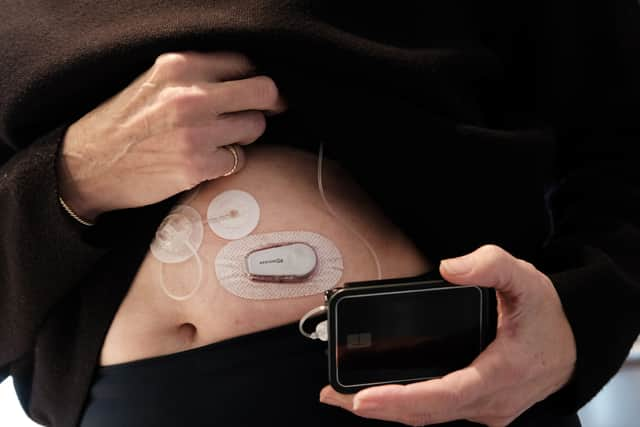

However ministers are being told to reinstate national funding for this and publish a long-term delivery plan to make sure there is equal access across Scotland.
Stephen Nixon and his 12-year-old son from Portobello, Edinburgh, both have type one diabetes. He told The Scotsman: “Removal of ring-fenced funding will affect thousands of patients across Scotland.
“The postcode lottery also means that someone in South Queensferry who is with NHS Lothian might not get access to this but someone in North Queensferry will because they are with NHS Fife.
“This technology is the best thing to a cure that we have right now. It takes away the mental strain and the guess work. It doesn’t remove the extra 180 decisions a day, but it helps you make them, and that is crucial.
“If you don’t give yourself enough insulin your body effectively kills you, it can lead to illness and death really quickly.
“We are already seeing patients due to get this technology having it cancelled because of the removal of centralised funding and that is a concern.”
The open letter that has been sent to John Swinney says there is also an economic benefit to getting more diabetes patients on this technology.
Diabetes currently costs NHS Scotland around £875 million every year, including £475m on complications. This technology can help to reduce hospital admissions and the risk of serious complications.
It said: “The sudden loss of this investment is devastating for the diabetes community.
“There is a very real concern that local health boards are neither financially able nor operationally prepared to meet increased demand, resulting in insufficient capacity to deliver hybrid closed loop systems to those who need them.
“The timing of this decision is particularly concerning, as local budgets are already committed for this year and do not reflect the proposed change in funding and delivery arrangements.
“While we recognise the challenging financial pressures currently faced across public budgets, the consequences of this decision are profound.”
The letter says any reduction in access to this technology will have a “direct and negative impact on both the physical and emotional wellbeing of people living with type one diabetes”.
This compares to NHS England which has committed to a rollout of this technology with a five-year funding plan.
The letter added: “Scotland has rightly been recognised as a leader in progressive diabetes care. This decision threatens to reverse that progress.
“At a time when technology is transforming the ability of people with long-term conditions to live healthier and more independent lives, it is essential that policy and funding frameworks keep pace with clinical and technological advancement.”
A Scottish Government spokesperson said: “It is incorrect to suggest we are withdrawing funding for closed loop systems. In 2024-25, the Scottish Government invested £8.8 million to support around 2,100 people to receive closed loop systems; including approximately 77 per cent of under 18s with type 1 diabetes. This rose to £14.4 million in 2025-26 and has, for 2026/27, been added to the record £17.6 billion core funding for health boards.”
Comments
Want to join the conversation? Please or to comment on this article.