
'It doesn’t feel like a government able to plan for uncertainty': how the SNPs cuts could affect Scots' lives

On Tuesday, Shona Robison announced her plans for emergency spending controls
It has been a period of comparative prosperity for Scots, who have enjoyed universal benefits such as free prescriptions, bus travel for young people and university tuition fees, all of which have come with a hefty price tag for their counterparts south of the border.
Now, the Scottish government has warned it has been forced to make swingeing cuts in a bid to balance the books - with a range of services set to take a financial hit.
While the main universal benefits have been protected from the axe for now, economics experts have warned that the government will struggle to “function well” in the “new era of austerity” heralded last week by finance minister Shona Robison. Opposition politicians have chastised the SNP government for measures such as shelving plans to roll out free school meals to all primary school pupils within the next couple of years - and dipping into a pool of cash earmarked for green energy projects.
On Tuesday, Ms Robison announced her plans for emergency spending controls, including slashing £115m from the health department and £23m from projects to tackle climate change.
This comes weeks after she wrote to all cabinet secretaries halting all but essential government spending, while civil servants were also told to put all options for cuts on the table, including universal benefits such as free prescriptions and university tuition fees. Winter fuel payments for pensioners are now to be means tested, a measure which has also been brought in by Westminster. The finance secretary has claimed the moves are necessary due to uncertainty over how much cash is coming Holyrood’s way in Chancellor Rachel Reeves’s October budget. However, others, including the Scottish Fiscal Commission, say much of these financial pressures are down to decisions made by the government here in Scotland.
Emma Congreve, deputy director of the Fraser of Allander Institute at the University of Strathclyde, points out that universal benefits would be “hard to justify” if introduced into today’s financial climate.
“I think if universal benefits didn’t exist right now it would be hard to justify them being put into place,” she says. “It would not tally with targeting child poverty and would struggle to meet the criteria for spend if they were being introduced now.
“But they are in place and it doesn’t look like there are any indications that will be challenged.”
However, she warns that individual people will likely see some detrimental impact of these cuts.
Writing to Holyrood’s finance and public administration committee, Ms Robison has argued that many of the emergency spending controls will have limited impact on frontline services and people’s day-to-day lives.
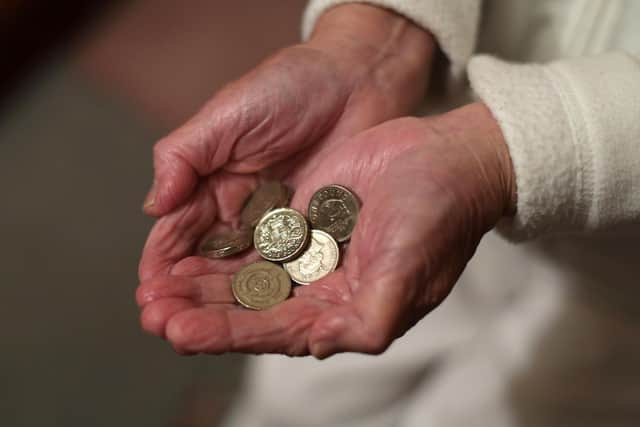

Ms Congreve believes this does not mean the cuts will not be felt by Scots across the country.
“Some of the cuts could have unintended consequences,” Ms Congreve said. “It feels like they are restricting the ability of the government to function well.
“It doesn’t feel like a government able to plan for uncertainty, and that is a real problem. It is reducing the ability of the government to do its job.”
Ms Congreve warns there are “real consequences” to some of the cuts, even if they seem quite minor such as curbing civil servants’ travel expenses.
She adds: “It seems that unless it is really urgent, those things are not allowed because ministers can’t prove it is value for money, and they need to be able to argue they are spending their money in the right places.”

It is not just the financial experts who are worried about the government’s ability to function over the next few months - opposition parties are also concerned.
“It’s going to be very tough for the government to get anything done in the year ahead,” says Liberal Democrat MSP Willie Rennie.

“I think that is reflected in the lack of ambition in the programme for government.
“We need big changes to boost public services and get our economy firing on all cylinders but I am not convinced that SNP ministers have the drive or the vision to make that happen.
“Cutting back on civil service spending may seem like a sensible economy but there is a risk that valuable experience is lost and the machinery of government starts to grind to a halt.”
Scottish Labour also thinks the government is going to struggle between now and when it sets the 2025/26 budget on 4 December.
A lot of the criticism from the SNP benches is levelled at Labour, with blame put on the chancellor for economic uncertainty following her announcement that there was a £22 billion black hole in the UK Treasury finances.
Scottish Labour MSP Michael Marra tells Scotland on Sunday: “Public services are already at breaking point and the SNP is struggling to deliver on the basics - and things are set to get even worse when budget cuts hit.”
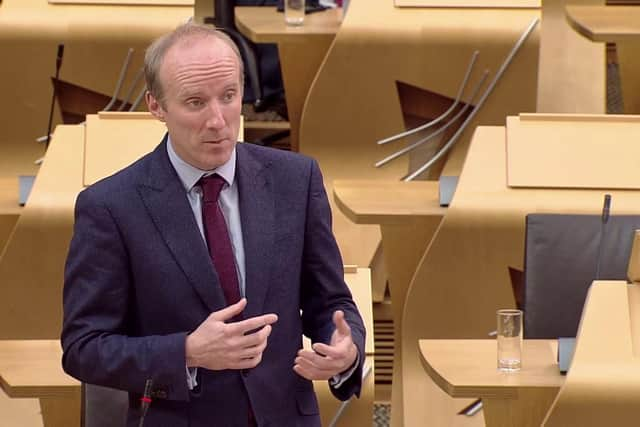
He says the “sticking plaster approach” has caught up with the SNP, and predicts it will cause “chaos” for Scots in the coming months.
The Scottish Conservatives say the SNP has “run out of ideas” because they have “run out of money”.
“They have produced no plans for growth though, as the Scottish Fiscal Commission pointed out, sluggish performance on their watch meant that we lost out on £624m in tax revenue,” says Liz Smith MSP.

“Despite having imposed the highest taxes in the UK, the SNP will have to make cuts at the level of the £500m slashed from the budget in future years.
“Their incompetence will continue to make it more and more difficult for our hard-pressed public services to operate.”
Other experts have warned the government will find it “challenging” to get this year’s budget past the post.
This is because there are fears the Scottish Greens will not back the SNP’s 2025/26 budget, leaving the nationalists relying on the Scottish Lib Dems for support. If the budget is not passed, an election could be triggered, something Mr Swinney has insisted the public does not want.
Government ministers have managed to get through a particularly difficult first week back after the summer recess - but the difficult weeks look set to continue.
The decisions they make in the next few months are crucial as next year’s budget needs to be watertight.
This could prove exceedingly difficult, as Ms Robison described the 2024/25 budget as the most challenging since devolution.
Indeed, it is the Scottish Greens who are pulling out all the punches after being ditched from government four months ago.
Earlier this week the party accused the SNP of throwing out all the Green policies they fought for in the Bute House Agreement (the cooperation agreement between the two parties which was ended by former first minister Humza Yousaf).
Ms Robison’s announcement earlier this week that £460m from ScotWind - cash raised by the government leasing out the seabed to wind farm developers - could be used to plug the black hole will not have appeased the party. Although this was initially earmarked for investment in green energy projects, after using £350m of this cash earlier in the year for day-to-day spending, it looks possible that it could be used elsewhere in the government’s budget.

Lorna Slater, co-leader of the Scottish Greens, said: “A lot of people will be disappointed that the SNP have gone back on so many of their pledges and cut so many crucial budgets.
“Actions count far more than words.”
She believes the government now needs to prioritise its Housing Bill, and make sure any new legislation brings around permanent rent controls and protection for tenants.
A spokesman for the Scottish Government said: “As part of his first programme for government, the First Minister has set out commitments that are affordable, impactful and deliverable.
“Ministers have made clear, following the UK chancellor’s July statement, that the Scottish Government continues to face the most challenging financial situation since devolution.
“This requires tough choices to ensure available funding can be directed towards the priorities of eradicating child poverty, prosperity, improving our public services and protecting the planet.
“Scotland has the most comprehensive social contract in any part of the UK.
“This includes free tuition, free prescriptions, and the Scottish Child Payment - which is estimated to keep 60,000 children out of poverty this year.”
Comments
Want to join the conversation? Please or to comment on this article.