
How will Rachel Reeves' Spring Statement affect Scots?
The Chancellor pledged more money for the Scotland, promised the public would be £1,000 better off by 2029 and pleaded with MPs not to oust Sir Keir Starmer
Rachel Reeves made her Spring Statement in the House of Commons on Tuesday afternoon.
Unlike previous years, where Chancellors have announced budget measures twice a year, Ms Reeves did not include any tax or spending changes.
This is because she has committed to just a single budget a year, in a bit to emphasise “stability”.
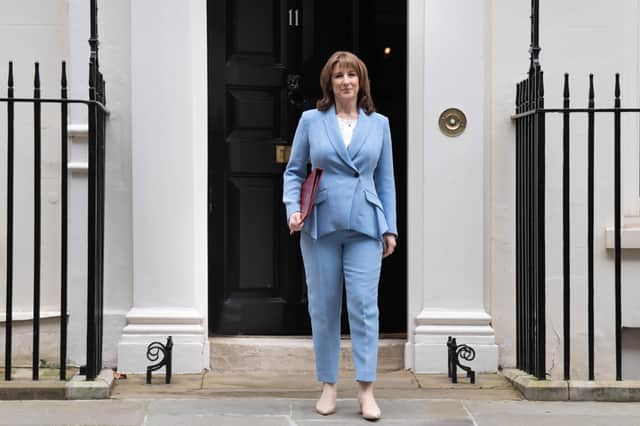

Instead, she did laid out forecasts on how the UK’s economy is doing and how it is predicted to do in the future.
So what did she say? And how will it impact Scots?
More Scottish Government funding
The Office for Budget Responsibility’s (OBR) forecast showed that the Scottish Government is set to receive £921 million in extra funding
Scottish Secretary Douglas Alexander said: “The Chancellor has set out how the UK Government has the right economic plan for Britain, cutting the cost of living, cutting borrowing and growing the economy.
“The Chancellor also confirmed an additional £921 million for the Scottish Government. That means that, since the general election in July 2024, we have provided the Scottish Government with nearly £12 billion extra for them to invest into public services like the NHS, transport or education.
“In an increasingly uncertain world, stability in our economy is vital. Because of the decisions the Chancellor has already taken, we have a stronger and more secure economy. Inflation and interest rates are falling, and families are better off as we tackle the cost of living.”
Brits to be ‘£1,000 better off’ by 2029
The Chancellor revealed that the UK’s budget watchdog had slashed its forecast for growth this year.
The Office for Budget Responsibility (OBR) indicated gross domestic product (GDP) will increase by 1.1 per cent in 2026, down from the 1.4 per cent it forecast in November.
But it upgraded its forecasts for 2027 and 2028 from 1.5 per cent to 1.6 per cent.
The Chancellor said that this was “growth of 5.6 per cent over the Parliament, after falling under the Tories in the last Parliament.”
She added: “By the next election, after accounting for inflation, people are forecast to be over £1,000 a year better off.”
Inflation to fall
Inflation - the rate at which prices rise - is forecast to be 2.3 per cent in 2026, lower than the OBR’s previous forecast of 2.5 per cent.
It is then set to be in 2.0 per cent in 2027, the same as previously forecast, and remains at 2.0 per cent in 2028, 2029 and 2030, unchanged from previous forecasts.
This would mean the UK Government would be hitting the Bank of England’s two per cent target.
Public borrowing to fall
Borrowing is set to reduce by “nearly £18 billion compared to the autumn”, with public sector net borrowing expected to fall from 4.3% this year to 3.6% next year, before hitting 1.8% in 2029-30, Rachel Reeves said.
The Chancellor told the Commons: “In their forecasts today, the Office for Budget Responsibility show that we are set to reduce borrowing by nearly £18 billion compared to the autumn.
“This year we are set to borrow less than the G7 average, something the Tories never achieved in fourteen years. The forecast today shows that Public Sector Net Borrowing is set to fall from 4.3% this year, to 3.6% next year, then 2.9%, 2.5%, and 1.8% in 2029-30.”
Plea to Labour MPs
The Chancellor used her statement to plead with Labour MPs not to get rid of Sir Keir Starmer if the May elections go badly - as is expected.
She pledged an additional £15 billion a year “for the priorities of working people” but only “if we stick to our plan”.
Ms Reeves said: “That is the prize on offer, that is the prize within our grasp.”
She also warned progress could be “wiped out by a change of course”.
She said: “We must reject the political instability which would put at risk all the progress we have made.
“My plan is the right one. I am in no doubt about how great the rewards can be if we stay the course. The forecasts today confirm that the choices this Government has made are the right ones.”
Comments
Want to join the conversation? Please or to comment on this article.