
Holyrood Election 2026: All the party manifestos and key pledges at a glance

Political parties vying for votes at May’s Holyrood elections have published their manifestos as they attempt to sway the public to back them at the ballot box. We take a look at the key pledges and what the Institute for Fiscal Studies (IFS) makes of the spending plans amid an extremely tight financial context.
Reform UK


Malcolm Offord’s prospectus proposes cutting the number of MSPs and ensuring politicians have to physically turn up at parliament.
Reform has pledged to cut Scottish income tax below the UK rate and has vowed to reinstate the "local connection" homelessness rule.
The party wants to scrap Scotland's extra tax bands and align the remaining bands with rates in England, with an aim to cut the rates by 1p initially and make bands up to 3p lower than south of the border by the end of the parliamentary term.
Mr Offord argued his party’s plans would "unleash Scotland's potential" and make Scotland “the best place to live and work in the UK”.
The IFS warned that Reform’s plans to pay for tax cuts by economic growth was “not credible”.
It added that the strategy was “a mirage created by a misunderstanding or misrepresentation of the current devolution settlement and incorrectly comparing cumulative and annual figures”.
Scottish Conservatives

Russell Findlay’s pitch to voters is focused on cutting back the Scottish government’s spending on devolved benefits to fund tax cuts and reductions in business rates.
The Tories’ manifesto also includes legislating for a taxpayer savings act to clamp down on government bureaucracy and waste as well as introduce a government transparency bill.
The manifesto pledged to hand back £500 for pensioners on their pension tax and argued it would cut bills by up to £2,483 a year.
Mr Findlay said his party will “end the SNP’s obscene waste of taxpayers’ money”.
He added: “For pensioners who have worked hard and deserve to enjoy retirement, this is no more than they deserve.”
The IFS said the Conservatives’ “=costs are “set out clearly” but warned there was a “significant risk that the amount saved” from cuts to disability benefits would be lower than anticipated.
Scottish Greens

Ross Greer and Gillian Mackay have pledged to extend 1,140 hours of funded childcare to all two-years and offer 570 hours from six months to two years.
The party would expand free bus travel to anyone under 30 and cap fares at £2, have proposed moving the school start age to seven and scrap council tax - replacing it with a residential property tax.
Although not devolved to Holyrood, the Greens want a ban on all new oil and gas developments in the North Sea.
Ms Mackay said her childcare plan was “one of the most crucial steps we can take to tackle inequality”.
The IFS welcomed the Greens’ plans for “substantial spending increases” being combined with “a recognition that this would need higher revenues too”.
But it warned that “increases in taxes would probably have to be even larger than suggested, or cuts made to other day-to-day spending”.
Scottish Labour

Anas Sarwar launched his manifesto for change with commitments to build 125,000 news homes, top up childcare outside of term time, end the 8am rush for GPs by reinstating family doctors.
Labour has also vowed not to increase income tax and potentially cut it if the economy grows , would end the ban on new nuclear power stations being built in Scotland and set up a new misogyny reduction unit.
Mr Sarwar argued his party’s manifesto was “a real plan to fix the SNP’s mess and end their waste”, adding that Labour would “get the basics right for all those hard working Scots who just want a government that delivers”.
The IFS praised Labour proposing no “big tax cuts of expansion in service provision and entitlements”, warning that “given the fiscal situation, the lack of big unfunded new commitments is welcome”.
The IFS added: “Instead, the focus is mainly on improving and reforming existing services.”
Scottish Lib Dems
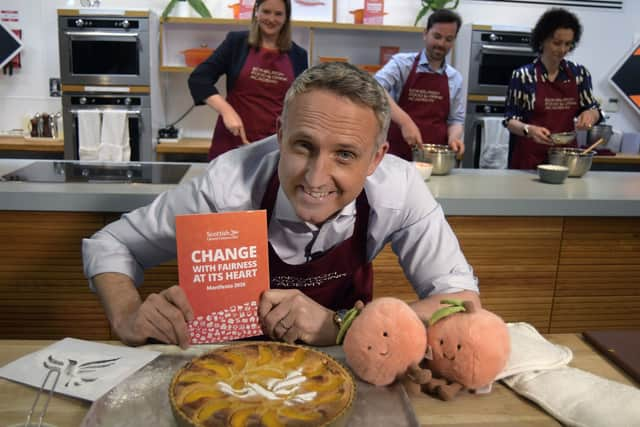
Alex Cole-Hamilton’s vision for the next five years includes 900 new patient-facing staff like nurses, physios and mental health professionals in GP practices and an emergency £100m home insulation programme.
The Lib Dems have also vowed to dual the A9 and construct tunnels for Shetland, as well as passing a Ferries Bill and hiring 2,000 more pupil support assistants.
Mr Cole-Hamilton said his party has “a realistic plan to get things done, focused on the things that matter most like access to healthcare and the cost of living”, warning that “it feels like our country simply isn’t working”.
The IFS said the party, like Labour, was “focusing on improving existing provision” instead of big changes.
It added that “fiscally, this is less risky than big unfunded pledges”, but warned there was “a bit of a hole to fill” to balance the books.
SNP
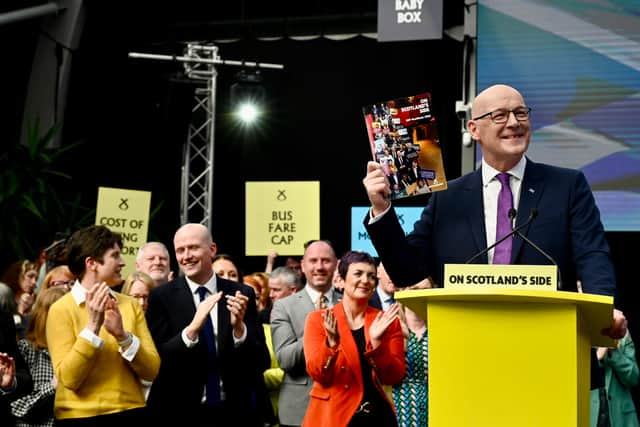
John Swinney grabbed headlines with a vow to cap the price of essential supermarket foods in the SNP manifesto.
The party has also vowed to expand its growing fleet of GP walk-in centres, extend wraparound childcare from nine months to 12-years, freeze income tax for the next five years and cap bus fares across Scotland at £2.
The SNP also wants to pilot a basic income for artists and a £200 youth culture pass.
Mr Swinney, who argued an independence referendum can be held by 2028, said the SNP would “deliver more cost-of-living support, a stronger NHS, and a stronger economy” if they are returned to power.
The IFS has warned that the SNP’s extra spending plans in the manifesto, costing an estimated £1.4 billion a year by 2031–32 have been tabled “without credibly saying how it would pay for this”.
“In reality, paying for these plans would require further tax rises or deeper cuts to lower-priority spending,” the IFS added.
Comments
Want to join the conversation? Please or to comment on this article.