
GP warns John Swinney's walk-in surgery proposals 'will not be delivered'

The First Minister said he will open walk-in GP surgeries across the country to help fix the crisis facing the NHS.
John Swinney has been warned that his proposals to roll-out walk-in GP surgeries across the country “will not be delivered” by a doctor turned MSP.
On Monday the First Minister unveiled his new proposals to transform the health service during his speech to SNP conference in Aberdeen.
The plans will see 15 walk-in GP surgeries open, operating between midday and 8pm seven days a week.
However, Dr Sandesh Gulhane MSP, the Scottish Conservatives' health spokesman, said the proposals show the Scottish Government has “no real vision” on how to fix the “permanent crisis” in the NHS.
Dr Gulhane, who also works as an NHS GP, has written to Mr Swinney to warn his proposals will do nothing to end the 8am rush for an appointment, and accused the SNP of putting headlines before delivery.
He said: “This latest policy from John Swinney to try and support GPs is nothing more than back-of-a-fag packet stuff and a pre-election stunt.


“John Swinney has been at the heart of a rotten SNP government who have failed GPs for 18 years. If this is such a good idea, why have they taken so long to do it?
“No wonder GPs like myself believe this will be the latest in a litany of broken promises made to us.
“I see first-hand the effects of the SNP’s mismanagement on GP services and what that is doing to overwhelmed colleagues and suffering patients.
“The SNP is completely detached from the reality facing staff and patients across Scotland’s NHS and have no real vision to fix the permanent crisis within the health service.”
He added that GPs are “burnt out and feel abandoned” and said the new proposals “will do nothing to help stem that tide”.

He added: “The solution can be found right now by backing the Scottish Conservatives plans to ring-fence funding specifically to increase appointment availability.”
Dr Iain Morrison, chairman of the British Medical Association (BMA) Scottish General Practitioners Committee, warned against shifting “essential resources” into “pilot schemes with limited potential”.
Dr Morrison argued that similar walk-in centres elsewhere in the UK had “not demonstrated good value for money”, insisting that cash must be “directed into core, essential services, such as general practice”.
Meanwhile, Dr Chris Provan, chairman of the Royal College of General Practitioners, said the plan “does not address the major barriers to good access – critical workforce shortages and unmanageable workload”.
Dr Provan said: “Who will staff these new services and their extended, weekend hours?
“How will continuity of care be preserved, when patients benefit enormously from knowing and trusting their regular GP?”
The SNP’s health secretary Neil Gray said he is currently considering urban, rural and island sites for the first 15 centres, which will be opened on a “pilot basis” to make sure they are workable.
Speaking to the BBC, he said: “We’re in discussions with the Royal College and with the BMA around their longer-term funding position [and] making sure that we are providing greater investment into existing general practice services.
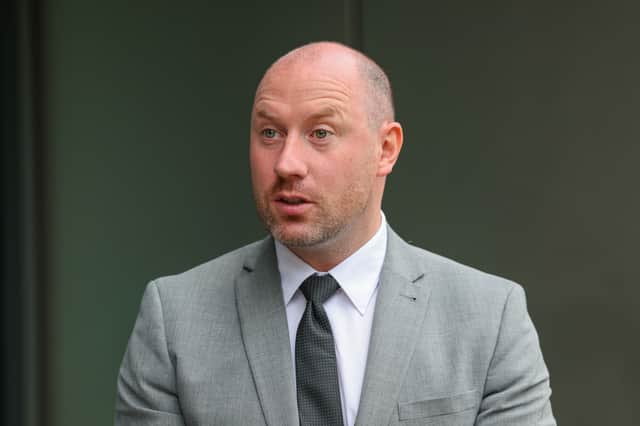
“This is about building a different way for people to get in. It isn’t about replacing general practice as we see it and know it, but it’s about providing an additional routine.
“We’ll be working with the Royal College and with the BMA about how we can design those services so that it is workable and does provide that additional functionality.
“I think this is an exciting opportunity for us to reimagine and ensure that we are building on the successful GP model that we’ve seen and provide alternative routes for people to get in, recognising that general practice is the absolute bedrock of our health service and we want to see even greater capacity going in there.”
When asked how these walk-in surgeries will be staffed, Mr Gray said: “We’ve got a record 1,200 GPs currently in training and we know, because I’ve been told by GPs that they are looking for employment, so we believe that this is something we can work with the profession on, ensuring we can staff both with GPs and advanced nurse practitioners and practice nurses, ensuring we’ve got a model that suits the needs of the people that are coming to see them.”
He added: “This is about providing additionality, looking to bridge in-hours with out-of-hours, looking to ensure that we’re avoiding people having to feel the need to go to A&E when the GP closes and avoid that 8am rush the following morning for people to seek appointments.
“This is about bridging that gap so that 12pm and 8pm, seven days a week, people have got access to the health service.”
This comes as the number of patients waiting 12 hours or more in A&E reached its highest level in eight months. Public Health Scotland figures showed that 1,604 patients had to endure these “dangerous” waits in the week ending October 5 - about 5.9 per cent of all A&E patients.
This is an increase from 1,431 (5.2 per cent) the previous week and the highest level since February.
The number of patients waiting more than eight hours also increased to 3,667 patients (13.6 per cent). The Scottish Government’s target is to have 95 per cent of patients seen within four hours, but this has not been achieved since before the coronavirus pandemic.
Mr Gray added: “These new walk-in clinics will bring positive benefits for people across Scotland and make it easier to access GP services at a time that suits people after work or on the weekends.
“We are seeing progress in reducing waiting lists, GP numbers are up and we have already increased investment in primary care by over £100 million, this should be welcomed. These new clinics will complement existing services and will not be a replacement for the care we already greatly value.”
Comments
Want to join the conversation? Please or to comment on this article.