
EU UK reset deal: What Sir Keir Starmer's deal means for Scotland and the UK

The new EU UK Brexit reset agreement was announced on Monday.
Prime Minister Sir Keir has confirmed a new agreement with the European Union after six months of negotiations.
In what is being described as a “major deal”, the agreement includes a string of changes that Sir Keir Starmer says will be “good for jobs, good for bills and good for our borders”.
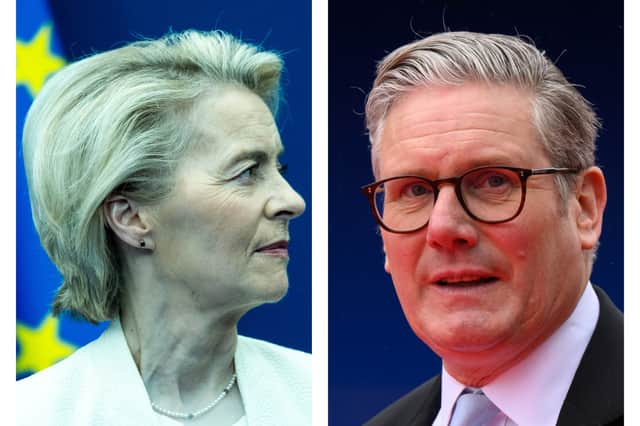

The UK government says the food trade (SPS) and energy (ETS) agreements are worth up to £8.9 billion annually in 2040 UK GDP terms.
Here’s the biggest changes and what it means for Scotland.
Food
As part of the deal, a new SPS agreement will make it easier for food and drink to be imported and exported by reducing the red tape that has hurt businesses and led to lengthy lorry queues at the border.
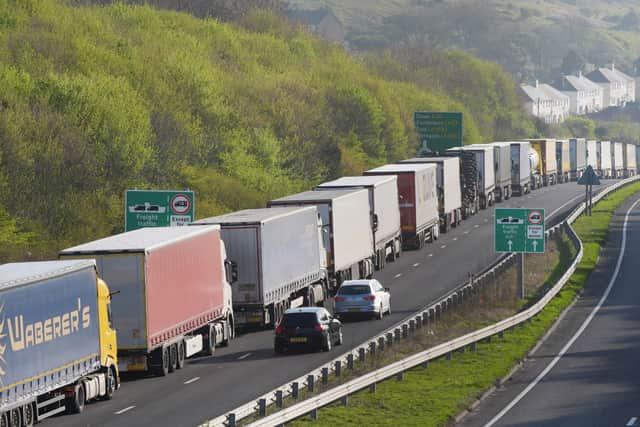
Some routine checks on animal and plant products will be removed completely, allowing goods to flow freely again, including between Great Britain and Northern Ireland. Ministers say this could lower food prices and increase choice on supermarket shelves.
Brexit led to a 21 per cent drop in exports and 7 per cent drop in imports, but now the UK will also be able to sell various products, such as burgers and sausages, back into the EU again.
Travel
One of the most immediate benefits is for holidaymakers, with British passport holders able to use e-Gates at more European airports as part of a UK-EU deal. Since Brexit, British travellers arriving at EU airports have generally been forced to queue for manned desks to have their passports stamped, rather than use automated gates with facial recognition technology.
This has led to many passengers facing long queues, particularly during peak periods. Now Scots going to Europe will have smoother travel. Pets will also be able to travel more easily, with the introduction of “pet passports” for UK cats and dogs – eliminating the need for animal health certificates for every trip.
The EU is planning to launch its long-delayed Entry/Exit System (EES) in October. This will replace the need for people arriving in the EU from non-member countries such as the UK to have their passports stamped.
Instead, they will need to have their fingerprints scanned and a photograph taken to register on a database, with the data stored for three years.
The UK and EU have also agreed to co-operate on a “youth experience scheme”, but British officials insisted numbers would be capped and stays would be time-limited.
North Sea
The deal also promises to create investment in the North Sea by encouraging up to 51,000 jobs in the area through the energy agreement that puts investment into decarbonisation. The UK government says the agreement will bring consumer benefits of up to £18 billion and up to £24bb in system benefits by 2050.
Fishing
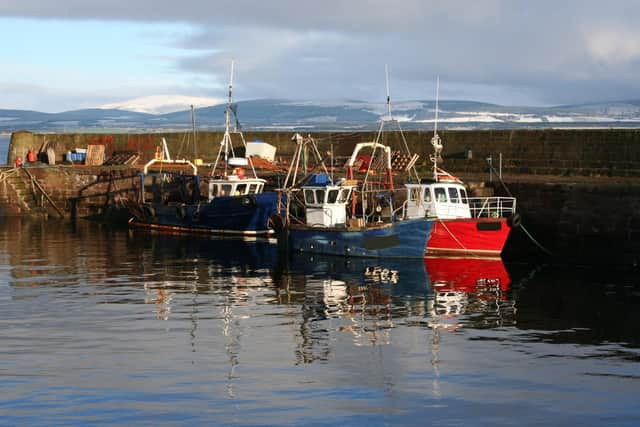
One of the more controversial areas is in fishing, with a 12-year deal done on fishing access for EU boats into UK waters. The UK government says it has secured improved trading rights for food and agricultural products into the European Union, meaning fishers in Scotland and the rest of the UK will be able to sell more of what they catch.
Labour also argues that by avoiding yearly renegotiations from 2026 onwards, they are giving fishers stability and certainty.
However, Elspeth Macdonald, who represents more than 400 fishing boats as chief executive of the Scottish Fishermen's Federation, described the deal as a "total capitulation to the EU".
She claimed the multi-year deal meant the EU continued to take a far bigger share, adding "it would be a terrible deal for Scottish fishermen”.
The First Minister said the deal showed that Scotland is “an afterthought in the UK government’s decision making”.
John Swinney added: “It’s always been like this about fishing, because Scotland’s fishing interests have been negotiated away by successive Labour and Conservative governments, and Keir Starmer’s government is just another example of that.”
Steel
British steel exports are now protected from new EU rules and restrictive tariffs, through a bespoke arrangement for the UK that will save UK steel £25m per year.
Defence
The agreement allows the UK defence industry to bid for £150bn worth of export contracts in the defence procurement project, a 430,000-jobs strong sector - the equivalent of one in every 60 jobs. The UK is one of the largest exporters of defence equipment in the world, and in 2023 the UK won defence orders worth £14.5bn.
Scotland's defence sector employs an estimated 33,500 people and added £3.2 billion to the Scottish economy in 2022.
Security
The UK will now enter talks to access facial image data sharing with the European Union for the first time, in a bid to ramp up criminal investigations across borders.
Under an agreement struck with Brussels, the move towards more data sharing seeks to help investigators speed up catching criminals and people smugglers. The deal’s measures to boost law enforcement and judicial co-operation will also look at further ways to exchange information sharing on fingerprints, DNA and criminal records.
It comes as joint efforts to tackle Channel crossings and to deepen information sharing “to control and manage migration” at UK and EU borders were also agreed.
Elsewhere the UK-EU deal pledged to work together on sharing operational information on returns to third countries, and explore possible deterrents and “innovative solutions” to curb illegal migration.
Both sides agree to do more to secure the borders, but also vowed to give international protection to those who need it.
Comments
Want to join the conversation? Please or to comment on this article.