
Do we expect too much from public inquiries, like those into Edinburgh trams and Covid, in Scotland?

Experts say there should be a clearer focus on what public inquiries hope to achieve.
Since 2007, they have cost the Scottish taxpayer £230 million, or about the same as the annual revenue expenditure of a smallish council.
Significant sums of money are spent on public inquiries in the UK. More than half of this goes towards staff costs, including a sizeable chunk on lawyers.
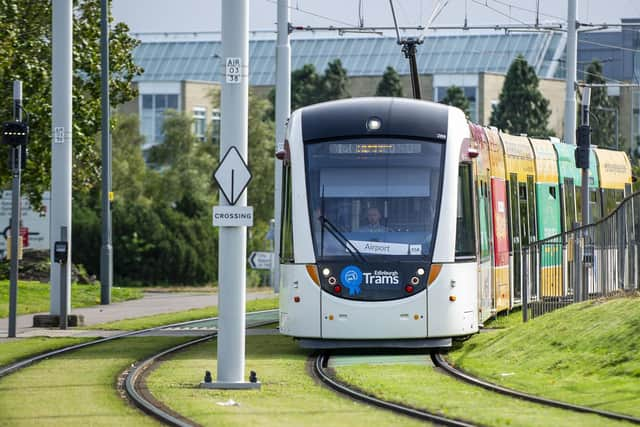

Meanwhile, there are criticisms over the length of time taken to reach conclusions. The probe into the Edinburgh tram fiasco, for example, took nine years and cost £13m.
By the time its report was published in September 2023, the extension of the tramline to Newhaven had already been designed, built and opened, and the scandal had largely blown over.
Both the UK and Scottish Covid inquiries are huge undertakings, and the ongoing Scottish Child Abuse Inquiry, announced in December 2014, has so far cost £95.3m.
But do we expect too much?
Is part of the problem simply that we expect too much of public inquiries? Holyrood’s finance and public administration committee is scrutinising their cost effectiveness, and the evidence has provided much food for thought.
"In other jurisdictions, there is a clearer focus on what the purpose of an individual inquiry is,” Dr Emma Ireton, an associate professor at Nottingham Law School, told MSPs. “We have had this in the past, but it's been drifting, and we've had massive mission creep."
She added: "There is a better understanding in other jurisdictions. When an inquiry is convened, you will see from the press, from the statements and so forth, there is a clearer understanding. 'This inquiry is to inform policy reform. This inquiry is to change policy to make sure that this doesn't happen again'. Or, 'this is a forensic inquiry to get answers to what went wrong so that we can understand.' Or, 'this is to correct the public record'.
"So there is a better understanding. We have created a problem that you don't see on the same scale elsewhere, because we are expecting inquiries to do all those things and also, on top of that, we're placing justice, redress, accountability, catharsis."
Laura Dunlop KC, convener of the law reform committee at the Faculty of Advocates, told MSPs: "I'm actually very interested in what Dr Ireton says about us being clear from the outset - what actually is this inquiry seeking to achieve?
"And that's not about terms of reference. Terms of reference are an art in their own right and they've got longer and people spend a long time framing them and all the rest.
"But the overarching question of ‘what is this really for?’, I think is very interesting and we perhaps need to do a bit more focused thinking on that."
Kicking problems into the long grass
James Mitchell, professor of public policy at the University of Edinburgh, has previously raised concerns that inquiries, while useful, can be a way of kicking problems into the long grass. There is also a sense that politicians and journalists sometimes reach for them as a panacea, setting unrealistic expectations.
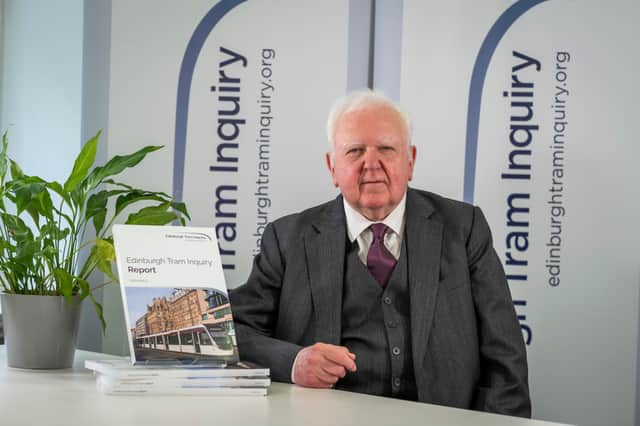
Lord Hardie, chair of the Edinburgh Tram Inquiry, said former first minister Alex Salmond promised a "swift and thorough" probe without any knowledge of what would be involved.
A report by a committee of the House of Lords in 2024 highlighted “a lack of clarity” as to what public inquiries can achieve. “Inquiries sit in an uneasy space between politics and the justice system, while combining elements of both,” it noted perceptively.
Why reform is needed
It seems clear the existing system could benefit from reform. Dr Ireton suggests establishing a public inquiries hub, to act as a “central repository of learning and procedural innovation, and to provide induction for new chairs and information on cost management”.
Michael Clancy, director of law reform at the Law Society of Scotland, told MSPs: “There ought to be some kind of Scottish inquiries unit, that the Scottish Government should establish.”
He added: “Why don’t we have a bank of people who are skilled at the running of inquiries and who can be called upon to be able to service any future inquiry?”
Of course, more focused, narrowly-defined inquiries would inevitably spark rows over what gets included in the investigation and what does not.
"We talk about the survivors and the bereaved as if they are a single, homogenous group, and they're not,” Dr Ireton, who co-authored the book The Practical Guide to Public Inquiries, said.
"Some of them want very detailed answers. Some of them want a quick inquiry to make changes so that no other family has to go through what they've gone through. Others really want the public record corrected.
"There is never consensus in any jurisdiction over what an inquiry should be, because these all conflict. And a decision has to be made at the very beginning, by the minister, looking at all these balancing, competing interests, in this situation what is needed from this inquiry? What do we need as the government to inform us going forward to address this matter of public concern? What is most pressing?
"So either you say all of those things and you accept that you're going to have massive inquiries - that probably by the time they report it's too late to bring about meaningful change, or you've had repeated incidents and so forth - or you accept that decisions need to be made, and some people will be disappointed and some people will be happy.”
Dr Ireton added: "You can't convene a huge inquiry to deal with everything and then say 'but we want it completed in two years'."
Comments
Want to join the conversation? Please or to comment on this article.