
'Chaotic' Budget nevertheless sparks optimism for Scottish Labour

Insiders believe this is a plan they can work with as Holyrood election looms
“This Budget has been absolute chaos from start to finish,” thundered the official statement from Shona Robison, the SNP’s Finance Secretary, shortly after the Chancellor sat down in the House of Commons. And there is no doubt it was messy.
In an unprecedented blunder, the full details of Rachel Reeves’s plans were published by the Office for Budget Responsibility (OBR) more than half an hour before she stood up in the Westminster chamber.
Following weeks of leaks, U-turns and fevered speculation, the Chancellor hiked taxes by £26 billion as she faced forecasts of weaker economic growth, faster inflation and higher unemployment.

Her announcements included a freeze on income tax thresholds - not quite the manifesto-shredding increase that was initially feared, but enough to drag 1.7 million people into paying more.
Scotland has a separate income tax system, and all eyes are now on Ms Robison’s Scottish Budget on January 13. She has not ruled out following suit.
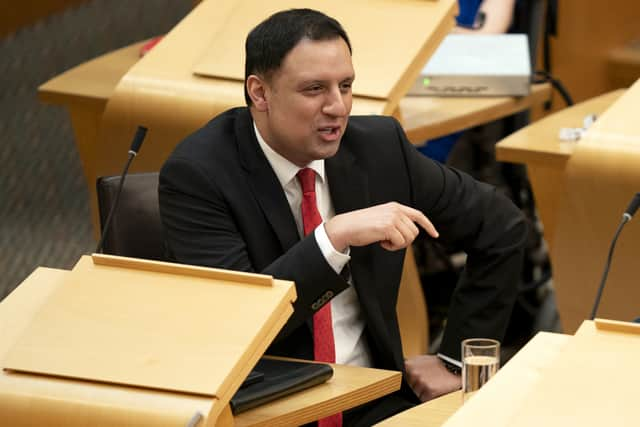
Elsewhere, Ms Reeves announced an extra £820 million for the Scottish Government by the end of the decade. This was, she said, because Scottish Labour leader Anas Sarwar “asked us to”.
Direct nod to Holyrood election
It was a direct nod to the upcoming Holyrood election. Mr Sarwar has been suffering in the polls due to the UK party’s plummeting popularity, and he desperately needs a positive story to tell voters in Scotland.
A video promoting the line was rapidly pumped out on Scottish Labour’s social media channels, but the party’s critics were less impressed. “My first thought was, could he not have asked for a bit more?” a senior Scottish Government figure said.
Ms Robison was more blunt. “I think everyone laughed out loud at that point, didn’t they?” she said. “Because no one believes that Anas Sarwar has any influence over the UK Government, and if he had he would maybe have got a bit more for Scotland.”
She said the extra £820 million paled in comparison with the cost of Labour’s previous National Insurance hike.
READ MORE: UK Budget: What Rachel Reeves' Budget means for you and your finances - pensions, fuel, ISAs
“The funding that has been set out is over five years,” she told journalists. “If you look at that in the context of over those same five years, the hike to employers’ National Insurance contributions in the public sector is £2 billion, so that puts in a bit of context that funding.”
The respected Fraser of Allander Institute (FAI) said the Treasury was reporting “relatively small additions to funding” for Scotland, with “a boost in the short-term” that quickly erodes away.
Nevertheless, behind the scenes, those close to Mr Sarwar are broadly pleased.
The two-child benefit cap has long been a source of internal strife, and the decision to lift it will go down well with activists. The Treasury said around 95,000 children in Scotland stand to benefit.
Meanwhile, action to reduce energy bills is seen as a key political win, even if opponents say it doesn’t go nearly far enough. This is an issue repeatedly raised on the doorstep, and Labour can now point to concrete action.
Investment announcements in Grangemouth, Greenock, Leith and Kirkcaldy all target areas where Scottish Labour will be in contention at next May’s election.
Party insiders believe this is a Budget they can work with as that crucial vote approaches. “We got what we wanted on the two-child cap, and we got what we wanted on meaningful action on energy,” said a senior figure.
They argued the soaring tax burden would be more of an electoral headache in Scotland if the party was facing off against the Tories or Nigel Farage’s Reform UK, rather than the SNP.
“The SNP invented fiscal drag,” quipped one Labour MSP, referring to the process by which taxpayers are dragged into higher tax bands. Anyone earning more than £30,318 pays more income tax in Scotland than if they lived south of the Border.
“There was no solution to any of this that did not involve some level of tax rises somewhere,” said the senior figure.
Windfall tax backlash
Nevertheless, the decision to retain the windfall tax on oil and gas companies - or the energy profits levy (EPL), to use its Sunday name - provoked an almighty backlash in the North East, and will perhaps play into wider fears about the transition away from fossil fuels.
READ MORE: Oil and gas sector warns it will be 'taxed to death' after Rachel Reeves extends windfall tax
“The industry put forward a case for a reformed EPL that would have delivered more than 100 projects, £50 billion of investment and protected around 160,000 jobs,” said Russell Borthwick, chief executive at Aberdeen and Grampian Chamber of Commerce.
“Crucially, it would have also delivered an addition £10 billion in tax revenues over the next decade.
“Without so much as a mention in the Chancellor’s statement today, the UK Government has instead opted for a cliff-edge end to North Sea production and to tax the industry to death inside five years. Jobs will be lost in their thousands as a direct result of this government’s failure to act.”
SNP Westminster leader Stephen Flynn said Labour seemed “determined to tax Scotland’s energy sector and industrial base out of existence”.
Mike Tholen, sustainability and policy director at trade body Offshore Energies UK, raised fears for the future. "Aberdeen is feeling the cold from all of this, big time,” he told me.
The North East is not a Labour heartland, but the oil and gas sector plays a big role in Scotland’s economy.
With such a smorgasbord of tax measures in the Budget, there is also a risk that it all falls apart.
“There is a significant chance that these measures won’t raise as much revenue as expected, as highlighted by the OBR’s uncertainty ratings; if that happens, the Chancellor might well be back in this position next year,” warned the FAI.
In a statement, Mr Sarwar said the Budget “means child poverty down, energy bills down, wages up and austerity rejected”, adding: "In May Scots face a choice - more failure and decline with John Swinney and the SNP or a new direction with me.”
If the polls are right, it currently looks like Scots will stick with the SNP. Mr Sarwar has a matter of months to turn that around. With a tricky UK Budget out of the way, he can get down to work.
Comments
Want to join the conversation? Please or to comment on this article.