
Chancellor's Budget approach causing 'economic distortion', say Scottish experts

The Fraser of Allander Institute has said the pre-Budget speculation is not good for economic stability and certainty
Scottish experts have warned the Chancellor’s Budget approach could cause “economic distortion”.
At the end of last week Chancellor Rachel Reeves ruled out increasing income tax in her 2026/27 budget, which will be published on November 26.
It was widely speculated Labour would break its manifesto commitment not to raise income tax in its upcoming budget after Ms Reeves made an unprecedented pre-Budget statement last week.


First Minister John Swinney has said the Chancellor must use the budget to end “rising bills and political chaos”.
Professor Mairi Spowage from the Fraser of Allander Institute at Strathclyde University said the markets have not responded well to the uncertainty Budget speculation is already causing, and warned it could have damaging effects on the economy.
Speaking to BBC The Sunday Show, Ms Spowage said: “The long run-up to the budget and various policy ideas speculated about over the last few months are not helpful for economic stability and certainty.
“We’ve seen more of that this week. I’ve never seen a UK budget where speculation of different forecasts and policies is decided so much in the public rather than behind closed doors before the budget is announced.
“The markets haven’t responded particularly well to the idea that instead of a broad-based income tax rise in order to fill the hole the Chancellor is dealing with, she is more likely to take a smorgasbord approach of lots of little taxes, which might be easier politically as that doesn’t break a manifesto commitment, but could cause economic distortion, particularly if it suppresses investment.
“So the markets are slightly unsure of what the Chancellor will announce.”
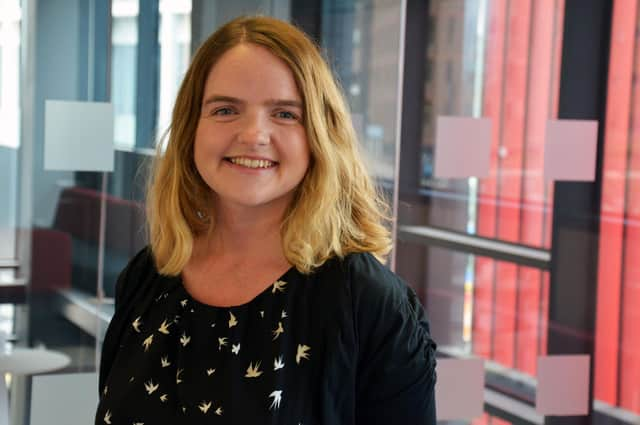
Ms Spowage said what has played out in the media suggests the Chancellor wanted to “pitch the idea of breaking her manifesto commitment” on income tax before making a final decision on what will happen in the Budget.
She said: “It sounded like she had both options considered and in the end has gone for the more politically easy one, but it can be potentially more economically problematic.”
Ms Spowage said the difficulty Ms Reeves currently finds herself in is a “sign of weakness of government”.
She added: “They cannot push through the welfare reforms they want because their backbenchers won’t support it, they cannot borrow more money because the markets won’t wear it, so they need to think about increasing tax.
“One reason they pulled back from income tax increases is because of the views of their backbenchers.
“A lot of speculation undermines this weakness that they can’t decide what to do and push ahead with it.”
Her comments come as the First Minister prepares for a pre-Budget visit to London. During his time there, Mr Swinney will give a speech at the Institute for Government where he will say the UK Budget must ease the financial pressures on families, and invest in public services’ post-Covid recovery.
Speaking ahead of this visit, Mr Swinney said: “It is no wonder Keir Starmer’s ratings are so low, with his ministers and advisers fighting each other when they should be fighting to reduce household bills.

“Every day I speak to people who feel let down by Labour - a party that isn’t even trying to keep its promises.
“By contrast, under the SNP government NHS waiting lists in Scotland are coming down, GP numbers are up, child poverty is falling and the unemployment rate is significantly lower than elsewhere in the UK.
“It is completely unacceptable for the progress we are making in Scotland to be undermined by Labour chaos.
“People in Scotland rightly wonder why they face sky-high energy bills while living in a country of such energy abundance.
“The big test for this budget is whether or not it lowers family bills - and that includes energy bills. There is no good reason Scottish households are paying so much to keep the lights on.”
He added: “The Prime Minister promised change from the Tories but has delivered more of the same - rising bills and political chaos.”
Ms Reeves had planned to increase income tax rates by 2p, but compensate workers with a 2p National Insurance cut. This was sent to the Office for Budget Responsibility as an option to be costed earlier this month.
This would have raised several billion pounds from non-wage income such as landlords and savings.

The Chancellor initially thought she was dealing with a £30bn black hole in public finances, however new assessments from the Office for Budget Responsibility have increased the projected strength of wages and tax receipts, taking the gap closer to £20bn.
If Ms Reeves does not increase income tax rates in her Budget, she will need to think of other ways to raise money while still sticking to her self-imposed fiscal rules on debt and borrowing.
This could include extending the freeze on income tax and National Insurance thresholds, which is due to expire in 2028.
This would not break the party’s manifesto commitment but could see income tax go up for some as increased salaries could pull them into new tax brackets.
Other options include lowering the income tax thresholds.
It is understood the Treasury is also considering a new tax on electric vehicles and higher taxes on gambling companies, amongst other measures.
Speaking after the government’s U-turn on income tax, UK Conservative leader Kemi Badenoch said: “It’s good if they aren’t going to increase income taxes, but the truth is they shouldn’t be increasing any taxes at all.
“I’ve never seen a government do this in the run-up to a budget. I have never seen this level of chaos, this level of irresponsibility.
“Reeves must guarantee no new taxes on work, businesses, homes or pensions - and she should go further by abolishing stamp duty.”
Comments
Want to join the conversation? Please or to comment on this article.