
Businesses demand action to boost growth as Scotland falls behind UK as a whole

Economy shrinks in February and March with GDP growth for first quarter sluggish, new Scottish Government data reveals
Business leaders have called for growth to be the “top priority” at Holyrood and Westminster after it emerged Scotland’s economy shrank in February and March and has fallen behind the UK as a whole.
Data published by the Scottish Government reveals GDP fell 0.2 per cent in March, following a similar drop of 0.2 per cent in February, prompting Deputy First Minister Kate Forbes to demand “decisive action” from the UK Government.
The figures also reveal that over the first three months of this year, growth increased 0.4 per cent in Scotland - below the 0.7 per cent recorded for the UK as a whole over the same period.


Ms Forbes insisted Labour ministers need to “counter the damaging economic impacts of Brexit” and also reverse the recent hike in employer national insurance contributions.
She said the Scottish Government has only “limited powers” over the economy.
Scotland Office minister Kirsty McNeill insisted it is “absolutely essential” that both the Scottish and UK governments “work together to deliver better jobs, wages and opportunities for the people of Scotland”.
Firms ‘expect situation to get worse’
Her call was echoed by Colin Borland, director of devolved nations at the Federation of Small Businesses, who warned that most small firms expected the situation to deteriorate further.
Mr Borland said: “We saw the first signs of confidence starting to return among small business owners in Scotland during the first quarter, after our Small Business Index (SBI) hit a four-year low at the end of last year. However, that returning confidence remains fragile – with more small businesses still expecting things to get worse before they get better – so it needs to be nurtured.
READ MORE: Anas Sarwar brands Nigel Farage a “tedious, pathetic little man" as racism row intensifies
“That requires all levels of government from Westminster and Holyrood through to local councils to keep a clear focus on the impact of their policies on small businesses.
“Growth needs to be everyone’s top priority. At a UK level, that includes looking again at the parts of the Employment Rights Bill that threaten to put smaller employers off taking a chance on hiring new recruits and removing barriers to business finance.
“For the Scottish Government and local authorities, it means delivering on promises to carefully assess the small business impact before adopting new regulations, taxes or policies.”
For the period January to March, Scotland’s services sector – which makes up the bulk of the economy – grew by 0.5 per cent, while the production sector grew by 0.3 per cent.
The construction sector was flat with 0 per cent growth recorded, while the agriculture, forestry and fishing sector contracted 0.4 per cent.
Looking at March alone, output in the services sector was flat at 0% growth, while the production sector shrank by 1.6 per cent. However the construction sector expanded by 0.3 per cent.
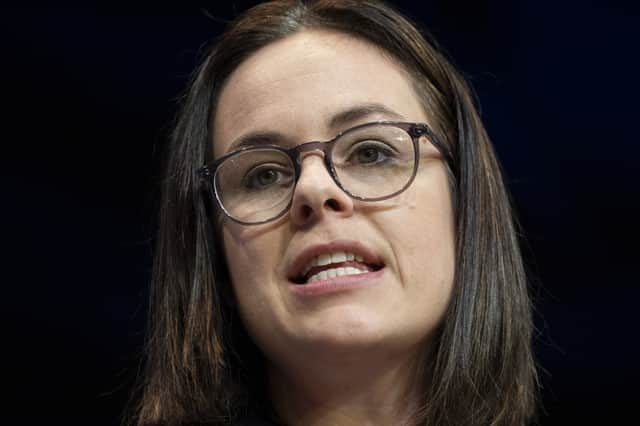
Mr Forbes, who has responsibility for the economy within the Scottish Government, stressed the figures for the first quarter of 2025 are “encouraging” when compared to the 0.1 per cent growth recorded over October to December 2024, and said they show quarterly growth “getting stronger”.
She added: “In the face of ongoing global challenges, dynamic steps are being taken to grow and transform Scotland’s economy.
“We are pursuing new investment, building export potential and supporting innovation. Last week the First Minister announced that US green aircraft engine developer ZeroAvia is to establish a new manufacturing base in Scotland, creating around 350 jobs.
“Meanwhile, our Programme for Government includes a six-point export plan to help businesses tap into new markets and increase sales.”
‘Limited’ powers for Scottish ministers
But she added the Scottish Government’s “limited” powers mean “decisive action” is needed from the UK Government to “counter the damaging economic impacts of Brexit and tackle the economic uncertainty currently being felt by business, workers and families”.
This action from Westminster must include reversing the “damaging decision to increase employers’ national insurance contributions”, the Deputy First Minister insisted.
Ms McNeill made clear however that “Scotland’s growth must not lag behind the rest of the UK”.
She said: “The UK government ended austerity in Scotland with a record £50 billion block grant in 25-26 for the Scottish Government to spend on public services.
“Meanwhile our Brand Scotland trade missions are promoting Scotland’s goods and services on the world stage to encourage further growth and investment, and our forthcoming industrial and trade strategies will create opportunities for people right across the UK.”

She also said the UK Government’s Plan for Change is “working by kick-starting economic growth and putting more money in people’s pockets”.
Ms McNeill added: “There’s been an annual pay rise of around £1,400 for up to 220,000 Scottish workers and an end to zero-hours contracts for nearly 80,000 Scots thanks to our ground-breaking Employment Rights Bill.”
Scottish Conservative shadow cabinet secretary for finance and local government Craig Hoy said governments in both Edinburgh and London were to blame for Scotland falling behind the UK as a whole.
He said: “Growth across the UK has been badly hit by Labour’s disastrous budget and their National Insurance tax rise. But under the SNP Scotland is lagging behind even those sluggish figures.
‘Two left-wing governments to blame’
“Thanks to the SNP’s higher tax rate, excessive regulations and failure to pass on rates relief, Scottish businesses are at a disadvantage. Thanks to the policies of two left-wing governments, economic growth has stalled, while Scottish firms and households are paying more to get less.”
Kevin Brown, Savings Specialist at Scottish Friendly, said: “March’s GDP figures show Scotland trailing the wider UK, which is disappointing but not disastrous, and certainly isn’t a signal to panic.
“The gap between Scotland and the UK isn’t huge, and with the right conditions – stable inflation, improved consumer confidence, and no escalation in global trade tensions – growth could quickly pick up.
“On a more positive note, the domestic picture looks to be improving. Inflation did spike in April, mainly due to higher utility bills, but the worst of that pressure should ease later in the year. The recent rate cut has also taken some strain off borrowers, even if it came at the expense of savers.”
Comments
Want to join the conversation? Please or to comment on this article.