
Final plea to push assisted dying plans over the line to provide 'choice, control and dignity'

MSPs undecided ahead of a vote on Scotland’s assisted dying laws have been urged to listen to the people at the heart of the proposed legislation - amid a warning that “not taking action has serious consequences too”.
The MSP behind Scotland’s assisted dying plans has made a final plea for politicians to “listen to the voices of terminally ill Scots desperate for more choice, control and dignity” as Holyrood is braced for what could be an historic moment.
MSPs will vote on the first legislative hurdle of Liberal Democrat MSP Liam McArthur’s Bill, that would make Scotland the first part of the UK to legalise assisted dying.
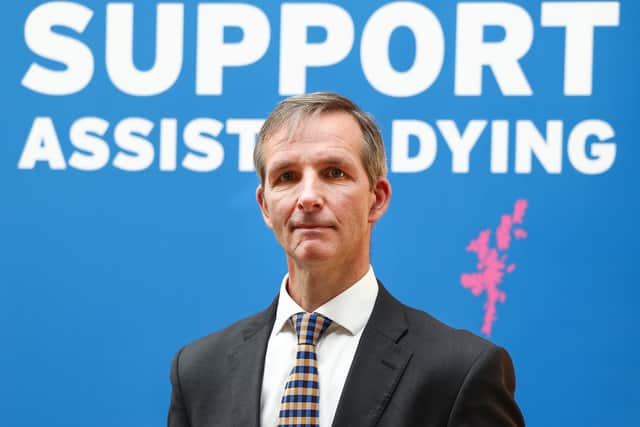

Under the plans, terminally ill, mentally competent adults would need the approval of two doctors for an assisted death and would need to undergo a waiting period to reflect on their decision to proceed.
The assisted dying legislation specifies the dying person would take the life-ending medication themselves and no other person would be permitted to do so on their behalf. The new law would create a new criminal offence to coerce someone into having an assisted death.
In a final appeal to MSPs who are yet to publicly state their voting intentions, Mr McArthur pointed to consistent polling showing “Scots want to see dying people in this country given more choice at the end of life”.
Final plea for MSPs to support assisted dying
He added: “My bill would put in place safeguards that don’t currently exist, a situation that leaves many terminally ill people more vulnerable and more likely to take matters into their own hands.
“This shows that not taking action has serious consequences too, with more deaths that are painful and undignified, despite the best efforts of palliative care, and more traumatised families left behind.”
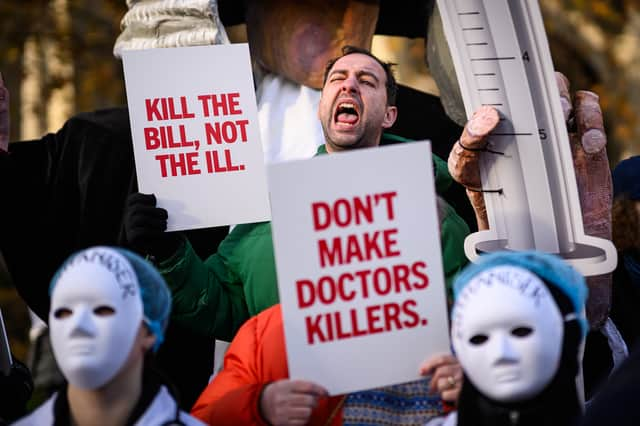
The Orkney MSP warned that “Scotland cannot put off this conversation”.
He said: “Parliament cannot continue to leave this issue in the ‘too difficult’ box. It must, at the very least, allow time for amendments to be considered to see if a bill can be agreed that commands majority support and public confidence.
"To my MSP colleagues, I say, if you have not yet made up your mind, my door is always open but most importantly I would urge you to listen to the voices of terminally ill Scots desperate for more choice, control and dignity.
“This bill has been a long time coming but it does now offer the chance to provide that compassionate choice for the small number of terminally ill Scots who need it."
READ MORE: Plan to 'cap' doctor involvement in Scotland's assisted dying plans as 'sceptical' claims addressed
Mr McArthur’s message has been echoed by the CEO of the Humanist Society Scotland, Fraser Sutherland, who has argued for politicians to be "bold, brave, and compassionate", adding that "voting against assisted dying is not a neutral position".
MSPs urged to be ‘brave’
In a speech to be delivered outside Holyrood today, Mr Sutherland will point to the public support for assisted dying, emphasising that assisted dying "is not about religion", nor a "fringe issue".
He will emphasise his organisation's appeal for "the fundamental right to choose", calling assisted dying "not controversial but compassionate", "not radical but reasonable".
But Mr McArthur’s plans have been dealt a blow after a series of influential MSPs lined up to confirm they would be voting against the legislation in this evening’s vote. The Scotsman understands that multiple SNP ministers are poised to vote in favour of the legislation.
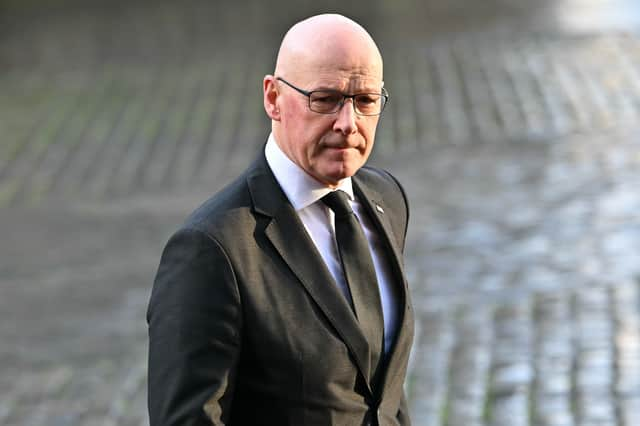
Last week, First Minister John Swinney confirmed he would vote against the Bill, while Scottish Labour leader Anas Sarwar has also publicly confirmed he will vote against the legislation.
Senior politicians confirm assisted dying opposition
Former SNP first minister Nicola Sturgeon also added her weight to opponents of the assisted dying proposals. In what she described as the “hardest decision” of her more than 25-year career as an MSP, posting on Instagram, Ms Sturgeon stressed that some of her concerns were “so fundamental” it would not be possible for her to back the Bill, including the potential for the legislation to become a “duty to die” for some.
READ MORE: Nicola Sturgeon reveals her vote on assisted dying in 'hardest decision' of political career
She added: “I have come to the conclusion that while some of the misgivings I have about the Bill in its current form could be addressed by amendments, some of my concerns are so fundamental that this would not be possible.”
Ms Sturgeon added that her issues with the Bill revolved around the potential for coercion and the definition of a terminal illness being “too wide”.
Scotland’s Health Secretary, Neil Gray will meanwhile abstain in the initial vote. Mr Gray will speak for the Scottish Government during this afternoon’s debate and will be the lead minister during amendments at stages two and three if the legislation proceeds, and has therefore said he will not support or oppose the Bill at stage one.
“Tomorrow, members of the Scottish Parliament will have a profound choice to make, informed by a very strong and impartial committee report,” the Health Secretary said in a statement.
Deputy First Minister Kate Forbes said she does not think “any amount of legal drafting can prevent people feeling pressured to die” as she confirmed her opposition to the legislation.
Ms Forbes warned of a slippery slope if the legislation passes.
“I think it is impossible to provide safeguards that will sufficiently avoid pressure being felt by patients who have received a terminal diagnosis,” she told the BBC.
“I think the people that are feeling the most concern and trepidation going into this week are disabled people, people who fear that it takes us down a road where, inevitably, across the world, you have seen those arbitrary lines shift.”
Fears over impact on those with learning disabilities
The concerns come as polling of 1,008 adults living in Scotland by Whitestone on behalf of the Down’s Syndrome Research Foundation UK, found two thirds of Scots have concerns people with a learning disability was expressing “voluntary informed consent” if they applied for an assisted death.
Dr Elizabeth Corcoran from the Down’s Syndrome Research Foundation UK said: “We are deeply concerned about the risks of coercion and undue influence in relation to the proposed change to the law.
“In particular, people with Down’s syndrome and people with intellectual disabilities in general are at significant risk of coercion and undue influence, in part because of their need to trust and build understanding for their needs with caregivers and medical professionals.”
“There is a very real risk that, if passed, this legislation could be applied far beyond its original intention. It may be stretched to include people who are not at the end of life, but who are instead viewed as having lives that are devalued through discriminatory attitudes and narratives. For our community, that possibility is terrifying.”
Comments
Want to join the conversation? Please or to comment on this article.