
Airlines hit out at air traffic control system after cancelled flights and delays

National Air Traffic Services blamed a ‘connectivity issue’
Airlines and trade bodies have hit out at the UK’s air traffic control system after flights were cancelled and passengers faced lengthy delays following the second technical problem in two weeks.
National Air Traffic Services (Nats) said a “connectivity issue” at its Prestwick centre was to blame for disruption at airports across Scotland, Northern Ireland and northern England.
The company said the issue was unrelated to a software fault on September 8, which caused more than 2,000 flights to be cancelled, affecting hundreds of thousands of passengers.
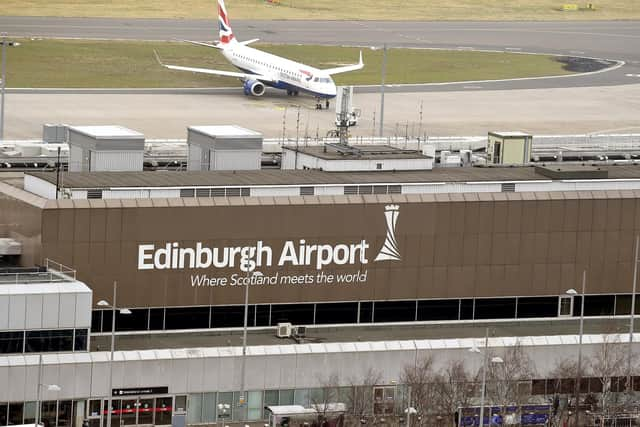

Some 129 flights scheduled to depart the UK were cancelled on Monday, as well as 124 that were due to arrive, aviation analytics company Cirium said on Monday evening.
Airlines expressed their dismay and anger at “yet another” incident, and Ryanair repeated its calls for Nats chief executive Martin Rolfe to resign.
EasyJet said the latest flight disruption “calls into question the resilience of Nats’ systems”, and Jet2 said customers and airlines need “action, accountability and proper resilience”.
According to Ryanair, more than 25,000 of its passengers were expected to be disrupted and more than 140 of its flights had been delayed on Monday.
Chief operations officer for Ryanair Neal McMahon said: “Martin Rolfe has presided over repeated system failures, repeated passenger disruption and repeated failures to deliver an effective back-up system.
“Enough is enough. Martin Rolfe should resign today.”
Wizz Air said there was a "national confidence crisis" in Nats, while British Airways said it was “disappointing” that some customers may experience disruption after “yet another technical fault”.
Speaking during a visit to Edinburgh Airport, First Minister John Swinney said: “It’s very regrettable that there’s been an issue with the air traffic control system today and that members of the public have experienced disruption as a result.
“I’m glad the issues are now resolved and that flights are able to take their normal course, but it demonstrates of all organisations, particularly the air traffic control system, having resilience, being able to withstand issues in the systems, so that people can rely on the services that are being provided.”
Gordon Dewar, the chief executive of Edinburgh Airport, insisted “something needs to change”.
He said: “The system is clearly not working – twice in the last few weeks. It’s national infrastructure that we’re all dependent upon.”
He said the disruption could potentially “ripple through to tomorrow as well”, adding: “So, we’re just working incredibly hard to look after people that are delayed or have to make other plans, make sure the operation can be the best it possibly can in the circumstances.”
Scottish Conservative transport spokesman Tim Eagle said: “Passengers at airports in Scotland and across the United Kingdom cannot continue to be hit with regular chaos and disruption like this.
“This is not only hitting holidaymakers and those going to work but is also deeply damaging for the economy.”
Passengers at Edinburgh Airport spoke of lengthy delays. Peter Haydock, a construction project manager, said his journey between Birmingham and Edinburgh had been set back by hours and led to a “wasted day”.
He said: “We got on the plane – and they told us on the plane. We sat there for 30 minutes, and they took us off the plane, back to the waiting area.
“We sat there for two or two and a half hours, and then reboarded the plane.”
Mr Haydock said the delays had led to him missing a coach as part of his work trip.
He said: “By the time I get to site, it’s going to be close to 4 o’clock, which is a complete wasted day, isn’t it?”
He added: “I got up at 5 o’clock today to get here.”
Stephen Jaeger, from San Francisco, had his journey from the US city to Belfast delayed by about 18 hours.
A cancellation meant he was stuck at Edinburgh Airport on Monday afternoon, unable to get a transfer flight to Belfast until Tuesday.
He said: “I could not get a flight, any of the later flights.
“There were two more tonight that I was not able to get, but they did book me a flight for tomorrow morning.”
He added: “I’m used to it. You know, I’m a business traveller, and these things happen.”
But the UK Civil Aviation Authority said disgruntled passengers were unlikely to be entitled to compensation.
“We know many passengers have faced disruption and frustration following a technical issue at Nats Prestwick centre in Scotland on Monday 21 September, and we understand the impact this has had on their travel plans,” a spokesperson said.
“We have reminded airlines of their responsibilities to look after passengers whose flights have been delayed or cancelled.
“We consider that disruption caused by the technical issue at Nats Prestwick centre in Scotland on 21 September is likely to be considered the result of ‘extraordinary circumstances’ under passenger rights rules.
“This means that although passengers should be looked after by airlines, they are unlikely to be entitled to compensation for delays or cancellations that were directly caused by the incident.”
Luke Petherbridge, the director of public affairs at ABTA, the trade association for tour operators and travel agents, said: “This is the second Nats incident to cause disruption in the last fortnight, and fourth in recent years. It’s simply not good enough.
“The industry and travelling public will want answers – not only on what has gone wrong, but critically how the system is going to be made more resilient to avoid future outages.
“These incidents cause inconvenience to travellers and significant financial costs for airlines and the wider travel industry, including additional work and costs for ABTA’s tour operator and travel agent members.
“As these Nats issues are entirely outside of travel companies’ control, the government should seriously consider whether Nats should be made to compensate the wider industry for such events.”
Tim Alderslade, the chief executive of Airlines UK, said air traffic control was “critical national infrastructure” which “must be resilient enough to keep people moving”.
He insisted passengers and airlines “deserve better” and underlying weaknesses in the system must be addressed.
Comments
Want to join the conversation? Please or to comment on this article.