
Scotsman Obituaries: Ted Williamson, stage lighting designer turned TV producer and director
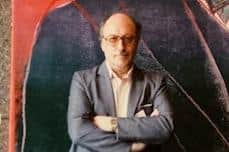
Edmund Clynes Williamson, senior television producer-director. Born: 9 August 1933 in Sheffield. Died: 14 November 2025, aged 92
Ted Williamson, who abandoned a promising career as a lighting designer on West End revues, touring productions of Broadway blockbusters such as Carousel, Guys and Dolls, Can Can and The Pajama Game, as well as pantomime in Birmingham, Plymouth and Brighton, to become a TV director with literally hundreds of programme credits to his name, has died, aged 92.
Born in Sheffield, where his father, Fred Williamson, was a wine and spirits merchant, he moved, with the family to Blackpool, aged five.
Ignored by the Luftwaffe during the Second World War, the popular northern seaside town was considered a safe refuge for large numbers of evacuees, mostly children from Manchester and Liverpool, as well as an ideal location for training and holding thousands of Allied troops.

Inevitably, the existence of such a large untapped audience, desperate to be entertained, together with a number of splendid theatres built to meet the demands of a huge peacetime holiday trade, attracted the attention of London theatre impresarios exposed to the threat of enemy bombers – only The Windmill Theatre could famously boast, “We never closed!”
Noel Coward, Margot Fonteyn, Laurence Olivier, Vivien Leigh, Richard Attenborough, George Formby and Gracie Fields were just some of the stars who cast a spell over the town, pushing it ahead of the West End as the wartime entertainment capital of the UK.
Williamson, who never tired of being taken to the theatre when he was growing up, left school hoping to find work in one of the town’s famous playhouses, having declined an opportunity to join his father in the wines and spirits trade. George and Alfred Black, whose lively revues attracted large audiences to the Blackpool Opera House, provided a much-needed start. Ted followed this with a spell in repertory which convinced him he’d never be a success as an actor.
As he later recalled, stage lighting, which attracted him from the start, was a fast-developing craft: “Directors tended to light their own productions, with mixed results.”
Drawn, irresistibly, to London and the West End, he joined Joe Davis (described by Williamson as “the first, most experienced and finest lighting designer in Britain”), who was in charge of lighting for all of H.M. Tennent’s London productions. Encouraged by Davis, his career as a stage lighting designer was progressing well when Williamson, ahead of many of his contemporaries, sensed popular theatre in the UK was facing a cataclysmic challenge: television.
A chance conversation with Stewart Cruikshank, managing director of Howard and Wyndham, the well-known theatre company with its roots in Glasgow, revealed that the Theatre Royal, Glasgow, had been sold to Roy Thomson, the Canadian newspaper tycoon who owned The Scotsman. Thomson was expected to gut the old place and turn it into a modern TV centre to house his latest interest, STV.
Williamson thought he would stay “perhaps two years” at the TV centre, Cowcaddens. However, as he also reflected, years later, “TV becomes addictive!”
Having started as a lighting director in April 1958, seven months after the company went on-air, it took him until August 1964, aged 31, to become a trainee programme director. As a director, or, as he preferred to operate, producer-director, between 1964 and 1989 he worked on a wide range of programmes, covering news and current affairs, sport, religion, light entertainment, drama, plus a large number of documentaries.
In an industry where image was important he was never less than stylishly dressed, quiet and thoughtful in his demeanour. A natural committee man, Williamson contributed time to anything he believed was a just cause, serving on the Scottish committees of the Variety Club of Great Britain and the Outward Bound Association. He also chaired, and served as awards convener, of the Scottish committee of the Royal Television Society.
A lifelong trade unionist he was, for several years, chairman of the STV branch of the Association of Cinematograph and Allied Technicians (ACTT).
Invited, after a quarter century of making documentaries for STV and the ITV network, to name his favourite titles, Williamson was likely to include Divided We Stand, which celebrated 100 years of the Scottish Cooperative Wholesale Society; One More River, the story of Dundee-born missionary Mary Slessor; The Maverick Millionaire, the story of Andrew Carnegie; Call Me Roy, a profile of Lord Thomson of Fleet, previously known as Roy Thomson, the man who started STV; not forgetting the 1967 Emmy-nominated Contract 736, a design-to-launch record of how the QE2 was built at Clydebank, which was also a record of the last days of the Clyde as one of the world’s leading centres for building great ships.
That job left him with an unusual memento, the bowler hat worn by John Brown’s legendary managing director, John Rannie, at all the launches he ever attended as the man in charge of operations; that last time in the company of Her Majesty, Queen Elizabeth II.
Rannie, who didn’t expect to attend another major launch on the Clyde following the QE2, was intent on binning it. Williamson pleaded with him not to do so on the grounds it was a precious piece of shipbuilding history, and should be preserved. “In that case,” said Rannie, “you keep it!”
Ted Williamson, stage lighting designer turned television producer and director, married Hilary Young, a public relations executive, at Cramond Kirk, Edinburgh, on 18 March 1968. The marriage lasted until her death on 21 September 2021.
He died of heart failure at Hairmyres Hospital, East Kilbride, on Friday 14 November 2025. He is survived by his children, Stephen and Morven, and his grandchildren, Carlos, Oscar and Hope.
Obituaries
If you would like to submit an obituary (800-1000 words preferred, with jpeg image), contact [email protected]